
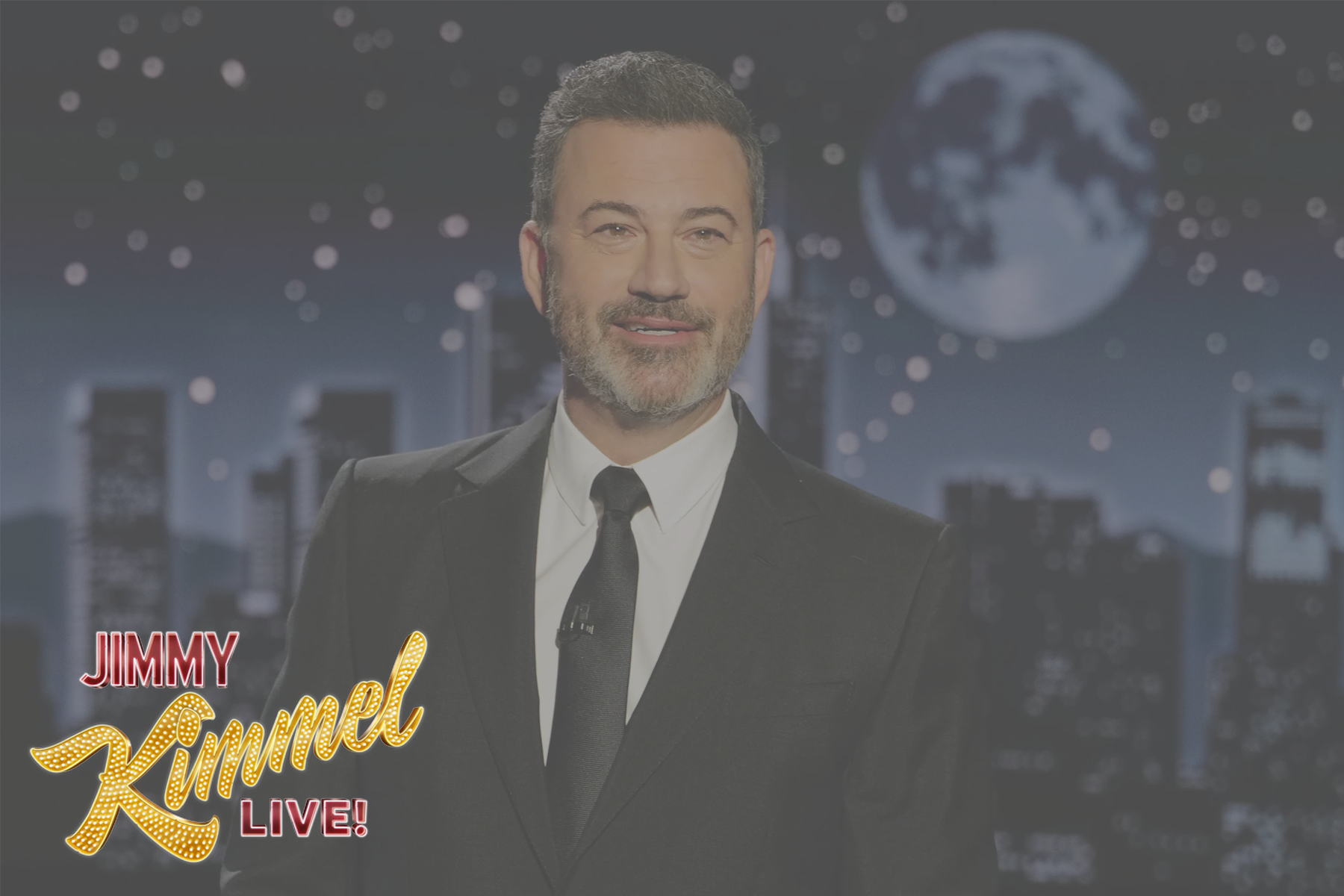
Jimmy Kimmel is a late-night comedy staple. Having been on the air since 2003, the comedian is perhaps best known for his viral videos, including “Mean Tweets” — where celebrities read hateful posts on X and his long running YouTube series “I Told My Kids I Ate All Their Halloween Candy.” Kimmel has always been a relatively tame figure in late night media. Though not as politically neutral as Jimmy Fallon, he is certainly not as outspoken as fellow late-night hosts Seth Meyers, Stephen Colbert, John Stewart or John Oliver.
That’s why the choice to indefinitely suspend Kimmel over comments made on air was so shocking. The reasoning behind the suspension, the forces that drove it and the public’s reaction have all spawned concerns about censorship and the chilling influence of the Trump administration on critics. Here’s a timeline on how these events progressed:
Wednesday, Sept. 10
Conservative political activist Charlie Kirk was assassinated by a gunman at Utah Valley University.
Sunday, Sept. 14
Responding to Kirk’s death, President Trump told reporters on the White House lawn that “[Americans] have a great country. We have radical left lunatics out there and we just have to beat the hell out of them.”
Monday, Sept. 15
The following Monday, in his opening monologue, Kimmel criticized efforts by “MAGA land” to capitalize on Kirk’s murder. He argued that Trump supporters were “desperately trying to characterize this kid who murdered Charlie Kirk as anything other than one of them.” He also took aim at Trump’s statements about the assassination as lacking emotion and an informed understanding of the gravity of the situation.
Wednesday, Sept. 17
Brian Carr, chairman of the Federal Communications Commission (FCC), told conservative podcaster Benny Johnson that Kimmel’s comments were “truly sick” and that ABC and by extension, Disney, should take action: “We can do this the easy way or the hard way. These companies can find a way to change conduct and take action on Kimmel, or there’s going to be additional work for the FCC ahead.”
Later that day, after facing pressure from broadcasters Nexstar and Sinclair, ABC announced Jimmy Kimmel Live! would be suspended indefinitely.
Monday, Sept. 22
After a weekend of controversy and backlash, ABC announced that Kimmel’s show would return to the air the following day.
The suspension of Jimmy Kimmel Live! demonstrates the new era of government censorship, one where government pressure can be disguised by corporate decision making — setting a dangerous precedent for how political intimidation could narrow free speech in American media.
The shock of Kimmel’s suspension was widely shared with millions understanding the dangerous precedent it has set. Kimmel, a fixture of late-night television for nearly 23 years was abruptly silenced within hours of repercussions being hinted at.
It didn’t take long for the public to realize Nexstar and Sinclair — the two largest distributors of ABC’s programming — pressured the network by threatening to pull Jimmy Kimmel Live! from public airwaves if Kimmel faced no repercussions. The underlying factor in Nexstar’s decision was a pending merger with Tegna valued at $6.2 billion. This deal would require FCC approval as Nexstar would surpass the 39 per cent household market cap. While the government never formally censored Kimmel, the implicit consequences of leaving him unpunished were made clear.
This isn’t the first time the Trump administration has utilized this type of leverage. In July, after Steven Colbert criticized Paramount for making a $16 million settlement in a defamation suit brought by Trump, the studio announced The Late Show with Stephen Colbert would be cancelled in May of 2026. Leading up to the announcement, Colbert’s show saw steady growth throughout the beginning of the year. With popularity increasing, is Paramount’s decision to cancel the show solely business related? Clearly the administration understands the power comedy holds over public opinion, but the studio would rather be complicit than face further multimillion dollar suits from Trump.
Late night institutions have been a mainstay and staple within American life and culture since the ‘50s. For many viewers who tune in even semi-regularly, they represent the bulk of the news media they’re exposed to. How late-night hosts choose to balance comedy with real world issues can influence how the public feels about certain decisions made by governments and administrations. This influence was most evident in the early 2000s with Jon Stewart and The Daily Show, which redefined the role late-night television could play in shaping political discourse.
Kimmel’s comments were hardly inflammatory by late night standards. Trump’s first administration saw Samantha Bee, John Oliver and others delivering far sharper critiques of Trump and his allies. If such a mild critique can trigger an uproar within the administration and lead a network to suspend a show during its 24th season on air, the boundaries of what networks deem to be acceptable speech for comedians is narrowing at an alarming rate.
Trump himself sought to downplay his role in the matter, claiming that “lack of talent” had caused the show’s abrupt cancellation. This spin was both inaccurate and revealing; ABC’s decision was a direct result of pressure from broadcasters, and the network never formally cancelled the program, yet the president’s comments hinted at an eagerness to frame the issue as a victory for censorship and cancel culture.
The Trump administration’s ability to utilize regulators in pressuring major networks and broadcasters into silencing critics within the span of a few hours is chilling. If these tactics were effective at muzzling a relatively mild late-night comedian, what happens when the administration targets a sharper critic or applies the same tactics to a wider reaching medium, like social media.
Comedians and late-night hosts, including David Letterman, Jimmy Fallon and Seth Meyers, quickly came to Kimmel’s defense. ABC’s other news related programming, most importantly The View, was under fire for not addressing the suspension. This was later clarified as the shows that aired after the announcement of the suspension were pre-taped. By then, the fears of a larger scale ABC blackout of the announcement caught fire, raising concerns about a larger scale censorship effort.
In the end, it was fans responding with their wallets forcing Disney’s hand to roll back the suspension. Howard Stern on his Sirus XM radio show, and many others announced cancellations of Disney+ and Hulu subscriptions, citing an inability to support a company’s willingness to cave under political pressure. This sharp dip in subscribers nearly overnight not only tanked stock value but highlighted the risks corporations face when they choose to be complicit in government backed censorship.
—
This case of New Age censorship does not resemble the censorship seen in past authoritarian regimes; it does not utilize direct bans, but pressures and power. Government and business can work together to silence dissenting voices in the name of market decisions.
The suspension of Jimmy Kimmel Live! represents more than a business decision; It’s an example of government influence masquerading as corporate decision making. While networks can reverse decisions under public pressure, the spread and severity with which Kimmel was silenced shows how fragile free speech and expression can be when regulators hold leverage over billion-dollar deals. As profits and political intimidation shift censorship into the boardroom, the future of free expression rests on dangerously fragile ground.