
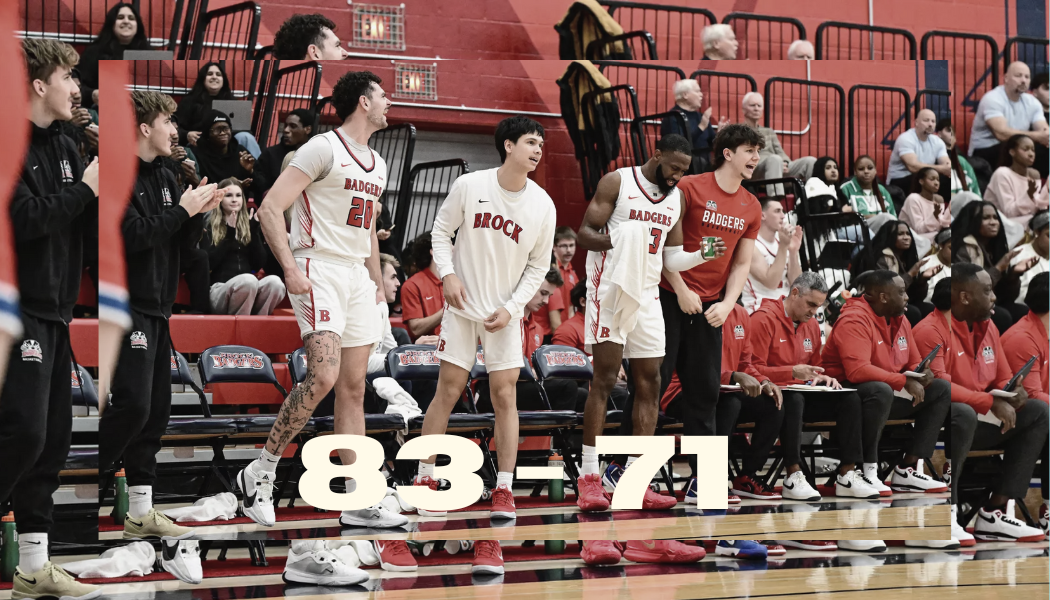
Brock didn’t need a miracle on Wednesday night at Bob Davis Gymnasium, just a steady grip on the game from the opening tip and the discipline to never let York breathe. The Badgers, who were already rolling at 13-4, handled business with an 83-71 win over the Lions (3-14) on Jan. 28, building an early lead and managing the rest like a team that knows exactly what it’s doing.
The tone was set immediately. York landed the first punch with a layup and a quick three, nudging ahead 7-2. But Brock didn’t blink. Michael Matas answered with a jumper, Xavier Fearon knocked down a triple and the Badgers’ bench injected life into the pace. Ben Herbert drilled two first-quarter threes, Isaiah Bujdoso finished inside, and Brock turned that early five-point deficit into a 27-15 lead after one. York didn’t lead again.
From there, the game became a lesson in pressure. Brock’s points off turnovers ballooned to 26, a number that explains why York’s possessions felt like they had an expiration date. Even when York found rhythm, Jeremiah Kwarteng attacking downhill or Malakai Ayres-Olson firing from deep, Brock kept stacking answers. Anthony Heyes spaced the floor with three triples on 3-of-6 shooting, Matas mixed in rebounds with timely scoring, and Cairo Perry delivered a calm, efficient 12 points.
The separation arrived fully in the third. Brock’s lead peaked at 24 with 6:34 left in the quarter, fueled by a stretch that combined perimeter shooting with second-chance muscle. The Badgers won the extra possessions battle decisively, finishing with 18 second-chance points and 43 rebounds. Michael Matas led that work with nine boards, while Birch Pockar added seven rebounds and a composed 10 points, including a perfect 5-for-5 night at the line.
York kept coming, mostly through Kwarteng’s force and shot making. He finished with a game-high 20 points on 6-for-14 shooting and didn’t miss a free throw (6-for-6). Ayres-Olson added 15, hitting three threes, and Stevanovic was flawless from the field (4-for-4) for nine points. But the Lions’ offense had to climb uphill all night. They shot 37.1 per cent overall and 25.0 per cent from three, and when their fourth-quarter surge arrived, it leaned heavily on free throws rather than flow.
Brock didn’t shoot lights out late. The Badgers went 0-for-6 from three in the fourth, but they never lost control. They closed with enough stops, enough rebounds and enough composure at the stripe (17-for-23 overall) to keep York stuck at arm’s length.
It wasn’t a finish built on drama. It was built on control, the kind that turns a game into a statement without ever raising its voice.