
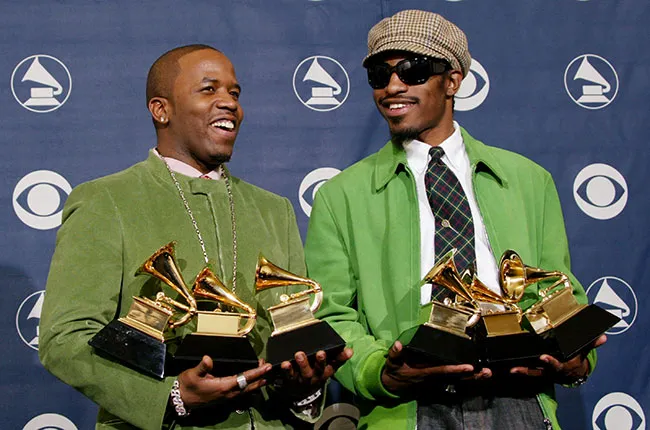
It’s hard to believe that an unusual rap duo from Atlanta, Georgia, made it this far in the first place, let alone became one of the most influential of all time.
Coming up as a rapper in the ‘90s was already difficult, but if you weren’t based out of the West or East Coast, good luck finding your way. Big Boi (Antwan Patton) and André 3000 (André Benjamin) were two young lyricists looking to make their mark on the rap world during a period when hip-hop was on the rise.
After forming the duo known as Outkast, both young men had their work cut out for them, as being a rapper from the South meant that you were going to be faced with the utmost disrespect. However, after winning the award for Best New Rap Group at the 1995 Source Awards, fans across both the East and West Coasts were shocked to see this unfamiliar duo from Atlanta on stage, especially with such prestige.
The rest was history. Following that moment, Outkast would go on to defy all odds and generate one of the most outstanding and consistent music catalogues in hip-hop history. From 1994, the group developed their uncanny, futuristic and jazzy style to produce five of the most iconic, unique and innovative albums the rap game has yet to see. It wasn’t just the duo’s ability to rap over fast beats or go bar for bar with each other, but the outreach they had in different genres and styles that would get the group recognized and inducted into the 2025 class for the Rock and Roll Hall of Fame.
Outkast are the pioneers of genre-bending hip hop, putting the South on the map for a future that would see the area take over hip hop completely. Countless artists attribute their style to Outkast, and for good reason. They embody consistency within their work and let it be known that they don’t care how they go about doing it.
Let’s take a trip down memory lane and review Outkast’s all-time great catalogue.
Southernplayalisticadillacmuzik – 1994
Their first studio album, released on April 26, 1994, Southernplayalistic — I’ll refer to it as such for the sake of your eyes — is Outkast in their most raw form. The duo was yet to have their trademark funky look, with both members still in their late teenage years, far from what they eventually grew into. Don’t get it twisted, though, as this album is a small introduction to the group’s iconic soul and jazz-infused rap style that is present right from the album’s intro. Its hit song “Player’s Ball” is as ’90s as a hit song can be, blending a boom bap beat, a catchy chorus and rhythmic flows to create Outkast’s first big song.
What stands out on this album from its contemporaries is the unique background sounds present throughout each track, made famous by the group’s creative beat-making. The duo dive into sounds that were never heard before that point, without even fully tapping into what they would do later on in future albums. It wouldn’t be fair not to mention the distinctive voices the two men possess, ones that would garner criticism from fans and critics who weren’t yet familiar with the group.
Outkast put their southern identity on full display on this album, clearly demonstrated by their unique voice and flows that paved the way for future artists of the South. What the album lacks in the group’s legendary creativity is made up for in passionate storytelling and innovative sound. Organize Noize produced the album for the group, combining sounds from the South and catchy beats that captivated listeners from its initial release.
These beats were accompanied by the raw storytelling of the young men’s lives at the time, focusing on the themes of living in Atlanta, racism, street life, women and growing into adulthood. This subject matter was nothing new at the time; however, the group was just getting started, and as they grew in age, so did their experiences with fame and identity.
Southernplayalistic was hip hop’s welcoming to Outkast. The album is certified platinum and remains one of rap’s most important debut studio albums. This may be the group at their greenest, however, the elements of storytelling, production and unique sound allow it to shine as the first baby of Outkast’s prestigious catalogue. The group was just getting started, and nobody could have predicted what came next.
ATLiens – 1996
Two years after their first project, Outkast released their second studio album, ATLiens, on August 27, 1996.
In just two years, the up-and-coming stars managed to create one of the most mature and complex albums that hip hop had ever seen. This was a whole new version of the two. André started wearing turbans, Big Boi was having baby mama issues and the worlds of these two had just turned upside down. For context, fame was now starting to affect the two, which in turn created a shift in their identity, forming more grown-up versions of them both. Gone were the days of generic dressing and immature behaviour; the group was now in a whole new world of self-discovery. For better or for worse, this allowed the two to collaborate on their most put-together album to that point.
The evolution from Southernplayalistic was night and day. The duo had cemented their identity as futuristic Southerners who could captivate audiences with otherworldly sounds and flows. It makes sense why the album is called ATLiens, as the group wanted to craft an album around their cosmic style and Southern presence.
The first track on the album, “Two Dope Boyz (In a Cadillac),” opens with a robotic voice welcoming the listener to the album — fitting for the theme of the project. Right away, Big Boi begins rapping with a more mature tone, further projected by the spacey beat in the background. The outer space vibe continues throughout the remainder of the track list, as both men show their chemistry together, rapping on beats unlike anything else from that time.
The ability for the two to work off each other cannot be understated. What makes their albums so attractive is the constant back and forth between the two artists, who feed off each other’s bars with elite storytelling and rhyming. Take a song like “Millennium,” for example, which has a lyric-less chorus but features two of the artist’s best verses in terms of wordplay. Things get even better on the title track of the album, where André gives one of the duo’s most catchy choruses, followed by an outstanding verse. It poked its head in Southernplayalistic, but Outkast was just beginning to show their incredible ability to make hit songs with hypnotizing choruses.
Overall, ATLiens is a darker, more mature version of the duo that featured some of the group’s most focused work to that point. Outside of the title track, the songs on ATLiens were beat-driven, storytelling pieces that mixed masterful wordplay and spacey production to their fullest potential. Many consider this to be Outkast’s best work; however, others say that this is just the starting point to the group’s ongoing evolution. At this point, Outkast defined the South. They were able to put an entire portion of the United States rap game on the map with their sounds, flows and flavours that played a role as the contrast to the forces on the two coasts.
It didn’t take long for the duo to release another instant classic, as two years later, they would release what is arguably one of the greatest hip-hop projects to ever exist.
Aquemini – 1998
Aquemini was released on Sept. 29, 1998, receiving massive praise from critics and audiences alike. This was Outkast in their purest form. Both men were now well into their 20s and had fully experienced what it was like to be famous. If you want to hear an album that represents the South, look no further. The project still has that classic, spacey, alien-like sound to it, but this time, the duo went all in on creating an Atlanta atmosphere. At this point, people recognized Outkast from their sound, allowing the group to fully dive into their persona as quirky, yet cool rappers who could create a song out of anything.
“Rosa Parks” is one of the smash hits of the project, defining the group’s sound. This record oozes charisma, from the title of a Southern icon, live instrumentation and you can’t forget the harmonica solo, performed by André’s late stepfather, Pastor Robert Hodo. If you haven’t already, go listen to this track, as it embodies Outkast’s ability to make you sing along and dance to the most outrageous kinds of music.
Outside of the upbeat Southern bangers, Aquemini features Outkast’s rock and roll sound that they began to incorporate through the late ‘90s into the early 2000s. Take “Chonkyfire” for example, a track that features a rocking bass guitar and loud drums on top of a hard beat produced by the group themselves. This type of genre-bending is featured on countless tracks on the album, as the group manages to mix their rapping with rock to create speaker-pounding bangers.
It was Outkast who contributed to a large portion of the production on the album — a role they played throughout all their projects moving forward. Along with Organized Noize Production, the duo was behind the making of numerous beats that became legendary in the hip-hop community, further cementing themselves as two of the most talented musicians of their era. Whether it’s headbanging rock riffs or laid-back spacey tunes, Outkast laced this album’s tracklist with a variety of instruments from different genres.
This is considered to be Outkast’s most complete album in terms of storytelling and pure rapping. Both Big Boi and André deliver some classic verses and bars that remain engraved in hip hop history as some of the best. Look at the title track, for example, as André’s final verse on the song is something so outstanding that it’s difficult to put into words. His ability to completely change the flow from the beginning of the song to his patterned rhyming and topics of personal trouble is done in a way that nobody else did after. A similar example is on the track, “Da Art of Storytellin’ (Pt. 1),” where both men give legendary performances about past relationship issues, rapped over a bouncy yet hypnotizing beat.
This album is considered one of the best in music history, and for good reason. Outkast came into their own and carried their momentum from ATLiens to their 1998 album with the utmost passion and character. It seemed impossible to top this, yet the group had something up their sleeve not too long after.
Stankonia – 2000
On Halloween of 2000, Outkast released their fourth studio album, Stankonia — their most anticipated album to that point. If you thought ATLiens and Aquemini were out there, listen to this rollercoaster of a project that features an energetic platinum hit song about the war in Iraq.
At this point, Outkast had established themselves as cultural icons due to the personalities of Big Boi and André, especially. The men were clashing in terms of personal style, which culminated in the two taking different buses on tour and André becoming vegan. Look up any picture of the duo around this time, and you will see countless images of their wacky looks around the new millennium. This separation wasn’t heinous, however, as the two still managed to create one of the most impressively complex and unique albums of the 2000s.
Stankonia was Aquemini ramped up a couple of dozen notches, with elements from what seems like hundreds of different genres incorporated throughout. These include rock and roll, jazz, funk, psychedelic rap, hip hop, gospel and electronic dance. With all these genres in a rap album, it may seem impossible to create a coherent project. If you haven’t already learned, Outkast does this for a living.
The album opens with a skit that perfectly encapsulates what it’s like to be on magic mushrooms, with a psychedelic trip through a minute of sounds and voices. Then, like the rest of the album, you’re shot out of a cannon into a new genre, this time to “Gasoline Dreams,” a rock and rap anthem that features a loud André chorus filtered by a slick electric guitar in the background.
To help the listener better understand the sudden shift in genres, each, or every other, song is followed by an interlude that contains a bridging story, leading to the next track. There’s no real explanation for the interludes, which leaves the listener to assume what it means for themselves.
Between the weirdness and insane story structure, Stankonia features some of Outkast’s most popular songs to date. Listeners outside of hip hop most likely know the song “Ms. Jackson” from its iconic chorus and equally legendary music video. This track can be considered toned down in comparison to the rest of the crazy music on the album, focusing rather on a real-life tale of André and his ongoing drama with fellow artist, Eryka Badu. The light-hearted beat and easily digestible lyrics are what made this track so viral upon release.
Other hits off the album include “So Fresh, So Clean” and “B.O.B (Bombs Over Baghdad).” The latter was the one that turned the most heads, as it referenced the ongoing conflict in the Middle East at the time. It was the electronic dance style of the track that turned it into a hit overnight, with patriots across the nation gravitating towards the song’s pro-U.S. message. Its non-stop energy had fans raving while also questioning what the hell was going on.
From top to bottom, Stankonia is a trip. It features the group’s most outlandish tracks, yet it works due to its differentiation from other music at the time, while still keeping the hip-hop fundamentals at its core. Its outreach to different fans earned it multiple Grammy nominations, including one for Album of the Year, and Record of the Year for “Ms. Jackson.” In total, the album brought the group two Grammy wins, including Best Rap Album and Best Performance by a Duo or Group for “Ms. Jackson.”
Underneath the surface, the duo’s clash of styles would come to a boiling point soon after, as the two artists were both eager to begin working on music as single stars.
Speakerboxxx/The Love Below – 2003
By 2002, Big Boi and André were ready to explore music as individuals. There wasn’t any beef between the two; both men just wanted to see what it was like to release albums on their own. By the time they finished their albums earlier in the year, they were ready to release them as two separate projects. However, their label never wanted them to create individual projects, believing it would halt the red-hot momentum the duo was riding at the time. So, by late summer of 2003, the two sides would come to an agreement and merge the solo records into a double feature, thus creating Speakerboxx/The Love Below.
Sept. 23, 2003 was the official release date of the project, serving as the fifth instalment to their catalogue. It was a monumental release for the group as it became a global hit within days, catapulting them into mega stardom.
Fans were captivated by the album concept, as many listeners were new to the idea of a double album — especially from a group as popular as Outkast. The first half of the track list was Big Boi’s, as he kept the same southern flow that Outkast carried for almost a decade. For context, Big Boi was always considered to be the less charismatic one of the duo, serving more as a traditional rapper than a dynamic artist like André.
Big Boi took any criticism and ran with it. Speakerboxxx was considered by many to be the better half of the project, mixing mega hits with deep cuts filled with flavourful bars and a charisma that many fans weren’t familiar with. One of the hits included “The Way You Move,” a song that went three times platinum and reached number one on the Billboard Hot 100.
Although he didn’t take any huge risks when it came to style, Big Boi’s Speakerboxxx provided fans with the traditional Outkast that they knew and loved, creating a balance with André’s more experimental side of the project.
André’s unique sense of creation was in full throttle on The Love Below. The track list serves as a movie soundtrack to André’s love life, mixing classical, jazz, R&B and funk elements throughout. This is where fans got to hear André sing, as the Atlanta artist tapped into his inner D’Angelo on tracks like “Prototype” and “Pink & Blue.” For the most part, his singing was a pleasant addition to the songs, but sometimes it overstayed its welcome, while fans criticized him for lacklustre vocals.
Like Stankonia, there are numerous interludes placed within the track list, creating a linear storyline centered around André and a girl that he is interested in. He lets out his sexy side on multiple tracks, showing his vulnerability and erotic thoughts on tracks like “Vibrate” and “Love is War.” Despite listeners harping on the lengthiness of André’s portion of the project, his openness was a nice change of pace and a look into the life of such an interesting personality.
In terms of hits, The Love Below delivered. “Hey Ya!” is the group’s most recognizable song to date, grossing over 10 million sales by 2024, making it a certified diamond. Other hits included “Roses” and “Happy Valentine’s Day.” All three of these tracks were a change of pace from most of the album, keeping an upbeat flow to the songs.
Despite the group’s original creative differences, Speakerboxxx/The Love Below became their most popular album of all time. It earned not only Best Rap Album of the Year but also Best Album of the Year at the 2004 Grammys, becoming the only rap album in history to hold such honours. As of 2025, Speakerboxxx/The Love Below is the best-selling rap album of all time and was a staple on radios throughout the 2000s.
—
After 2004, Outkast would release a soundtrack to their 2006 film Idlewild that performed poorly in terms of sales and critic ratings. Since then, the group never officially broke up, but has been on hiatus since 2007.
Over the course of a decade, an unknown rap duo from Atlanta, Georgia, would turn into one of the most popular duos, if not the most influential, in hip hop history. In those 10 years, they would release classic album after classic album, doing so with unique styles and flows that nobody else was brave enough to try. Their genre-bending and outreach allowed them to connect with vast audiences and placed them amongst the greatest of all-time, not only in hip hop, but all of music.