
While I’d never claim to have perfect attendance, it’s around this point of the semester when attendance in general seems to fall apart. Whether it’s course load burnout, early morning weather or simply a day too nice to spend indoors, students tend to give up on going to class.
I don’t believe most students enjoy missing lectures or scrambling to catch up afterward, yet inconsistent attendance has quietly become part of the modern university experience. Universities are still holding onto a lecture model built for scarcity. But as students increasingly rely on online materials, YouTube explanations and A.I. companions, the notion that students must be physically present to access knowledge has struggled to keep pace.
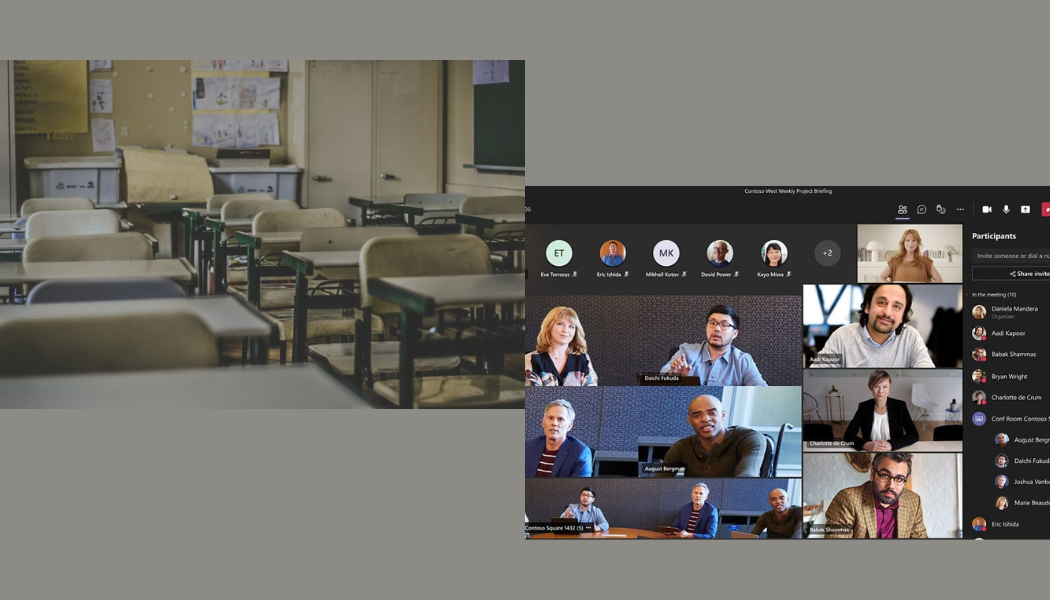
I have always preferred face-to-face learning. I focus better in a classroom and value the opportunity to interact with classmates and professors in real time. For most of my time at Brock, I’ve never questioned the traditional lecture format. That changed on my first day of this semester, when one of my professors began teaching while simultaneously streaming and recording his lecture for students unable to attend in person.
His approach reshaped how I think about lectures. This dual-access model preserves everything valuable about in-person learning. The lecture still happens physically, while making the experience accessible to students online through Microsoft Teams, a platform the university already pays for. Whether attending in the classroom or remotely, students can watch, ask questions and engage with the material in nearly the same way.
Traditional lectures are losing the pull they once had. Students can now complete assignments or prepare for exams even after failing to attend any lectures. The issue is not that students no longer want to learn. It’s that learning is risking the loss of its human element as institutions fail to recognize how education has changed.
Technology is evolving faster than universities are adjusting. Professors can respond by making courses more difficult or by attempting to restrict A.I. use, but without a clear reason as to why a human instructor provides something uniquely valuable, lectures risk becoming less central to the university experience. Accessibility may prove to be a stronger response than restriction.
Expanding access to high-quality lectures could reduce students’ reliance on A.I. tools while strengthening their critical thinking about course material. The solution is not surveillance software or embedded A.I. kill switches in assignments; it’s making lectures easier to attend and proving the human aspect of learning is essential.
In the short term, universities may feel as though they are competing with A.I. to deliver a better learning experience. Higher education can only prevail if it adapts its structures to better meet students where they are. A dual-access lecture model allows lectures to remain fully in person while also being streamed live, enabling students to learn in environments where they are most focused and comfortable. Remote participants can still ask questions, and recorded lectures provide an opportunity for review rather than replacement.
Recording lectures may feel risky. Some students will inevitably skip class and binge recordings before exams. But one way or another, those challenges already exist. It would be naïve to argue that watching a lecture recording for the first time provides the same educational experience as attending live, taking notes and participating in discussion. The limitations of remote viewing may reinforce the value of attending in person.
I’m sure critics worry that hybrid learning could empty lecture halls or reduce the need for physical classroom space. Yet the opposite may be true. When students can observe the benefits of live lectures, even remotely, their motivation to attend in person could increase. Flexibility does not eliminate classroom dependence; it may prove to reinforce its importance.
The dual access model has the potential to strengthen student success, improve relationships between professors and students and deepen engagement with course material. Universities have already demonstrated their ability to adapt and leverage technologies during emergencies. The challenge now is to adapt deliberately rather than reactively.
The question facing universities is no longer whether students should come to class. It’s whether classrooms are evolving quickly enough to meet students where learning already happens.