

Over the past decade, far-right movements have shifted from the fringes of politics into mainstream discourse across continents. This trend has become visible in various ways, from street-level mobilization to electoral politics and digital spaces. What factors are causing these trends and how do they affect you?
Street-Level Actions
Since mid-2025, the United Kingdom has had nationwide protests emerge after an asylum seeker was found guilty of sexual assault in Essex. Demonstrations spread to major cities, framing their cause around public safety, but quickly shifted into broader anti-immigration rallies.
Protestors targeted hotels housing asylum seekers, sparking clashes between far-right demonstrators and counter-protestors, resulting in arrests and political pressures. The UK government has responded by accelerating asylum reforms and restricting family reunification policies.
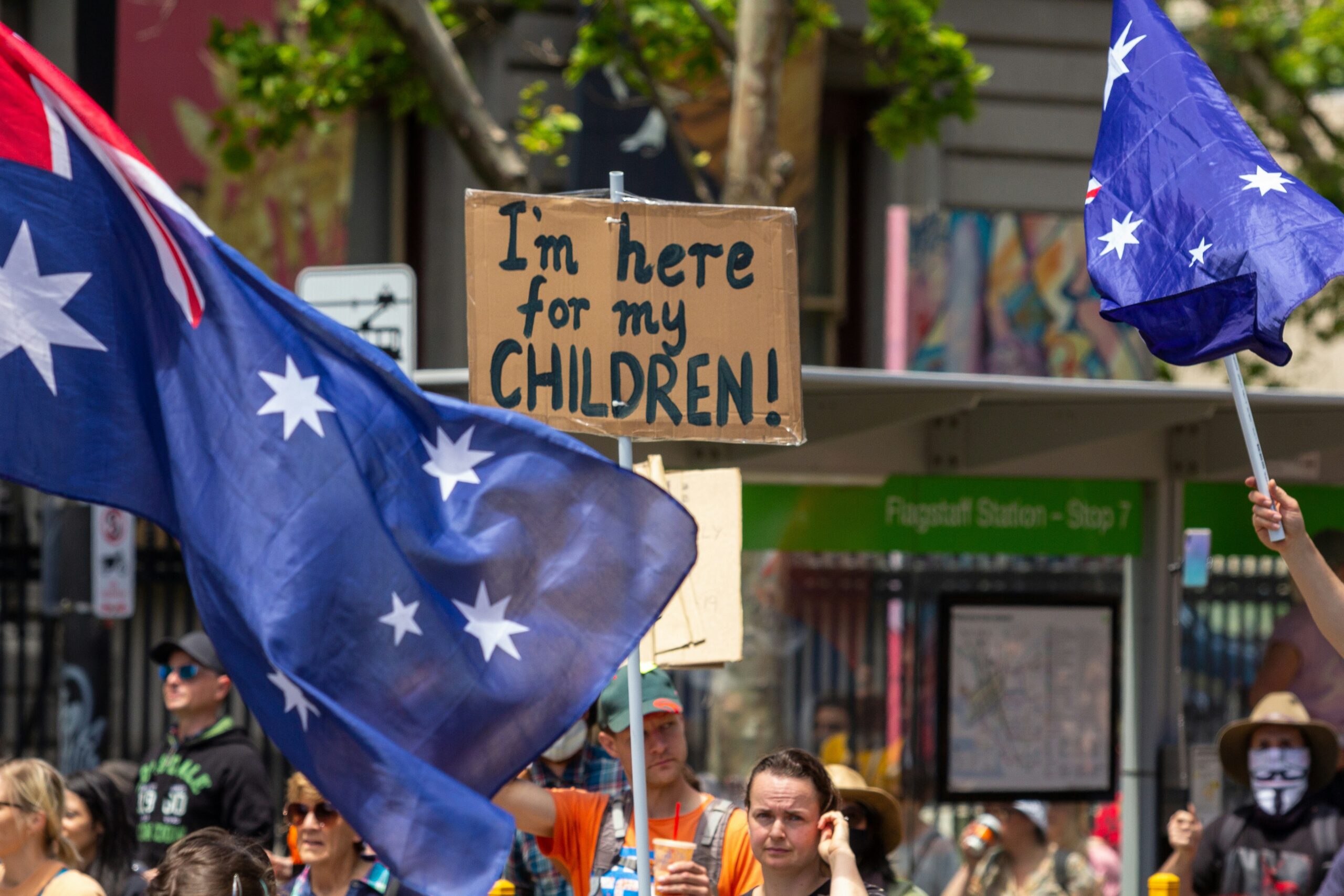
Simultaneously, Australia has had parallel demonstrations under the banner of the “March for Australia.” Rallies in August 2025 have drawn crowds of thousands across cities such as Sydney and Melbourne. While using a similar framing to the UK, protestors in Australia have presented themselves as a grassroots opposition to immigration and housing shortages.
They are evidently supported and exploited by self-proclaimed neo-Nazi and extremist groups, such as the National Socialist Network, which has openly promoted white supremacist rhetoric. The violent targeting of an Indigenous cultural site in Melbourne further highlighted how white supremacist actors are embedding themselves within broader nationalist mobilizations.
Political Rise
Though there are no active demonstrations or rallies occurring in the rest of Europe, there has been a notable rise in popularity of far-right parties — such as Germany’s Alternative für Deutschland (AfD).
The AfD in Germany was formed in 2013 and have since been denoted as a fascist group, by German intelligence — along with others — due to various antisemitic, anti-Muslim and anti-democratic sentiments held by numerous leaders of the party.
The leader of AfD party in Thuringa, Björn Höcke has been fined twice for using banned Nazi slogans. Co-founder of AfD, Alexander Gauland has minimized the impact of the Holocaust numerous times. AfD leaders in general have threatened deportation for German citizens of non-ethnic origin, specifically Muslims, foreigners and “non-assimilated” Germans.
The AfD demonstrates the rise of fascist movements as they went from winning 13.3 per cent of votes in 2017 election, to 11.3 per cent in 2021, then doubling it to 24.1 per cent in 2025 — becoming the second largest party in Germany.
The party’s electoral rise is just one of many, all of which can be found IPU Parline’s global data on national elections.
Active Clubs
The connecting factor from the streets to political offices are the mobilization of extremist groups and ideologies. One such development in the late 2010s was the emergence of Active Club Network, a decentralized network of small, militant fitness and social groups.
Largely inspired by neo-Nazi organizers like Robert Rundo of the Rise Above Movement, in the late 2010s, Active Clubs pioneered in the United States. Their model emphasizes physical fitness, martial training and male bonding as gateways into extremist ideology.
By 2025, Active Clubs have proliferated across North America, Europe and Oceania.
Though the numbers are not expansive — seemingly a few hundred to thousands —their influence lies in their tight-knit cells, propaganda reach and capacity for violence.
Active Clubs deliberately avoid centralized hierarchies, making them harder to disrupt legally. Instead, they share branding, training manuals and online propaganda, creating a recognizable identity without formal leadership.
After infiltrating WSAC’s Wickr group, a senior researcher at Hope Not Hate, Patrik Hermansson, shared his finding with BBC. He explained that these groups position themselves as part of a white resistance and believe in the necessity for separation of the white race from all others.
Active Clubs Influence in Canada
While relatively new, Active Clubs have begun forming cells in Canadian provinces, though the group size is relatively small, even a handful of members can pose risks as the model is built for replication and expansion.
The Clubs in Canada are using the same strategies as abroad — fitness training, social belonging and meme-driven propaganda to attract young White men in urban and university settings.
Implications of Global Extremism
The overview of the current global picture suggests that far-right movements are no longer confined nor isolated but have scaled beyond borders, creating a global ecosystem. Local protests in the UK, rallies in Australia or memes on Telegram are all formulated within the same transnational system of extremism.
Explanation for the Rise
Political analysts have identified several structural factors that explain the rise and spread of far-right ideologies.
- Economic Insecurity: rising inequality, housing affordability crises and precarious job markets foster resentment and create openings for scapegoating migrants and minorities. Studies across Europe show that economic dissatisfaction has strong correlations with support for far-right parties.
- Migration and Demographic Change: increased asylum flows caused by war, climate displacement and economic crises have allowed for immigration to be easily weaponized and used as a scapegoat for all political misfortunes. The UK’s asylum protests exemplify how local incidents can be leveraged into nationwide anti-immigrant sentiment. In Australia, housing crises continue to be linked rhetorically to immigration regardless of complex underlying causes. Both protests and their specific target of migrants as symbols of broader societal decline reflects how demographic uncertainties and unaffordability leads to hatred and anxieties, fuelling mobilization.
- Digital Platforms and Transnational Networks: social media has and continues to accelerate far-right narratives across borders, often through fascism disguised as irony, lifestyle branding and conspiracy theories. In the UK alone, over 76,000 online posts advocating for “remigration” were found in a 2025 study. Many of those posts originated from outside the country — illustrating the transnational nature of digital extremism. Canadian online communities also mirror slogans, memes and advocacy for “remigration,” Most of which originate from American and European extremists.
How Does This Affect You?
Studies from PubMed Central have indicated that adolescents and young adults are particularly susceptible to recruitment into far-right communities. Developmental factors such as identity formation, social belonging and exposure to online rhetoric make this age group particularly vulnerable to ideological influence.
While far-right ideologies do not pose immediate concern for the daily experience of most Canadian students, they are becoming increasingly visible in Canadian communities and campuses. Through both digital platforms and physical activities, these groups establish a presence via the blend of social, cultural and fitness-related content with political ideology.
—
Fostering awareness of extremist tactics, along with engaging in research-based education and open discussion spaces, serve as tools for reducing their spread and preventing their normalization in academic and social settings.