
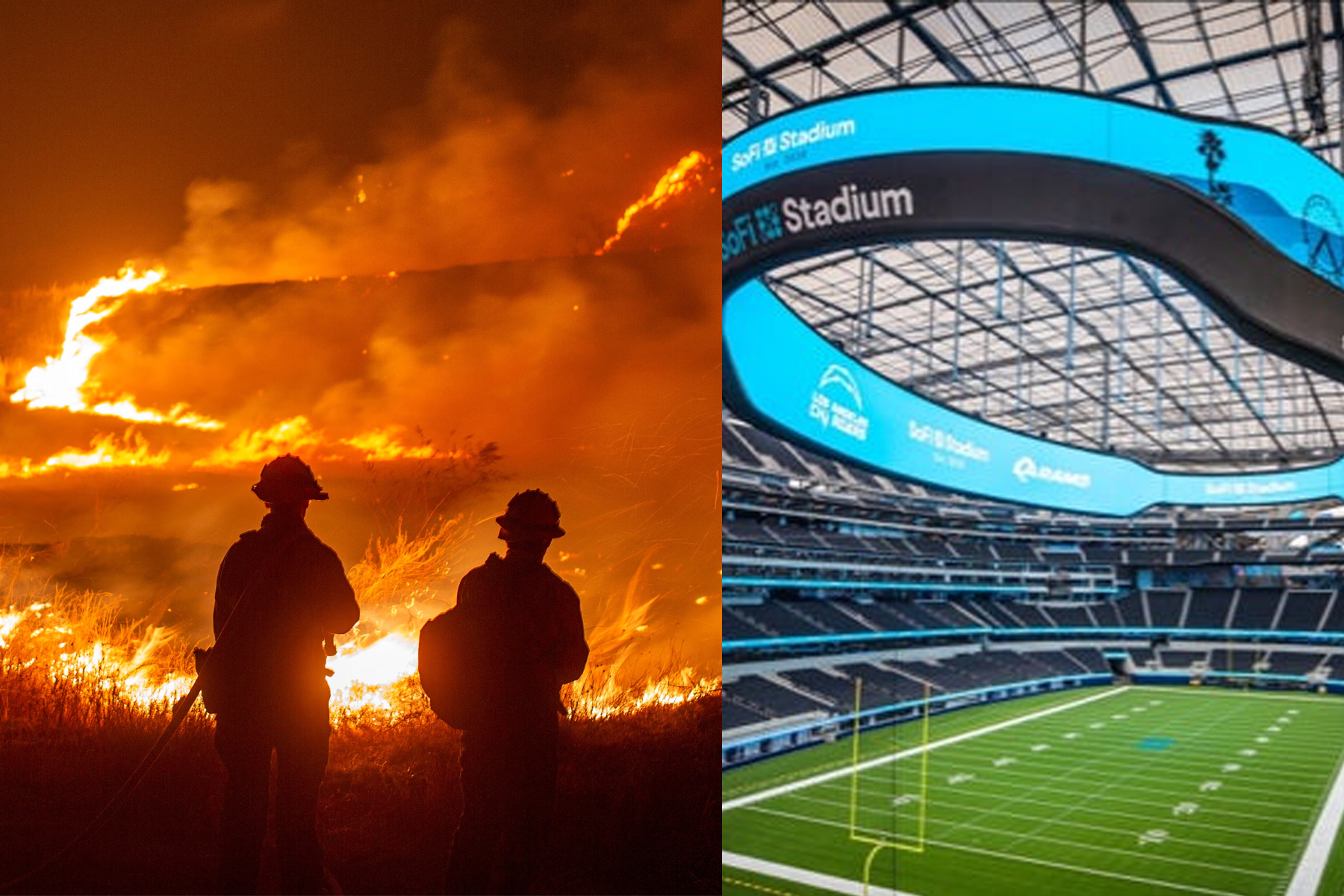
The L.A. wildfires have disrupted sports across the region, impacting athletes and forcing teams to navigate unexpected challenges.
The L.A wildfires are a recurring and devastating natural disaster in Southern California, fueled by a combination of extreme heat, strong winds and prolonged drought conditions. These fires often ignite during the late summer and fall months, when vegetation is dry and highly flammable.
In recent years, the intensity and frequency of these wildfires have increased, resulting in destruction that has displaced thousands of residents, destroyed homes and caused widespread air quality issues that extend far beyond the immediate burn zones. These fires not only affect communities but also disrupt daily life, including industries like sports.
The impact of the L.A. wildfires on sports has been significant, with athletes, teams and organizations forced to rapidly adapt to changing circumstances. High school and college teams in particular have struggled to find suitable venues for competition, with many relocating games to unaffected areas. Professional teams have also felt the strain, with concerns about the long-term health risks of competing in smoke-filled environments. Beyond the logistical challenges, wildfires have highlighted the vulnerability of sports to environmental disruptions, which can push leagues and organizations to rethink their preparedness for such crises.
One of the most prominent examples was the Genesis Invitational, a PGA Tour event hosted by Tiger Woods. Originally scheduled at the Riviera Country Club in Los Angeles, the tournament was forced to relocate to the Torrey Pines Golf Course in San Diego due to hazardous air quality caused by the fires. The decision was made after organizers received reports of unbreathable conditions and concerns from players about the safety of competing in such an environment. The event, held in February 2025, not only changed locations but also became a platform for raising awareness about the fires, with proceeds from certain initiatives directed toward relief efforts.
Similarly, the NFL faced a major disruption when the Los Angeles Rams had to move their Wild Card playoff game against the Minnesota Vikings. Originally scheduled to take place at SoFi Stadium, the game was relocated to Glendale, Arizona. This decision came after consultations with local officials, who expressed concerns about the strain on emergency services and the health risks of hosting a large-scale event during the fires.
The University of Southern California (USC) women’s basketball team faced a disruption when their game against the Northwestern Wildcats was postponed due to wildfires. Originally scheduled to be played at the Galen Center in Los Angeles, the decision to postpone was made in response to deteriorating air quality.
Similarly, the top-ranked University of California, Los Angeles (UCLA) women’s basketball team had to relocate their game against Penn State. Originally set to take place on UCLA’s campus in Westwood, the game was moved to the Walter Pyramid at Long Beach State University, approximately 35 miles away. This relocation was necessitated by concerns about air quality and safety near UCLA.
The devastation caused by the L.A. wildfires serves as a reminder of the challenges faced by communities in the region, including athletes and sports organizations. While games can be rescheduled and events relocated, the impact on individuals — whether it’s athletes displaced from their homes or residents losing everything to the fires — cannot be understated.
While sports offer a temporary escape and a sense of normalcy during such crises, the wildfires serve as a sobering reminder of the challenges many are currently facing. Beyond the games, the focus must remain on supporting those affected, fostering community solidarity and addressing the environmental factors that make such tragedies more frequent. By acknowledging the bigger picture of these events, we can ensure that the sports world not only adapts but has the ability to raise the voices of those who need help the most.