
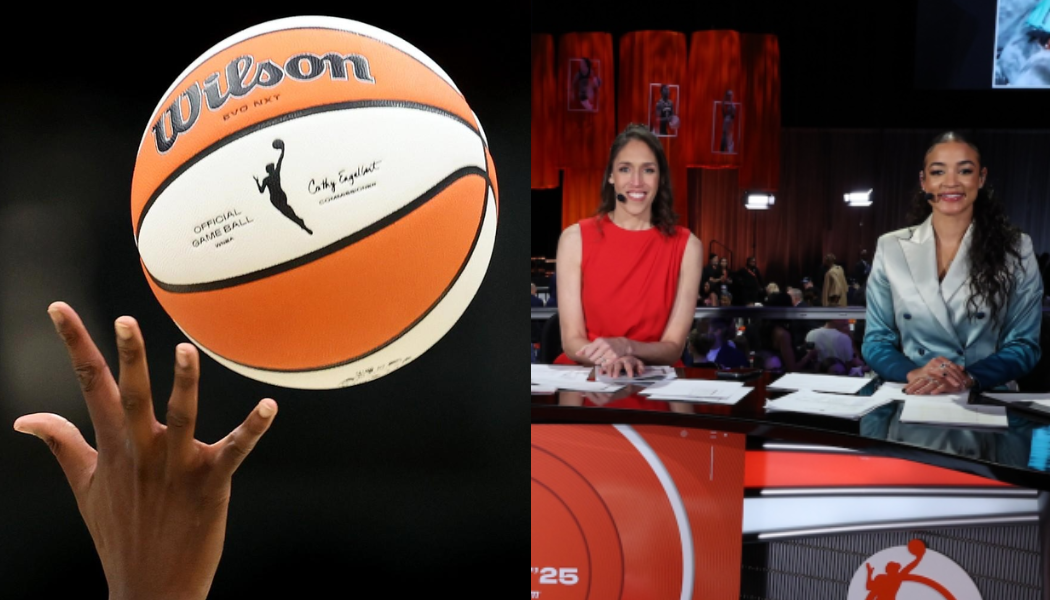
Broadcasts of women’s sports continue to differ from men’s coverage in ways that are visible, documented and traceable to specific on-air decisions. Across basketball, soccer and tennis, clear examples show how women are described and analyzed differently, while also given different production treatment, even in the highest profile competitions.
One of the clearest examples occurred in the 2023-24 NCAA women’s basketball season, when South Carolina centre Kamilla Cardoso — then one of the most dominant players in the college league — was described during a broadcast as “a big Brazilian girl who knocks down people.” Cardoso was a senior at the time, a national champion and the 2024 SEC Defensive Player of the Year. Male players of her size and style — whether in NCAA or NBA broadcasts, —are typically described with terms like “dominant in the paint,” “physically imposing” or “rim protector.” The phrase used for Cardoso stood out because comparable language is not applied to male athletes.
A major study from USC and Purdue analyzing over 250 televised games found that broadcasters introduced personal life storylines five times more often in women’s basketball games than in men’s games. Examples included extended on air segments about Sabrina Ionescu’s family, upbringing and relationship with Kobe Bryant during the 2019 NCAA Women’s Tournament, while men’s tournament broadcasts during the same week focused almost exclusively on strategy, matchups and analytics.
Soccer provides even more stark examples. During the 2015 FIFA Women’s World Cup, FOC commentators repeatedly referenced U.S. goalkeeper Hope Solo’s off field legal situation during match play. In contrast, during the 2014 and 2018 Men’s World Cups, male players facing off field investigations did not have those issues discussed during live match broadcasts. The Women’s Sports Foundation’s media audit logged this discrepancy directly from broadcast footage.
Production inequality is also visible on record. During the 2022 NWSL Challenge Cup, several nationally broadcast matches were filmed using one fixed camera angle, a setup normally reserved for youth games, not professional leagues. The NWSL publicly apologized and acknowledged the limited resources. For comparison, MLS games that same year used between 10 and 16 cameras, according to Apple TV’s production guide.
Tennis shows similar discrepancies. The 2022 Wimbledon women’s final between Elena Rybakina and Ons Jabeur drew over three million viewers on BBC One, outperforming several men’s matches that year. Despite that, BBC’s broadcast schedule allocated significantly less post-match tactical analysis for the women’s final than for the men’s matches played earlier in the tournament.
The difference in how physicality is framed appears in both professional and college sports. In a 2018 WNBA broadcast, Los Angeles Sparks forward Nneka Ogwumike was described as “surprisingly strong.” Broadcast transcripts show this phrasing stood out because male forwards of similar size and athleticism were described during the same season using terms like “bruiser,” “anchor” and “elite defender.”
Even at moments of record visibility, broadcast framing differs. The 2023 NCAA women’s championship game, LSU vs. Iowa, drew 9.9 million viewers, the most viewed women’s college basketball game ever at the time. ESPN’s own programming logs show the pregame coverage focused heavily on personal features: Angel Reese’s family background, Caitlin Clark’s childhood and motivational stories. Meanwhile, the men’s championship pregame that year prioritized KenPom analytics, defensive efficiency matchups and coaching scheme breakdowns.
These examples show documented, traceable differences in how women’s sports are presented on air. The consistent pattern across these cases is not based on interpretations but on specific, recorded broadcast choices that have been analyzed in major academic and media studies.