

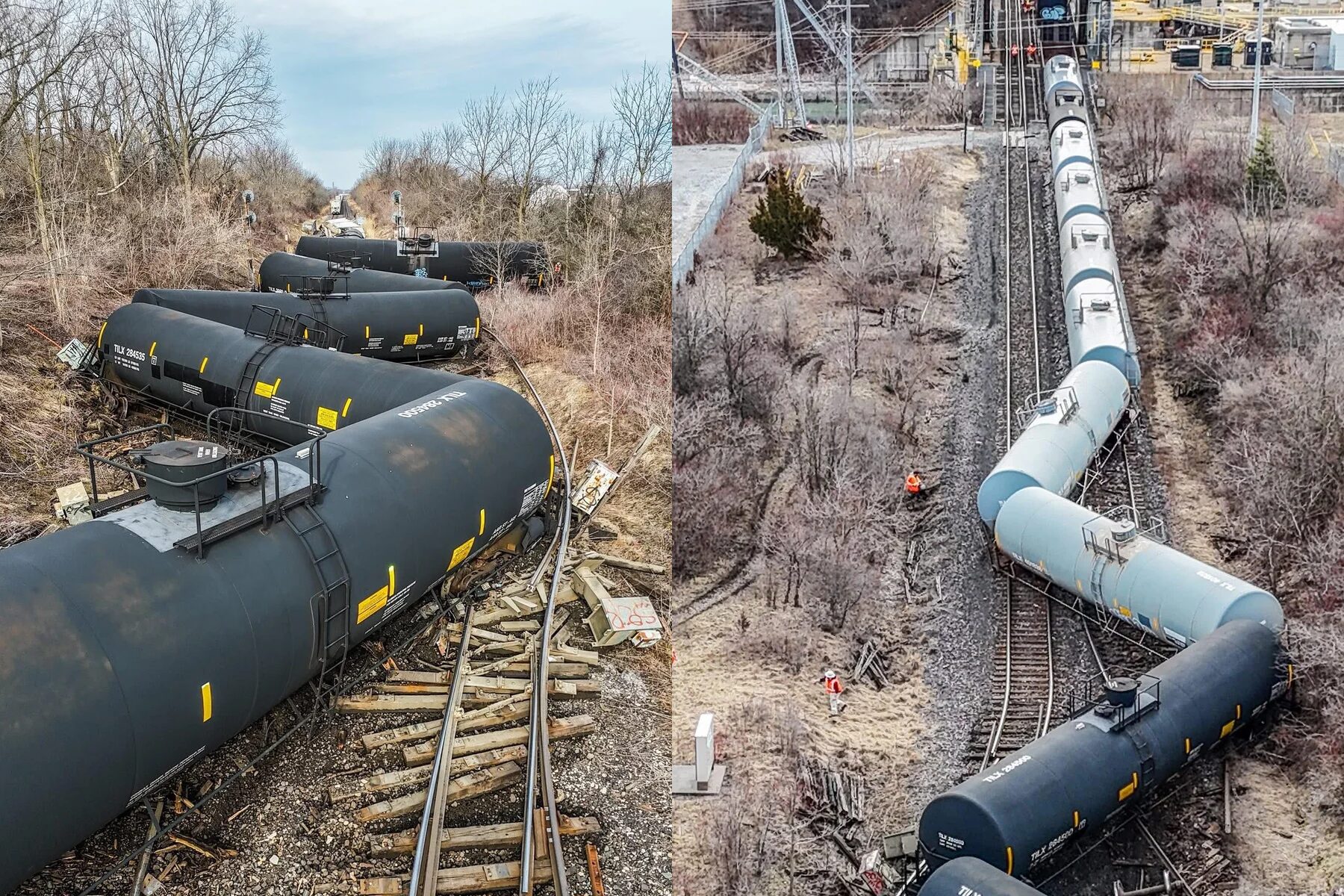
The CN freight train derailment in St. Catharines is another reminder of why it’s never a good idea to allow a private corporation to own and maintain important infrastructure.
About a week ago, a Canadian National (CN) freight train derailed while passing through St. Catharines. The derailment resulted in the spillage of polyethylene, a nonhazardous chemical, as well as the closure of both a Welland Canal Bridge and GO train service to the region.
For the purpose of this article, “important infrastructure” is defined as infrastructure that is critical for the operation of different industries and is the sole piece of infrastructure of its kind.
For example, the 400 series highways are critical pieces of infrastructure that serve to support several industries by allowing their workers or goods to move around freely. Because of this role and the lack of similar alternatives, it makes sense for these highways to be operated by the public for the public good.
The only exception would be for the corridor where highway 407 overlaps with the other 400 series highways. An argument for privatization does exist since similar competition is available. However, the fact that it was publicly funded, sold for a negligible amount of money and now there’s an expanded congestion issue raises a different, case specific, argument entirely on whether it should’ve been sold.
Corporations in general should not be allowed to both operate and maintain the infrastructure they use for monopolization, as accumulation of assets often leads to poorly maintained infrastructure in the name of cost cutting.
Railroads are prime examples of this. When a freight corporation owns the railroad tracks it operates on, it’s incentivized to maintain them at the lowest possible standards that it can get away with.
This wouldn’t be a problem if it did not jeopardize public safety and if the railroads didn’t have other purposes.
A derailment near a major population centre has the potential to endanger the lives of thousands of people. In 1979, a freight train derailed in Mississauga, resulting in the largest peace time evacuation in North America up until Hurricane Katrina.
The train was carrying several chemicals that, if spilled, posed a risk to human life. The chemicals included caustic soda, toluene and chlorine. Nobody was killed during the incident, but around 218,000 people were forced to evacuate.
The derailment occurred when a lubrication was improperly applied to the wheels of a rail car, causing it to overheat and come off the car.
Now, the danger posed in the St. Catharines derailment was thankfully less severe than what occurred in Mississauga. The fact remains, however, that cost cutting measures resulting in poor training, poor oversight or poorly maintained equipment should not be allowed to jeopardize the safety and lives of thousands of people.
Railways also serve their communities by opening up the potential to passenger rail services or hosting existing passenger rail services that can, or already do, aid in alleviating traffic woes.
The government should step in to either more strictly regulate railways, nationalize the rails or force a separation between who owns the railways and who operates on them.