
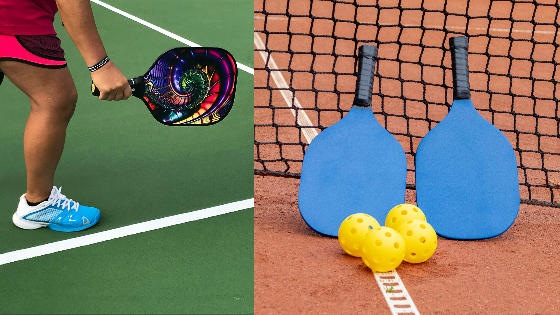
Pickleball, once an improvised backyard diversion, has become one of the most rapidly expanding sports in North America, with nearly twenty million participants in the United States as of 2024.
Its transformation from a family pastime to a recognized professional sport shows how accessibility and institutional support can converge to elevate an activity into a global phenomenon. Understanding this trajectory requires attention to its origins in the 1960s, the processes of formalization that followed and the social forces that explain its present-day popularity.
The game traces its beginnings to the summer of 1965 on Bainbridge Island, Washington. Joel Pritchard, then a U.S. Congressman, together with friends Bill Bell and Barney McCallum, devised a game to entertain their children when traditional sporting equipment was unavailable.
They adapted a badminton court, used ping-pong paddles and substituted a perforated plastic ball for the shuttlecock. The rules evolved quickly, with modifications such as lowering the net and instituting underhand serving to make the game easier to learn and playable across age groups.
The origin of the name “pickleball” has long been debated. One story credits the Pritchards’ family dog, Pickles, while other traces it to the rowing term “pickle boat,” which refers to crews assembled from leftover rowers. USA Pickleball and family accounts suggest that the latter explanation came first, with the dog named afterwards, though both stories remain part of the game’s lore.
The sport’s early spread was regional, largely within the Pacific Northwest. By 1967, the first dedicated pickleball court was constructed near the Pritchard home, signaling a move from improvisation to permanence. In 1972, Pickle Ball, Inc. was established to manufacture paddles, distribute equipment and protect emerging rules.
A critical milestone arrived in 1984 with the formation of the United States Amateur Pickleball Association, later renamed USA Pickleball, which published the first official rulebook. These developments provided the foundation for tournament play, standardized competition and eventual national recognition. Throughout the 1980s and 1990s, the sport gained traction in community centers and, notably, in retirement communities in Arizona and Florida, where its accessibility made it attractive to older adults.
The twenty-first century marked pickleball’s entry into mainstream recreational life. Between 2008 and 2015, the number of U.S. courts expanded from roughly 1,500 to more than 12,000, reflecting institutional investment and community adoption. By 2020, pickleball was already recognized as one of the fastest-growing sports in the country, but the COVID-19 pandemic accelerated its reach.
With restrictions limiting indoor gatherings, outdoor and socially distanced activities became highly desirable. Pickleball precisely offered that balance of social engagement and safe recreation. Municipalities repurposed tennis courts with pickleball lines and retailers saw demand for paddles and ball surge. According to the Sports & Fitness Industry Association, participation rose by more than 223 per cent between 2020 and 2023, reaching 13.6 million players. By 2024, that number climbed further, with nearly 19.8 million Americans playing the sport.
The sport’s rapid ascent has been shaped by cultural and commercial forces. In recent years, professional tours have emerged, complete with sponsorships, prize money and media coverage. Celebrities and professional athletes from other sports have invested in pickleball teams, lending visibility and credibility. This professionalization has further reinforced its image as more than casual pastime. Yet, its fundamental appeal remains tied to its inclusivity and adaptability. Unlike many sports that require years of training before meaningful participation, pickleball offers a quick learning curve while still allowing skilled players to refine technique at the highest levels.
In less than six decades, pickleball has evolved from an improvised family game into a sporting and cultural phenomenon. Its combination of accessibility, institutional support and capacity bridge generational divides, leading the sport to secure its place in the contemporary athletic scene. Today, whether in recreational leagues, community programs or professional tournaments, pickleball represents not simply a trend but a lasting reconfiguration of how sport can engage wide populations. Its enduring popularity underscores the ways in which a simple innovation, nurtured by community adoption and cultural timing, can reshape the world of recreation and sport.