
Tuesday, February 17, 2026
Brock's Only Independent Student Newspaper
One of the only worker-managed newspapers in Canada

Visa dispute strains US-Iran World Cup plans  

|
|

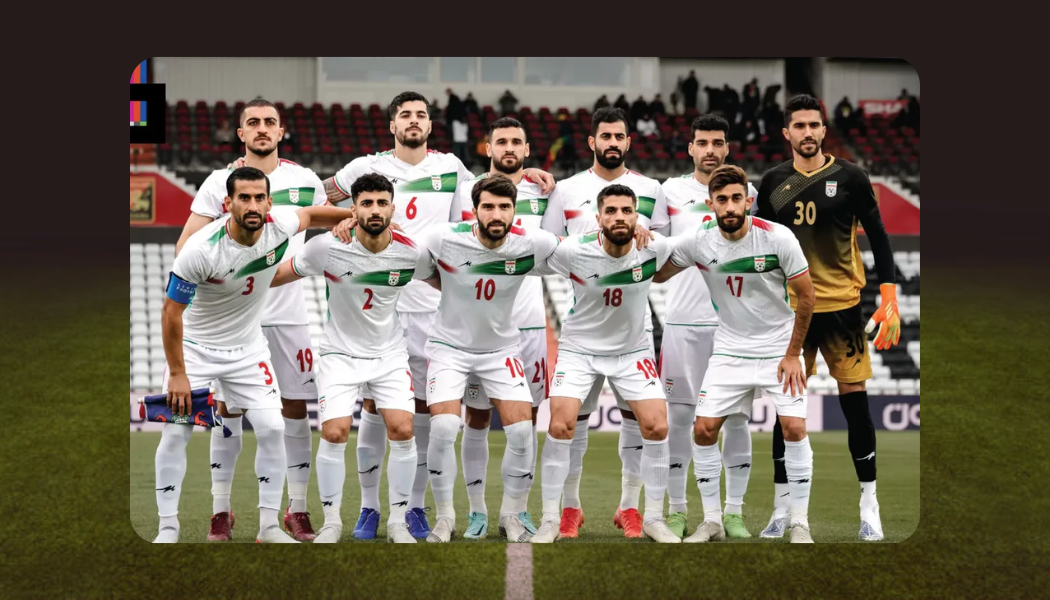
The United States has refused entry visas to several members of the Iranian delegation scheduled to attend the draw for the 2026 FIFA World Cup, a move that prompted the Iran Football Federation (FFIRI) to initially boycott the event. 

According to FFIRI officials, the U.S. denied visas to several senior delegates, including the federation’s president, Mehdi Taj, citing what Tehran described as “restrictions unrelated to sport.” The visa refusals reportedly affected five members of a nine-member delegation who applied to attend the draw ceremony in Washington, D.C. on Dec. 5.  

The decision has stirred controversy, because under U.S. policy — including exemptions tied to the 2025 travel restrictions under Proclamation 10949 — athletes, coaches and necessary support personnel travelling for major sporting events are allowed entry. According to FFIRI, the visa denials “have nothing to do with sport,” a phrasing that underlines Tehran’s view that the move was political.  

In response, the federation sent a formal notification to the tournament’s governing body, FIFA, stating the affected officials would not attend the draw. An FFIRI spokesman argued that the U.S. decision undermined the spirit of sporting cooperation and violated the assurances given for the World Cup.  

Eyebrows were raised internationally, given that the 2026 draw is a key event for fans, media and national teams worldwide. Regardless, the visa rejection reflects an intersection of sport and geopolitics, one where diplomatic tension has spilled into global athletics. Observers note that the U.S.-Iran relationship has long been fraught, as currently, Washington’s travel restrictions on numerous countries, including Iran, remain in force.  

However, developments in the days following have complicated the story. While several high-ranking officials were denied, at least partial entry was granted. Among those given visas were Iran’s Head Coach, Amir Ghalenoei, along with a few other officials, which is enough to ensure that the draw would still include an Iranian presence. 

As of Dec. 5, those cleared by U.S. authorities attended the draw ceremony in Washington, although the initial boycott threat underscored Tehran’s discontent.  

This situation highlights enduring challenges faced by Iranian sports bodies navigating U.S. immigration rules, even when the event is athletic, not political. For some, it raises questions about fairness, consistency and whether sport can ever be insulated from geopolitics.  

More by this author

RELATED ARTICLES

Key free agent moves in the MLB thus far  

As MLB free agency slowly comes to an end, there are still major moves being made. While some are bigger than others, many names have been swept under the rug or have failed to receive much attention, especially considering the current landscape of the league and how much drama there was in January. 

The Epstein files and sports figures  

In early 2026, the U.S. Department of Justice released more than three million pages of documents under the Epstein Files Transparency Act, fulfilling a legal requirement to make long-withheld records relating to convicted sex offender Jeffrey Epstein and his network of contacts public. These files include emails, correspondence and other material mentioning a range of public figures — including several connected to the sports world.

Black athletic greatness has never come without weight  

Black History Month offers an opportunity to look closely at how Black athletes have shaped sport not just through talent, but through moments of consequence. Their legacies are built on specific decisions, performances and risks that changed what was possible for those who followed. In this context, greatness is inseparable from pressure and the cost of carrying it. 

Midseason metrics are defining the Unrivaled title race  

As the 2026 season of Unrivaled reaches its midpoint, the shape of the tournament is becoming clearer through the standings and the statistical separation between teams.

Men’s basketball: Brock controls York in 83-71 win 

Brock didn’t need a miracle on Wednesday night at Bob Davis Gymnasium, just a steady grip on the game from the opening tip and the discipline to never let York breathe. The Badgers, who were already rolling at 13-4, handled business with an 83-71 win over the Lions (3-14) on Jan. 28, building an early lead and managing the rest like a team that knows exactly what it’s doing.  

Parity makes sports entertaining, but not always better  

Parity is one of the most frequently invoked — and most misunderstood — ideas in modern sports discourse. It’s often reduced to a simple visual: different teams winning championships, standings that look “balanced” or a league where no single empire dominates for too long.

The cost of being seen in women’s sports  

In women’s sports, visibility is often framed as progress. More broadcast deals, sponsorships and social media attention are presented as unquestionable wins after decades of marginalization. However, increased visibility brings a parallel demand that is far less discussed: protection.

Brock handles business at home against York   

The Brock Badgers women’s basketball team hosted the York Lions in an unusual Wednesday evening game on January 28th in the Bob Davis Gymnasium. Coming into the contest, the two teams were tied for second place in the OUA Central Division with a 10-6 record, looking to gain an edge over one another as the playoffs loom.