

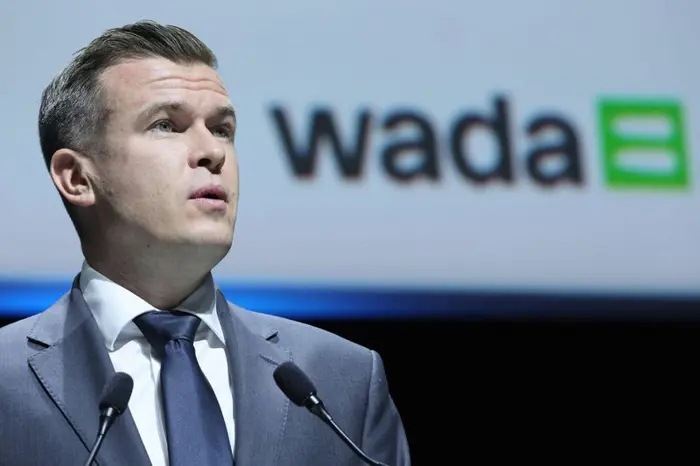
The World Anti-Doping Agency (WADA) has delayed a decision that could potentially impact Donald Trump’s presence at major international sporting events, pushing any outcome until after the 2026 FIFA World Cup.
The issue stems from an ongoing dispute between WADA and the United States government over unpaid financial contributions. The U.S. has withheld more than $7 million in dues across 2024 and 2025, citing concerns about WADA’s handling of certain doping cases, including a controversial investigation involving Chinese swimmers. This funding standoff has led WADA to consider new rules that would penalize governments that fail to meet their obligations.
Among the most significant proposals is a measure that could bar government officials from attending major sporting events if their country withholds funding. While the rule would apply broadly, it has drawn attention because it could affect high-profile figures such as Trump and other U.S. officials.
However, during a recent executive committee meeting, WADA opted not to move forward immediately. Instead, the organization postponed a final decision until this September — two months after the World Cup concludes. The tournament, which will be co-hosted by the United States, Canada and Mexico, is set to begin in June and remains unaffected by the current proposal.
This delay effectively removes the possibility of any ban taking effect during the World Cup itself. Even if the rule is eventually adopted later this year, it would more likely come into force ahead of future events, including the 2028 Olympic Games in Los Angeles.
The situation reflects a broader, long-running tension between WADA and U.S. officials that spans multiple administrations. The withholding of funds began under previous leadership and has continued into the current administration, suggesting the dispute is less about individual politics and more about structural disagreements over how global anti-doping efforts are managed.
WADA has emphasized that stable funding is essential to maintaining the integrity of international sport. According to its leadership, financial uncertainty can directly affect the effectiveness of anti-doping programs and, ultimately, the fairness of competition for athletes worldwide. At the same time, questions remain about how enforceable such a rule would be, particularly when it comes to restricting elected officials from attending events hosted within their own country.
For now, the delay provides temporary clarity. The World Cup will proceed without the complication of potential political bans, allowing organizers to focus on the logistics of hosting one of the largest sporting events in the world. The underlying conflict, however, has not been resolved.
As WADA prepares to revisit the proposal later this year, the outcome could carry significant implications — not only for U.S. involvement in global sport, but for how international governing bodies enforce accountability among member nations.