

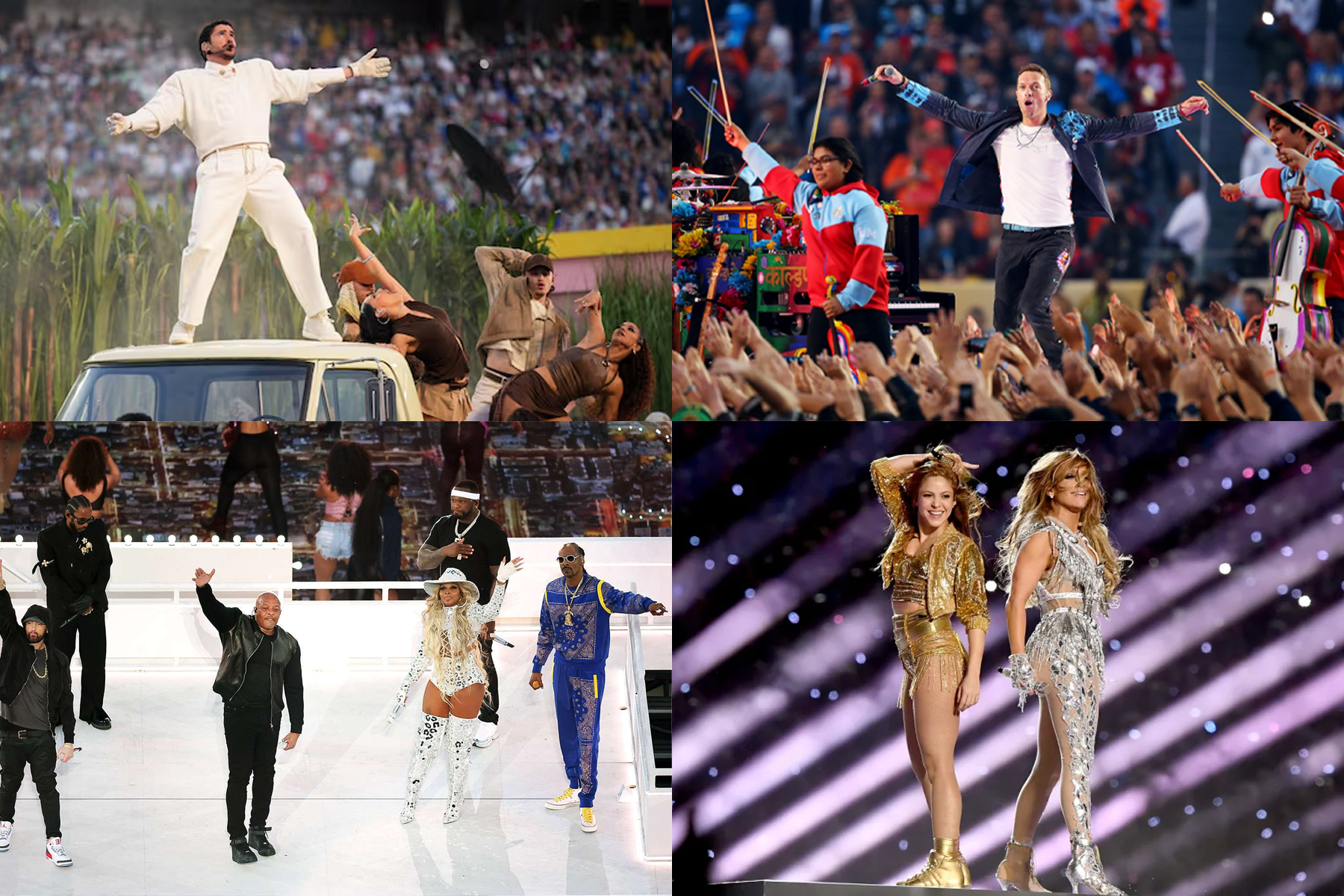
The halftime show is supposed to be a break. A pause. A moment for players to catch their breath and for coaches to make adjustments that might actually decide the outcome of the game. Instead, it has turned into a full-scale concert that just happens to interrupt a sporting event.
Somewhere along the way, sport became the opening act.
The modern halftime show — especially the one attached to the Super Bowl — doesn’t really pretend to be secondary anymore. It is the centrepiece. It is rehearsed, marketed and dissected with more intensity than the game itself. Entire audiences tune in just for those 12 to 15 minutes, treating the actual sport as background programming that fills time before and after the performance.
It’s not even subtle. Weeks before kickoff, coverage shifts toward the performer: what they might wear, which songs they’ll choose, whether there will be surprise guests and how elaborate the stage design will be. Analysts break down rumours like they’re game film. By the time the teams actually take the field, it feels like a pre-show for something else entirely.
And when halftime finally arrives, everything stops — not for strategy, but for spectacle.
In a matter of minutes, a full concert stage appears out of nowhere. Platforms rise, lights flood the field, dancers hit their marks and, suddenly, a football stadium becomes a global tour stop. Then, just as quickly, it all disappears. The field resets, the players come back out and the game resumes like it wasn’t just temporarily replaced by a live music production with better lighting than most arenas.
It’s impressive. It’s also a little absurd.
Performers like Rihanna and Beyoncé have delivered halftime shows so dominant that they reshaped the entire memory of the event. Not because the game itself lacked quality, but because the performance exists on a completely different scale. You don’t walk away debating play calls or defensive schemes; you remember the visuals, the choreography, the moment someone appeared out of nowhere and the crowd lost it.
That’s the shift. The halftime show isn’t interrupting the game — the game is interrupting the concert.
There’s also something strange about the audience dynamic. Tens of thousands of fans pay to attend a live sporting event, only to collectively focus on a concert they didn’t explicitly choose. Millions more watch from home with no investment in the teams involved, but full investment in the show. It creates this odd split where one part of the audience is waiting for the game to resume, while the other is hoping it never does.
And yet, both groups sit through the same thing, whether they like it or not.
Outside of the Super Bowl, halftime still resembles what it used to be. University games, smaller leagues and local events often feature marching bands, dance teams or short performances that feel connected to the sport rather than competing with it. There’s a kind of honesty in that approach. It acknowledges halftime as a pause, not a takeover. No one is pretending it’s the main attraction, and because of that, it doesn’t have to be.
But once you’ve seen the bigger version, it’s hard to unsee it. Silence starts to feel like a missed opportunity. A simple break feels incomplete. There’s this expectation now that halftime needs to justify itself, that it needs to entertain at a level that rivals the event it’s interrupting.
The irony is that halftime shows were never meant to carry this kind of weight. They were filler, something to keep the crowd engaged while the real focus regrouped. Now, they are often the most talked-about part of the entire night.
The final score might decide who wins, but halftime decides what people remember. And increasingly, it’s the concert in the middle of the game — not the game itself — that sticks.