

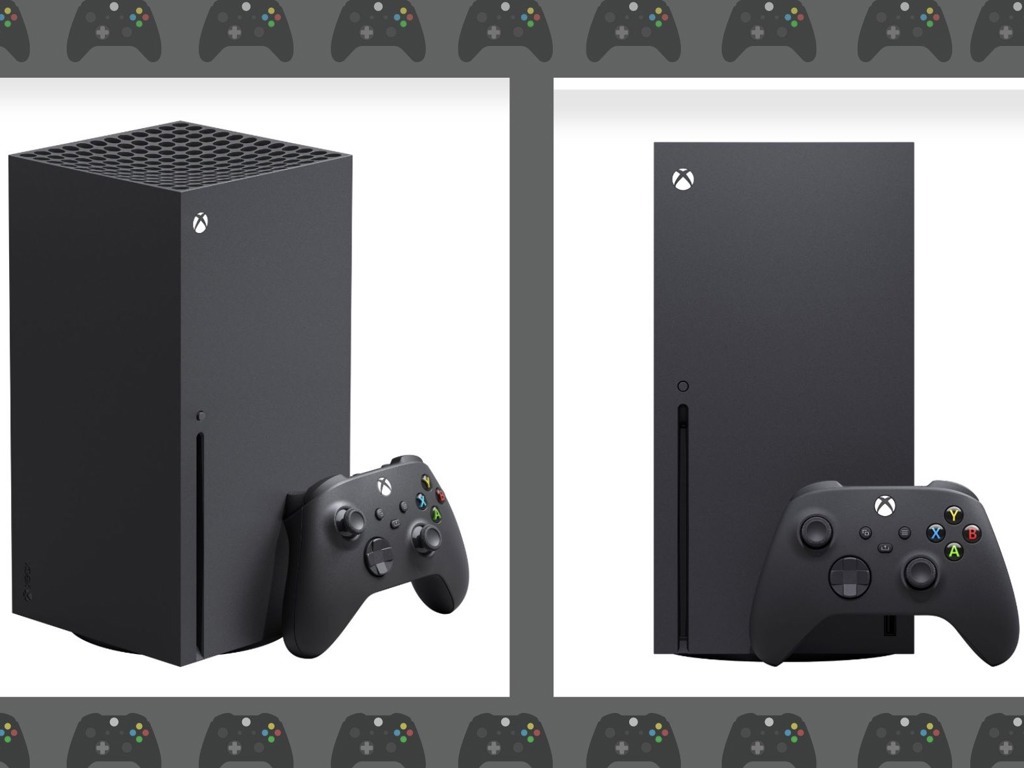
Xbox’s potential strategy to release their exclusives on competitors’ platforms risks throwing off the balance of the video game industry.
Last week, prominent industry insiders detailed Xbox’s supposed plans to launch formerly exclusive titles on platforms like Sony’s PlayStation 5 (PS5), a direct competitor to Microsoft’s Xbox Series X/S. A post on X (formerly Twitter) by Phil Spencer, CEO of Microsoft Gaming, has revealed that there may be some truth to these claims, with him promising a “business update event” for this week that will detail the company’s “vision for the future of Xbox.” This would eventually materialize in an upcoming podcast scheduled to air on Feb. 15.
If this is true, it is nothing less than an admission that the Xbox brand is in a terrible state that pales in comparison to its competitors, the hugely successful PS5 and Nintendo Switch.
The PS5, which launched merely two days after the Xbox Series X/S in November 2020, has sold much better than Microsoft’s offering. It is reported that the PS5 sold 22.5 million units in 2023, vastly beating Xbox’s sales of 7.6 million units across the same period. Nintendo’s most recent financial report reveals that the Switch has sold a whopping 139.36 million units since its launch in March 2017, which also massively outpaces Xbox’s recent console sales.
Both the Xbox Series X/S and PS5 have suffered a drought of exclusive games throughout this console generation, something that can likely be attributed to the increasing technical demands of more powerful hardware. However, while short, the PS5’s list of major exclusive games still has a higher quantity than Xbox Series X/S – and for many players, many of Sony’s games are higher quality too. One of these titles is the recently released Marvel’s Spider-Man 2, which was received significantly better than Xbox’s flagship 2023 offering, Starfield.
It doesn’t help that many would-be Xbox exclusives are also released on PC, meaning PC gamers don’t need to invest in an Xbox system to play the latest games. Many new titles exclusive to the Xbox brand are also playable on the Xbox One – the Series X/S’ predecessor – so owners of that system might not feel the need to make the upgrade.
Speaking of the Xbox One, Spencer admitted last year that “[Microsoft] lost the worst generation to lose in the Xbox One generation, where everybody built their digital library of games.” In other words, many players purchased games digitally last generation, and Spencer feels they’re more likely to stick with whatever brand they used then, so they can carry their digital library forward into future consoles.
Whatever the reason for Xbox’s dwindling sales may be, the potential strategy to move exclusives to their competitors’ hardware would be an admission of Microsoft’s failures in the video game industry.
This profit-driven change could dissuade consumers from purchasing an Xbox console and will likely disappoint loyal Xbox fans who feel connected to the gaming brand. It would almost be an abandonment of Xbox’s most loyal customers; it would make their console less valuable to gain some cash from their competitors’ fans.
This change may also reveal Xbox’s plans to eventually leave the console business altogether and become a third-party software-only developer as Sega did in 2001. Sega, who had once been a prominent hardware developer and a direct competitor to Nintendo, saw their Saturn and Dreamcast consoles fail commercially before pivoting to becoming a third-party developer for the brand that used to be their competitor. At this point, it’s not hard to imagine Xbox ending up in the same place.
It’s no secret that Xbox has made some major mistakes over the last two console generations, most recently acquiring major third-party developers and struggling to use them to create meaningful exclusive content. Despite all of their issues, however, it would be a shame to see one of gaming’s “big three” exit the hardware industry. Such a move also risks shattering the fragile competitive balance in the gaming industry, as strong competition forces companies to create better content in order to outperform each other.
While Xbox has yet to officially confirm or deny these leaks, it’s still concerning to think about what implications their potential plans might have on the future of the video game industry.