

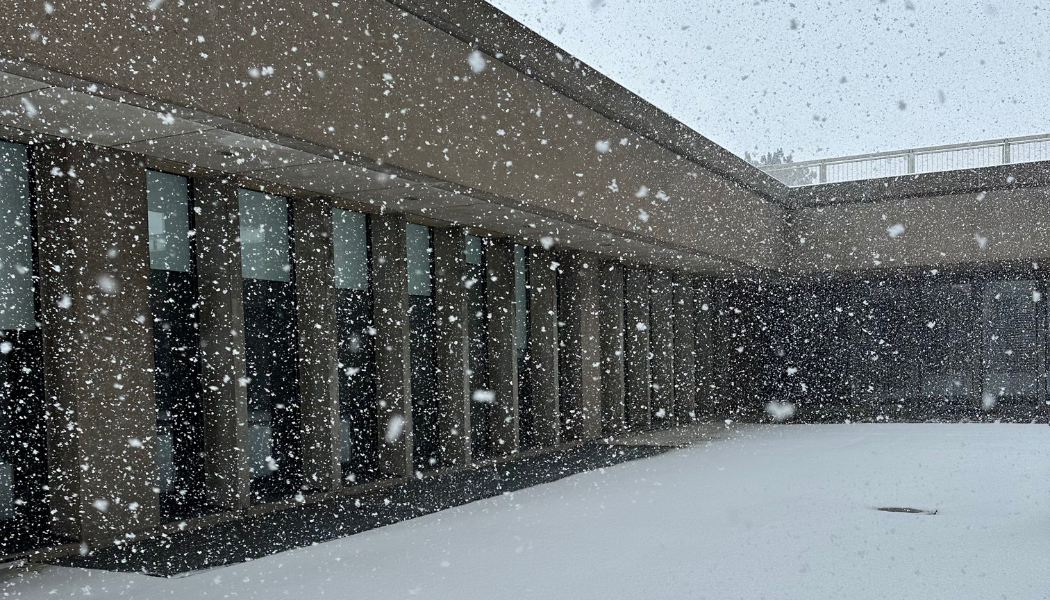
As it gets cold, the late October breeze metamorphosing into a biting chill characteristic of early November, I can’t help but lose myself to the melancholy that comes with reminiscing. Then, as the snow falls and the world turns white, I inevitably get lost in what could have been.
It happens every year. As the world around me starts to freeze, I find myself transported back to a particular period of my life that I spend the rest of the year actively trying to forget. Google says grief is cyclical and it must be right because every winter, without fail, I begin to mourn the loss of my first love.
It caught me off guard the first time it happened. I was sitting bundled up on the steps of my front porch, waiting for a friend to come pick me up, when a wisp of frozen air danced across my chilled cheeks — the first sign of impending winter. The feeling that rose inside my chest sent a chill down my spine, as if suddenly I was right back where I had been a year earlier, in the deepest trenches of violent heartbreak. It sent me into a spiral for a week.
As I relived it all — warm hands clasped in mine, steaming hot cups of green tea, late night drives gazing out at the world bathed in streetlight — it was easy to lose myself in the sadness. It took everything in me not to dive headfirst back into the deep end of devastation.
Grief is funny like that.
It wasn’t as though the end of that relationship came as a surprise. No matter how hard I tried to hide from it, I knew it was coming. We were like drunk drivers — it was never a question of if we’d crash, but when. When we did, the windows opened as we went into the lake, and I tried everything I could to keep the water out. Barricading my body against the windows, screaming for help. Maybe we both did. Maybe we both tried our best.
But that doesn’t change the fact that the car is still rusting at the bottom of the lake; a suburban legend locals whisper about like a ghost story.
Sometimes, I let myself wonder if any of it ever happened at all — that is, until all the leaves start to change colours and desert the trees, leaving behind a skeleton stripped bare: a ghost of something beautiful. As I watch all the tree’s hard work, the buds that had bloomed in the spring and the foliage that thrived in the summer, abandon the roots that worked so hard to foster such growth, any doubts I might have disappear.
There is something to be said about moving on.
It doesn’t matter how many months or years pass by. Knowing that I loved in such an ugly way that I managed to spill it all over my clean white spirit; bite marks on arms, my teeth blood-stained, crooked and yellow. I was yanked away so hard that my brain shook in my skull.
It’s easy to fall back into it. To become a different person; someone you don’t recognize in the mirror.
The most fascinating part is how little it affects me during any other part of the year. I often go multiple months without thinking about this period of my life, caring very little about how things ended. Yet, the moment the weather starts to get cold, I drown in it; cement blocks tied to my feet, dragging me down.
I used to blame myself for an inability to move on, disgusted by my incapacity. Other people seemed so good at putting this kind of stuff behind them. I’ve since learned how untrue that really is.
It’s okay to wake up one day and miss someone you lost long ago, but you can’t let it overtake you.
Love is difficult. It’s one of those things you don’t just get over, no matter how amicable the separation was. Even when you can confidently look back at your reflection and know that you are no longer in love with the person you lost, love is never really gone. Instead, it’s redistributed, sprinkled all around like confetti.
These days, I’ve been doing a lot more swimming than sinking. I don’t guilt myself into hiding from the ghostly remnants of a part of my life that I once held so dearly. I let myself wallow a little and then I remind myself how happy I am to no longer be 19 years old. How happy I am with the life I am leading now, the people I love and the person I have become.
If you hide from your own feelings, you’ll lose yourself to them. If you acknowledge your feelings and love yourself, not in spite of them but because of them, you will emerge from the darkness a better person because of it.
Love is hard. Love hurts. But love makes you human, and mourning what you have lost means you are real.
And in a world where everything is fake, be real. You won’t regret it.