

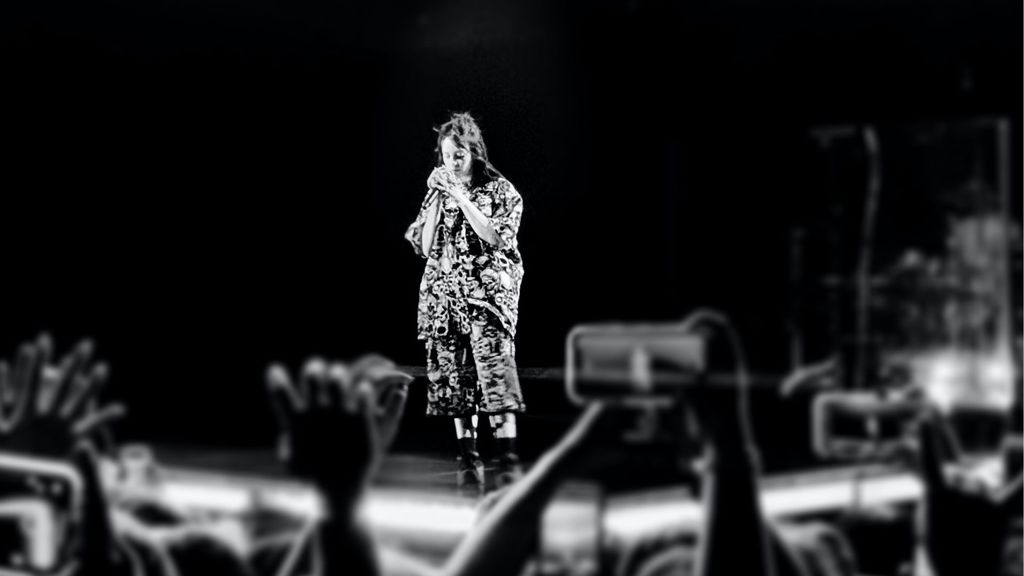
Billie Eilish’s comments about men’s appearances not being scrutinised are untrue, harmful and hypocritical.
Eilish, 21, made headlines in November because of her interview with Variety in which she talks about womanhood, sexuality and other personal topics. While she mentioned a lot of interesting and valid things throughout the interview, one particular comment drew criticism online.
“Nobody ever says a thing about men’s bodies,” Eilish said in the interview. “If you’re muscular, cool. If you’re not, cool. If you’re rail thin, cool. If you have a dad bod, cool. If you’re pudgy, love it! Everybody’s happy with it. You know why? Because girls are nice. They don’t give a f**k because we see people for who they are!”
Eilish claims that men aren’t body shamed because each type of male body is accepted. This is not only objectively untrue, but it belittles men who have been body-shamed and paints their experiences and feelings as somehow less valuable.
Robbie Williams can certainly testify to this. After a series of Instagram comments about his body looking “too skinny” or “emaciated,” Williams opened up about his body dysmorphia and self-loathing. “I could write a book about self-loathing where my body image is concerned,” Robbie told his fans. “Like pure self-hatred. The ugliness of feeling ugly… I’m body dysmorphic. The struggle is real, the sadness shocking.” It’s a saddening example of men also being targets of body shaming, despite Eilish’s claims that “nobody ever says a thing” about them.
Liam Payne faced public ridicule over his appearance, with some wondering if he had Botox or fat removal. Zac Efron and Timothée Chalamet have also spoken publicly about their experiences with being shamed over their appearances.
A study from CALM revealed that 48 per cent of men have faced mental health struggles over their appearance, with two in five men feeling pressure to have the “perfect” body. For Eilish to make such ignorant statements is harmful to these men, who already suffer with these concerns but are now openly invalidated by Eilish telling them that the pressure placed upon them doesn’t actually exist.
If we’re observing people who shame men for their appearances, perhaps we should start by looking at Eilish herself. She has been very vocal about her thoughts on “ugly” men:
“Why is every pretty girl with a horrible-looking man? I don’t understand,” said Eilish in a Pitchfork interview in 2019. “Listen, I’m not shaming people for their looks, but I am, though. You give an ugly guy a chance, he thinks he rules the world … Because they got a hot girl, they can be horrible? Like, you’re still ugly, though.”
Interestingly, despite her claims about girls’ kindness, she’s not exactly seeing people for who they are.
It’s one thing to make a statement in an attempt to support women. Advocating against body shaming women is a noble thing to do, as it’s a painful experience for many and that shouldn’t be overlooked. But if one’s advocacy involves invalidating a whole other group of people and their experiences in an attempt to push up the group you support, then there’s a problem with your advocacy. If your attempt to show support toward one group actually tears away at the self-esteem of another, then you have failed as an advocate and have done more harm than good.
Body shaming can happen to anyone, and no one’s experiences should be invalidated in the quest to normalise kindness and support. Billie Eilish’s intent to support women is admirable, but by invalidating the real experiences of men in the process, she has exposed her own advocacy as hypocritical and damaging.