

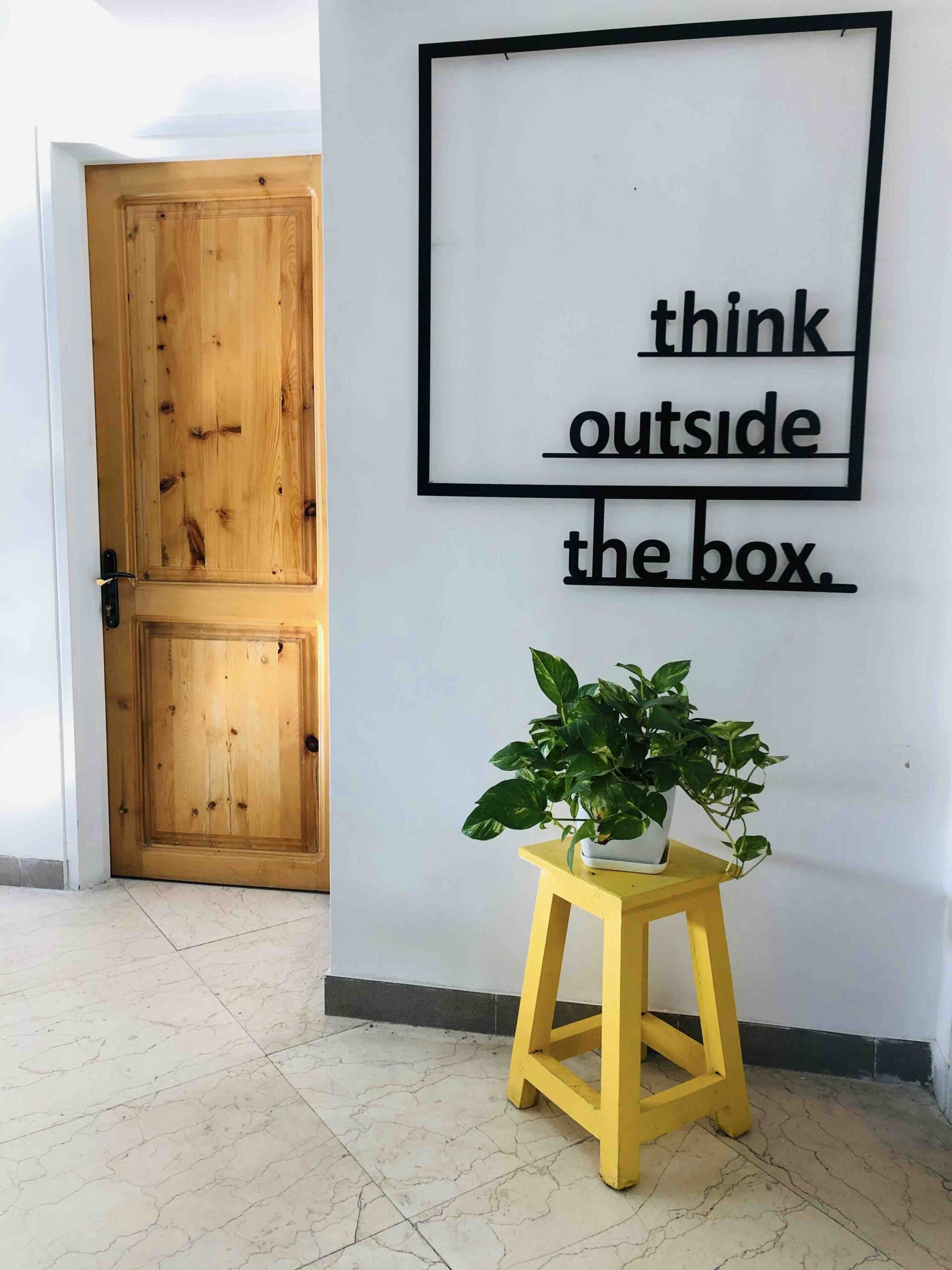
Originality should not be the bottom line of making art.
Anybody who creates knows the burden of originality. Sessions of creative flow can often be interrupted by thoughts of, “this has been done before,” or “this is just a mixture of pre-existing works.”
In the digital age, where shows and movies are churned out at such a rapid pace, and where people have hardly any time to digest content before moving on to the next thing, creating meaningful, original content can feel impossible.
So much has been made. Not only do we compete against the millions of other people creating today, but there are already millennia of pre-existing and culturally significant art. Even filmmaking goes back a century, or longer if you consider theatre productions as a form of proto-film.
But the reality is that barely anything is entirely original today, and the most popular creations are reminiscent of other successes.
Dune: Part Two is one of the highest-rated films of 2024 – and the highest-grossing film worldwide at the time of writing. In my preparation to see the movie, I watched a 20-minute recap of Dune: Part One, in which the film was described as “Game of Thrones in space, with sandworms instead of dragons.”
Game of Thrones is an incredibly popular series, but does its existence mean that all political high fantasy is off the table? Dune would disagree. The plot thickens when you consider how Frank Herbert’s original Dune novel came out in 1965, 34 years before George R.R. Martin’s A Game of Thrones was published.
The reality of it all is that creation has always been based upon intertextuality, or the relationship between texts across forms, genres and creators.
Some narratives and archetypes have indeed been done to death (I’m looking at you, Luke Skywalker). Poets who compare their love to a bed of roses, or their grief to a black hole, aren’t going to win any awards. However, equating originality to that which has never been done before is a dangerous mindset for creators, especially those who are young or still learning.
Getting inspired by other creators is nothing to be ashamed of; in fact, it may give your creation more merit to be compared to already-successful works.
Nothing, for example, quite compares to the first Metroidvania-style game I ever played, Hollow Knight. But even Hollow Knight isn’t entirely original. It is essentially a combination of Super Metroid and Dark Souls, but it works because of the apparent love, dedication and unique elements that comprise it.
Intertextuality speaks to the progression of art as a whole: creators building off of each other’s ideas throughout space and time. The earliest ancient Greek statues, like Cleobis & Biton, are heavily inspired by statues from ancient Egypt.
“Entirely original content” would exist in a vacuum outside of all other art, forgoing the conversational and intertextual nature of content that already exists. Even highly experimental work often comments on the status quo in one way or another. It would imply a creator who does not engage in any form of art, and even someone like this might end up making something that’s “already been done.”
In 2023, Ed Sheeran was sued for copyright infringement for his song “Thinking Out Loud,” in which he was accused of copying Marvin Gaye’s “Let’s Get It On.” Sheeran won the case by playing his guitar in court to perform a multitude of songs that all use the same chord progression – Sheeran explained the defence and partially performed it on The Howard Stern Show.
Similar to tropes in fiction, or colours in a painting, chord progressions are “in a songwriter’s ‘alphabet,’ [their] toolkit, and should be there for [everyone] to use,” said Sheeran. Artists who pave an entirely unique path may be original, but there’s a reason why popular trends become popular in the first place.
Experimentation is crucial for the progression of art, don’t get me wrong, but progress is defined by building upon a shared foundation. The Great Pyramid of Giza wasn’t built overnight, after all, and its conception wouldn’t be possible without the Egyptian architecture that came before it.
At the end of the day, making art is an outlet for emotion and creativity, and every artist brings something new to the table or can spin a pre-existing trend in their own, unique way. Of course, copying work is nothing to be proud of, and plagiarising or using other people’s intellectual property can get you in hot water.
Using other people’s specific characters, settings, or ideas is not what I’m talking about. You cannot make your own video game about Samus Aran without getting Nintendo’s permission, but you could craft a story about space warriors and aliens. Anyone engaged in the act of creating shouldn’t be concerned with whether their ideas are original enough, but you can always check Canada’s copyright laws to be safe.
The best art comes out of play-work but getting bogged down by thoughts of “what if it isn’t good or original” is incredibly restrictive, especially in a society characterized by countless other stressors, and in which it can feel like everything has been done.
But art has not ceased. Authors have not stopped writing novels, movies keep coming out to critical reviews, and billions of people still enjoy music and visual art.
Art is everlasting, and the future of it rests in the palms of young creators, even those who think their work isn’t good enough, or not original enough.