

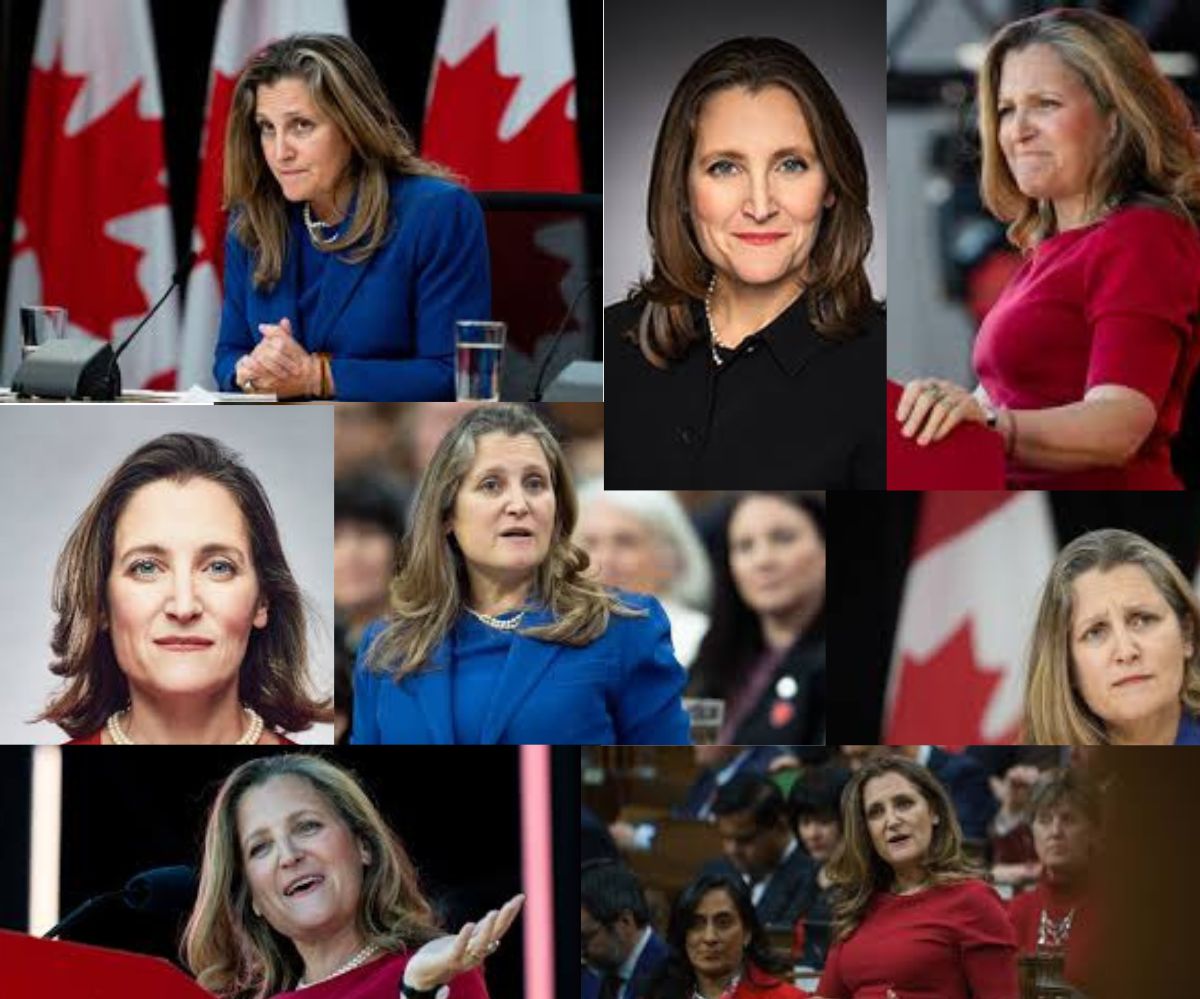
Former Finance Minister and Deputy Prime Minister Chrystia Freeland announced her resignation from Prime Minister Justin Trudeau’s Cabinet on Dec. 16 after her reassignment to a different position.
In her letter to Trudeau shared via X, Freeland wrote that her resignation is “the only honest and viable path” forward after Trudeau asked her to adopt a new position in the Cabinet instead of continuing as Canada’s Finance Minister.
According to reporting from Bloomberg, Trudeau told Freeland that he no longer wanted her to serve as Canada’s Finance Minister and ushered her into a role wherein she would no longer run a department within Parliament.
Bloomberg sources say that Freeland perceived this act as a “major demotion” and ultimately chose to resign a few days later — just hours before she was set to present Canada’s Fall Economic Statement.
The letter to Trudeau suggests disagreements between the two members of Parliament leading up to Freeland’s resignation. Freeland said that she and Trudeau had been “at odds about the best path forward for Canada” during the weeks following Donald Trump’s electoral win in the United States.
The fast-approaching Trump presidency has been a major point of discussion in Canadian Parliament. Freeland cited Trump’s “aggressive” economic approach — including his tariff threats on Canadian goods — as a “grave challenge” that must be given adequate attention.
Freeland said that it is of utmost importance that Canada matches Trump’s aggression in their response to his threats, saying that the solution to this challenge includes “pushing back against ‘America First’ economic nationalism” to maintain Canada’s financial stability.
Following this statement, Freeland said that the Canadian government should avoid “costly political gimmicks” so they can save reserves in the case of an imminent tariff war between the two countries. This concern holds relevance to the recent financial decisions of the Liberal Party, like Canada’s GST holiday and the uncertain $250 rebate that may come this year.
Freeland suggested that Parliament should continue to prioritize the issue of financial tension between the United States and Canada and craft a “true Team Canada response,” but she warned Parliament to only proceed with the best interests of Canadians in mind.
Freeland signalled to the widely held suspicion of the motives behind government decision-making, writing that Canadians “know when we are working for them, and they equally know when we are focused on ourselves.”
Freeland followed this statement by repeating her concern toward the threats that are looming over Canada in advance of the United States’ Trump presidency, writing that the way Parliament deals with aggression and conflict between the two countries will redefine how Canadians view the Liberals’ leadership, for better or worse.
The letter concludes with Freeland writing that the current state of relations between Canada and the United States have informed the way she approached government spending throughout the fall, saying that the capacity for “flexibility” within Canada’s finances was her top priority.
According to CBC Radio Canada, Freeland’s resignation left many Liberal MPs frustrated with Trudeau. At the caucus meeting following Freeland’s resignation, some MPs told Trudeau to reconsider resignation as well.
Despite Freeland’s resignation from the Cabinet, she will continue to work as a Liberal Member of Parliament and plans to run for the seat she currently holds in Toronto once again in the next election.