

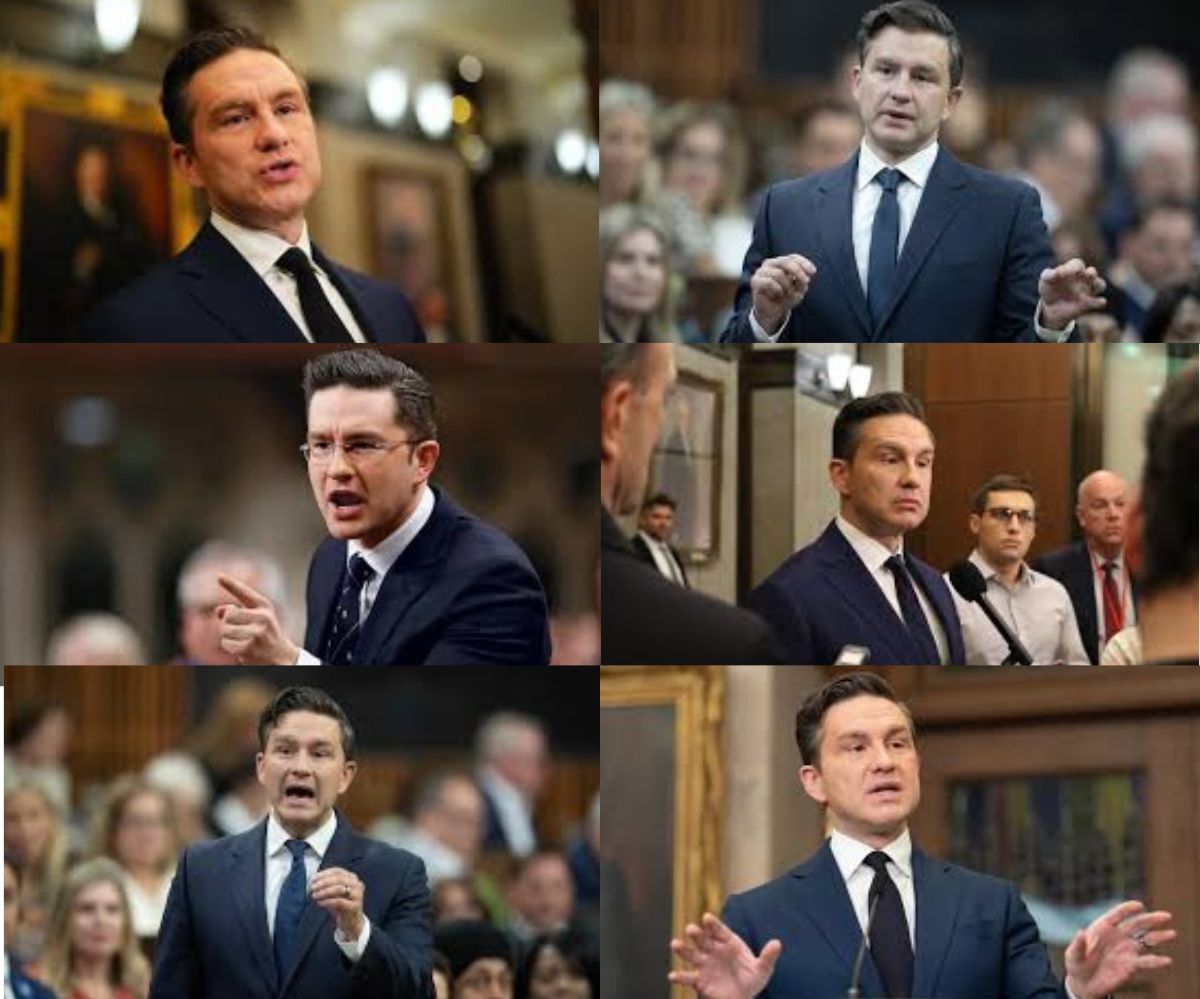
The tendency for right-wing Canadian politicians to grossly demonize the left through allegations of widespread radical “wokeism” shows that the incitement of political polarization — especially through misinformation and fearmongering — is overly relied upon in our political discourse and this brings negative consequences to voters.
On Jan. 2, Conservative Party of Canada leader Pierre Poilievre said in an interview with conservative psychologist Jordan B. Peterson that Prime Minister Justin Trudeau has led Canada under “authoritarian socialism,” claiming that Trudeau aims to control “every aspect of your life.” Peterson agreed, saying that Trudeau “clearly has narcissistic personality characteristics” and calling the Liberal Party “far-left socialists,” not centrists.
However, when defining Trudeau’s so-called radically left efforts, Poilievre frequently cites his attempts to push forth stronger gun laws, decriminalize drug use and impose a carbon tax while he himself releases carbon emissions by frequently travelling to “luxurious global destinations,” referring to the Prime Minister’s frequent trips to expensive tropical resorts.
It is of less importance to share my personal stance on these issues — and Trudeau’s leadership overall — but rather to interrogate if they are indictive of the authoritarianism and radicalization that Poilievre alleges.
Although some voters may view Trudeau’s beliefs as leaning toward the left, his overall time in office has been anything but radical, let alone radically leftist or socialist.
The progress of Trudeau and the Liberal Party has been centre-to-left leaning — some left-leaning policies include the Canadian Dental Care Plan or the evolving Pharmacare Bill, for example — but it is undoubtably not indicative of a move toward full socialism in the slightest.
Poilievre’s latter quote, wherein he says that Trudeau taxes carbon emissions yet has his own large carbon footprint from luxurious travel, demonstrates Trudeau’s hypocrisy but is not representative of any leftist ideology, which is where the problem lies.
If Trudeau does not fit the characterizations made by right-wing politicians, including Poilievre, then the purpose of drawing attention to his non-existent radicalism is purely to cultivate an association between any leftist ideology with danger and fear in the minds of the electorate.
As every opposing politician to Trudeau has pretty much exhausted talks of the Prime Minister’s leadership being unproductive and weak, they have turned to radical, mostly false or exaggerated characterizations of the left to sway voters to the right in advance of the upcoming election.
Poilievre has continued to attack anything he deems “woke,” which he defines as anything “designed to divide people by race, gender, ethnicity, religion, vaccine status and any other way one can divide people into groups,” and has continued to fuel mass defunding threats and increasingly aggressive characterizations of the left on a broader scale.
However, Poilievre is inciting more division by characterizing the entire centre-left political sphere as dangerously radical.
The more exaggerated or downright false claims of leftist radicalization Poilievre makes in relation to the current centre-left politicians in power, the more he stigmatizes the idea of not only having an actual leftist government, but also those who believe left-leaning political ideologies in general.
This is evidently a tactic to imply that self-proclaimed “common sense Conservatives” are the only viable option in the upcoming election, but it fosters deeper polarization between the left and the right as it forces voters to loyally assign themselves to a singular category.
This act has consequences not only for leftist politicians and groups, but for voters themselves. By perpetuating a stigma of radicalization and danger towards an entire side of the political spectrum, many voters may end up voting for politicians not because they support their policy decisions or values, but because they are either afraid of being categorized as a “leftist” or they misunderstand the values of leftist politicians because of the massive amount of misleading information pushed forth by Conservative politicians like Poilievre.
The tendency for politicians in Canada and the West at large to rely on inciting fear and strengthening polarization just to collect more votes speaks to their lack of strength policy-wise with the electorate and ultimately breaks down the fundamental principles of our democracy.