

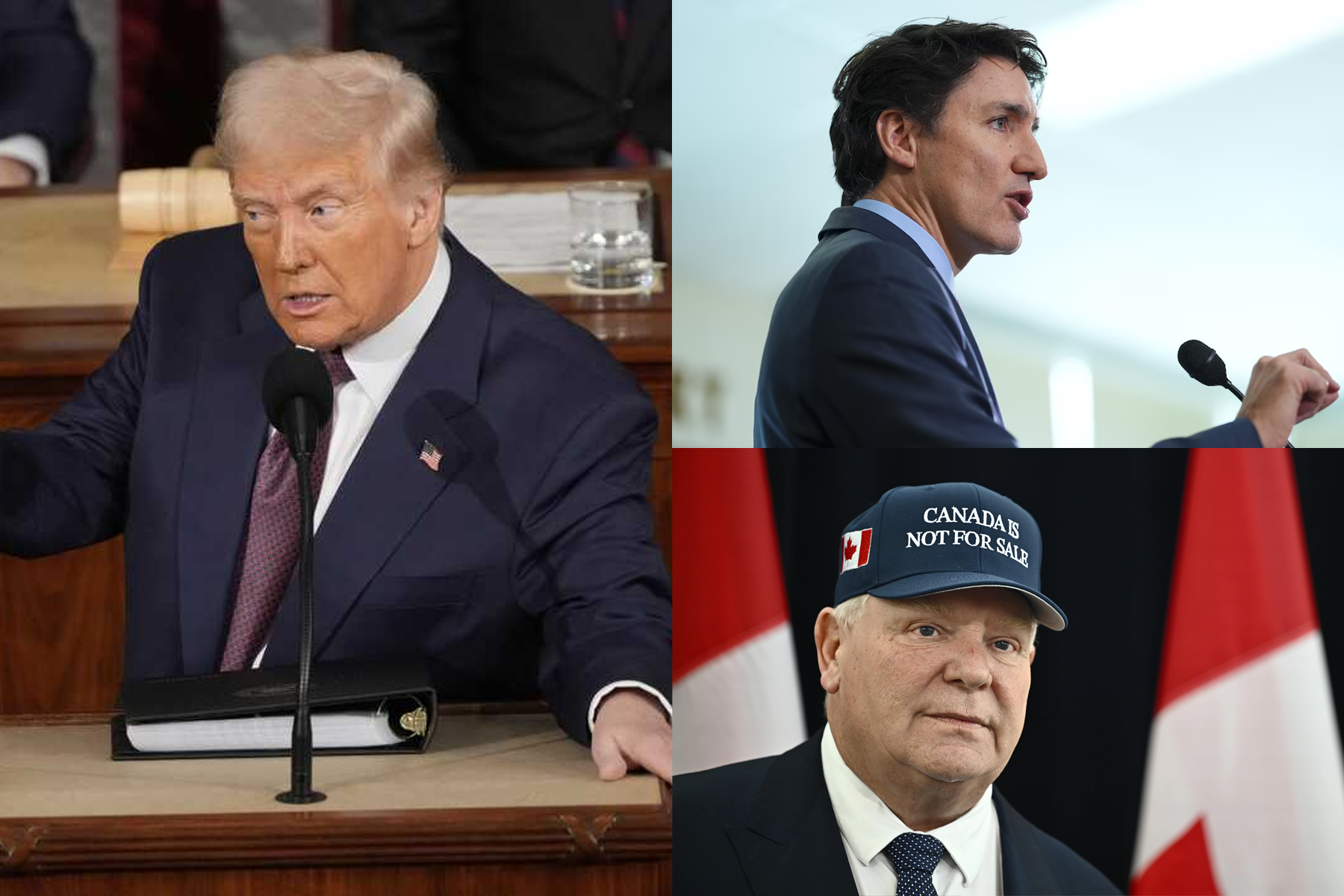
Despite a one-month reprieve for certain Canadian products protected by CUSMA, the tariff conflict between the U.S. and Canada remains ongoing.
As far back as November, President Trump has been threatening levies on Canadian products. However, when the tariffs materialized earlier this month, the proposed 25 per cent levies became much more complicated than they initially seemed. The Brock Press has provided a thorough breakdown of the events leading up to Trump’s initial decision to place tariffs on Canadian products.
At the time of writing, the proposed tariffs have undergone several alterations and small changes — as has Canada’s retaliatory response to the U.S.
Here’s an overview of what has changed regarding Trump’s original tariff proposals and how Canadian officials have responded to the issue.
Trump’s newest order to delay tariffs
On March 6, Trump signed an order to delay tariffs on certain Canadian products until April 2. According to the White House, the only products included in the tariff reprieve are those that comply with the Canada-United States-Mexico Agreement (CUSMA), which is a free trade agreement between the three nations to ensure that they remain the “largest free trade region in the world” with “strong economic ties.”
Products that comply with this agreement must be produced or obtained in Canada, the U.S. or Mexico. If they are not, they must meet a Regional Value Content (RVC) threshold, wherein a certain percentage of each product’s value must be sourced from CUSMA countries.
Suppliers who have not ensured that their products comply with CUSMA, and who supply industries that the American tariffs initially targeted, will continue to face a 25 per cent tariff.
However, Trump has made a few extra exceptions regarding these products. For example, the tariffs on Canadian potash — an ingredient in agricultural fertilizer — was lowered to 10 per cent after pressures from farming industries. He also exempted three major car manufacturers — General Motors, Stellantis and Ford — from the tariffs as their reliance on North American suppliers would threaten both economies.
As of March 12, Trump has put forth 25 per cent tariffs onto steel and aluminum goods entering the U.S., lowering from his original threat to place 50 per cent tariffs on these items.
The Canadian response
Several Canadian politicians had responses to Trump’s decision to go forth with his tariff orders, each sharing similar sentiments. Dominic LeBlanc, Canada’s Minister of Finance, shared a post on X saying that Canada “is being unfairly targeted” by the U.S., sharing a link to a Government of Canada news release calling the tariff conflict “unjustified.”
Ontario Premier Doug Ford echoed LeBlanc’s response, saying that the trade war has become “an absolute mess” in an interview with Fox News.
“People are going to be losing their jobs in the U.S. and in Canada, and inflation is happening already,” said Ford. “One thing the market doesn’t like is uncertainty.”
In response to Trump’s tariff orders, Ford originally said he would place a 25 per cent tariff on Canadian energy going to New York, Michigan and Minnesota, regardless of any tariff delays from Trump. However, Ford took back this threat during negotiations after Trump threatened 50 per cent tariffs on steel and aluminum goods.
At a news conference on March 6, former Prime Minister Trudeau said that “conversations shall continue” between the two countries to ensure that tariffs do not cause extreme damage to the sectors they are inflicted upon. However, Trudeau warned Canadians that Canada will be in a trade war “for the foreseeable future.”
Retaliatory tariffs
Despite Trump’s order to delay some tariffs on Canadian products, the Canadian government decided to leave their retaliatory tariffs in place. According to a government source, Trudeau will not make amends with the U.S. until they remove all the increased tariffs they have put in place over the last month.
At the time of writing, Canada has placed a 25 per cent tariff on $30 billion worth of U.S. goods, with a second round of tariffs worth $125 billion still pending.
A full list of all the affected products can be found on the Government of Canada website. The list stretches in length, covering products ranging from meat and dairy to coffee and sunscreen.
—
The tariff conflict has proven to be a day-by-day issue, with change arising frequently. Until a resolution is made between Canada and the U.S., Trudeau said that Canadians should focus on buying locally-made Canadian products to minimize the economic impact of the tariffs on their daily lives.