

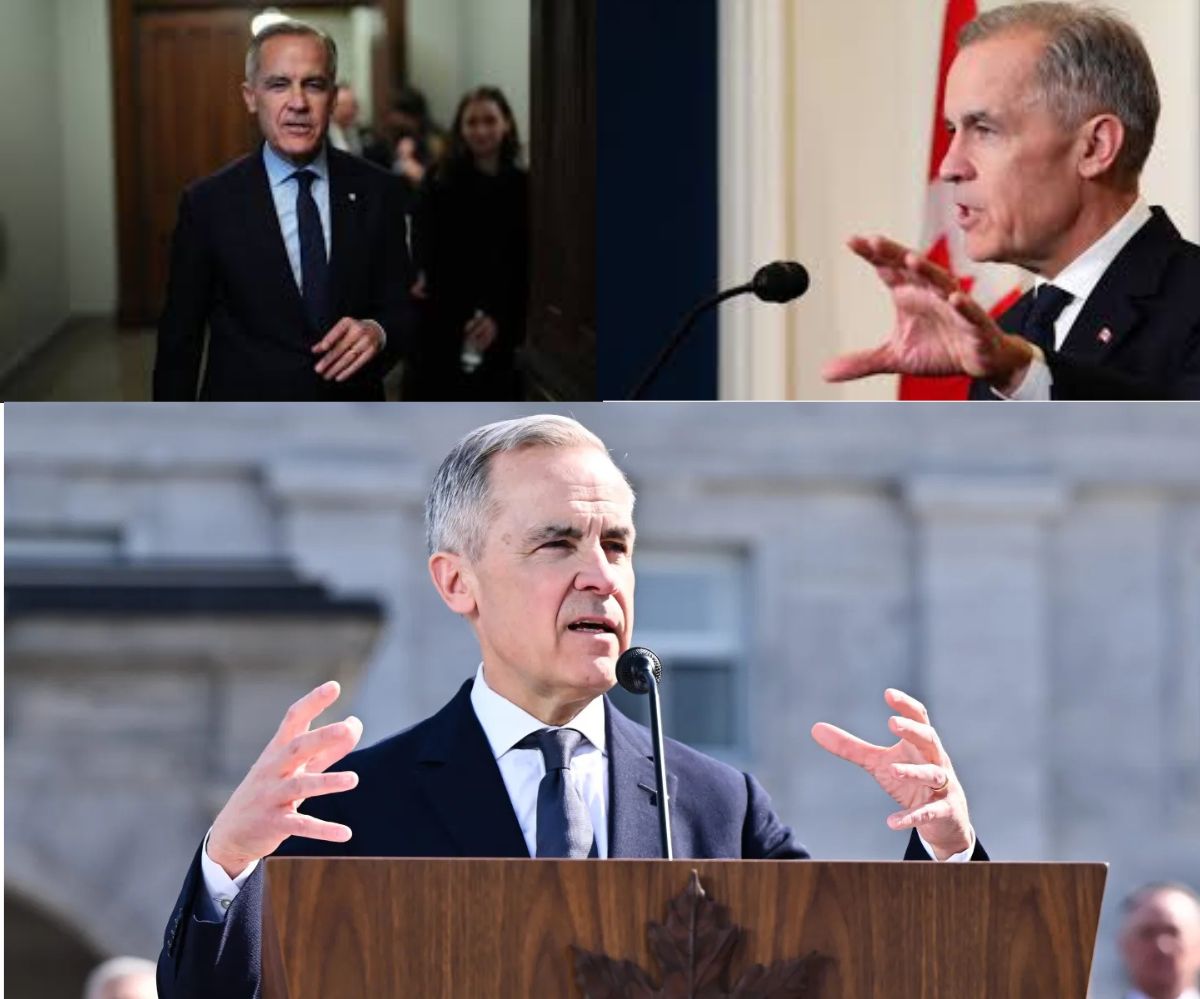
Canadian economist Mark Carney has been chosen to take over Justin Trudeau’s position as leader of the Liberal Party and prime minister of Canada.
On March 9, Carney was named the new leader of the Liberal Party after receiving 131,674 votes from registered Liberals, representing 85.9 per cent of voter support.
In his victory speech, Carney outlined his initial plans for the new Liberal government. The first thing Carney mentioned was that his Liberal government will remove the consumer carbon tax for families, farmers and small-to-medium-sized businesses.
During the Liberal leadership debate, Carney prefaced this as one of his biggest priorities, with plans to change the carbon tax so “big polluters” are financially responsible for the environmental damage they contribute to. He also proposed that larger companies should have better access to sustainable options in their production processes to ease their impact on the environment.
Carney also said that his government will stop the rise in the Capital Gains Tax to incentivize builders to “take risks” with greater rewards.
Carney has entered leadership in precarious times as Canada’s trade war with the U.S. intensifies. In his speech, he mentioned that Canada’s current retaliatory tariffs will bring maximum impacts to the U.S. economy, with minimum negative effects faced by the Canadian economy. Carney said he will keep Canada’s retaliatory tariffs in place “until the Americans show us respect and until they can join us in making credible and reliable commitments to free and fair trade.”
The new Prime Minister said the revenues accumulated from the tariffs will go toward protecting Canadian workers in industries affected by Trump’s tariffs, but he did not clarify specifically how the government plans to do so. Days later, when Carney visited a steel plant in Hamilton, Ontario, he elaborated on this sentiment, saying that the Liberal government will strengthen their relationship with industries targeted by Trump and work towards a “comprehensive approach to trade.”
During his victory speech, Carney said that Conservative leader Pierre Poilievre poses an equal threat to Canadians as President Trump. Carney called Poilievre the type of lifelong politician who “worships at the altar of the free market despite never having made a payroll himself.” Carney also said that Poilievre would “undermine” the Bank of Canada and “let our planet burn.”
Carney said that Poilievre is not demonstrating leadership, but instead demonstrating “ideology,” saying that his beliefs reject Canadian values of togetherness and express a “fundamental misunderstanding” of the economy.
Carney reassured his audience that Canadians do have the power to “control [their] economic destiny” despite the threats to their economy. In doing so, Carney once again brought up his plans to create one Canadian economy instead of 13, as he outlined during the Liberal leadership debate.
Similar themes of unity were prevalent throughout Carney’s victory speech. He continually mentioned the necessity of conquering political polarization and standing unified against threats to Canada’s economy and sovereignty at large, using the stark political polarization in the U.S. as a cautionary tale.
Carney finished his speech by recognizing his status as an economist but clarified that he cares about the economy not because of his career, but instead because he cares about how the economy affects people.
Carney is set to be sworn in as the prime minister of Canada on March 14. During this time, he will announce who will serve as his cabinet ministers.
Carney’s full victory speech can be found on CPAC’s website.