

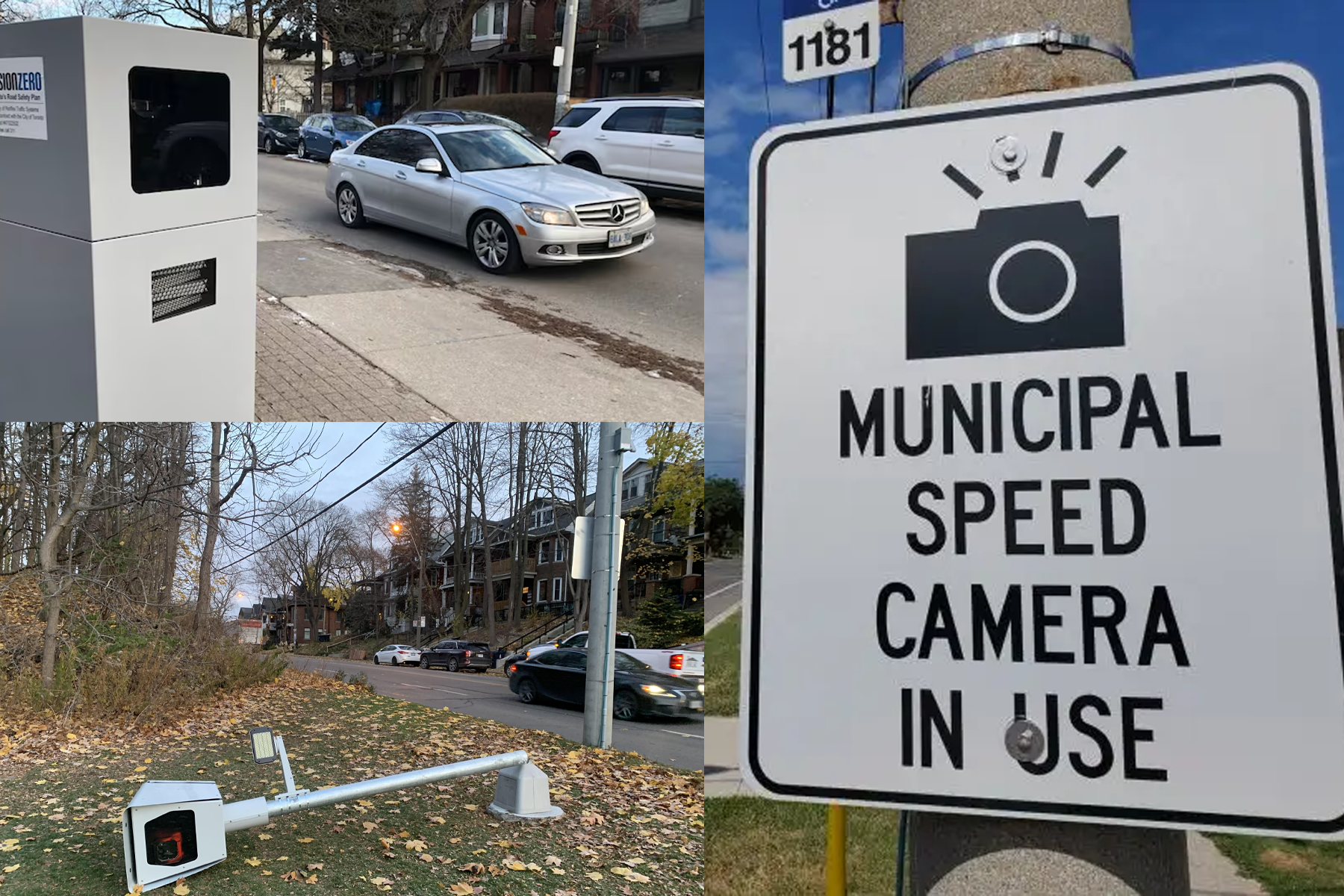
The debate surrounding automated speed enforcement cameras distracts from a core issue in Ontario’s communities: our dangerous car-centric infrastructure.
If you’ve been driving around the Niagara Region lately, you might have noticed more signs popping up warning you to follow the speed limit or else you’ll be facing a fine — without ever getting pulled over.
Though speed cameras are appearing across the province, the ones in Niagara are a part of the region’s Automated Speed Enforcement Program, a broader initiative working to make communities safer for pedestrians, since most of them are children walking to and from school.
According to the Niagara Region’s website, automated speed enforcement cameras work by capturing an image of any vehicle driving over the legal speed limit and subsequently mailing a fine to the driver’s registered address.
The region has published a list of locations where speed cameras will be in use and has also put up signs communicating the use of speed cameras, so it is no secret to drivers when their speed is being measured.
Though the region says that the program has reduced speeding here in Niagara, Premier Doug Ford condemned the use of speed tracking cameras in community safety zones, saying they are nothing more than a “tax grab,” suggesting that cities remove “all of them.”
“People [are] driving through a neighbourhood, and they’re five [to] 10 kilometers over [the speed limit] and they’re getting nailed?” said Ford. “It’s not fair.”
Though it’s clear that Ford’s sudden reluctance to support speed control initiatives is nothing more than a populist push to garner more support from Ontarians — especially following 16 speed cameras being vandalized and cut down in Toronto.
Subsequently, Ford’s comments struck a debate between the provincial government and municipalities that disagree with his stance.
The Association of Municipalities of Ontario (AMO) addressed a letter to Ford on Sept. 10 urging him to reconsider his plans to help cities remove the speed cameras.
The letter cites a 2025 study from SickKids and Toronto Metropolitan University mirroring the Niagara Region’s findings that Automatic Speed Enforcement devices maintain safety in communities and reduce instances of speeding.
Though both ends of the argument surrounding speed cameras have support, there’s a key factor missing from this discussion: why do we have 4,000-pound machines in constant close proximity to the members of our communities, machines that are so dangerous that they must be under surveillance in an attempt to prevent more unnecessary death than what they’ve already caused?
Especially if you’ve grown up in a city that has minimal walkable qualities — unless you’d like to cut two hours out of your day to make a trip to the grocery store — it’s easy to leave our reliance on cars unquestioned, accepting that cars are the most efficient way to get around (here, “efficient” can only apply to time, as there is no denying the outrageous carbon footprint car-centricity has left on the environment).
The province has been evading our disturbing reality of car dependence, with Ford attempting to scrap bicycle infrastructure so his government could trade bike lanes for increased vehicle traffic flows while also proposing the ridiculous tunnel plans for Highway 401 — backlit by the ever-looming presence of Highway 413 construction.
The government’s decision to make Ontario consist of sprawling highway projects and barely walkable cities ultimately leads to death.
Transport Canada reported that Canada has an average of 1,872 car-related deaths per year, with victims aged 20 to 24 — the same age of many university students — representing one of the highest demographics facing preventable car-related death.
Disturbingly, Transport Canada has only published data up to 2021 — meaning that there are countless other deaths that have not been accounted for in their measurements.
Despite Ford’s populist approach to the issue — yearning to present himself as the everyman that also speeds when he’s late for work and would hate to get a fine in the mail on top of all the other expenses Ontarians like himself are dealing with — it is integral to remember that the provincial government has control over our deadly infrastructure.
Though I am not claiming that Ford’s government heralded car dependence — it has a far deeper history than that — his government chooses to actively limit our transportation options through their funding choices, policy-making and intensified focus on highway projects.
Ultimately, speed enforcement is more than necessary in our community safety zones. As Ford condemns speed cameras for their “inconvenience” to drivers, Ontarians should remember that his government’s infrastructure choices encapsulate the reasons why we need these safety measures to protect our communities from the ever-present dangers of car-centricity.