

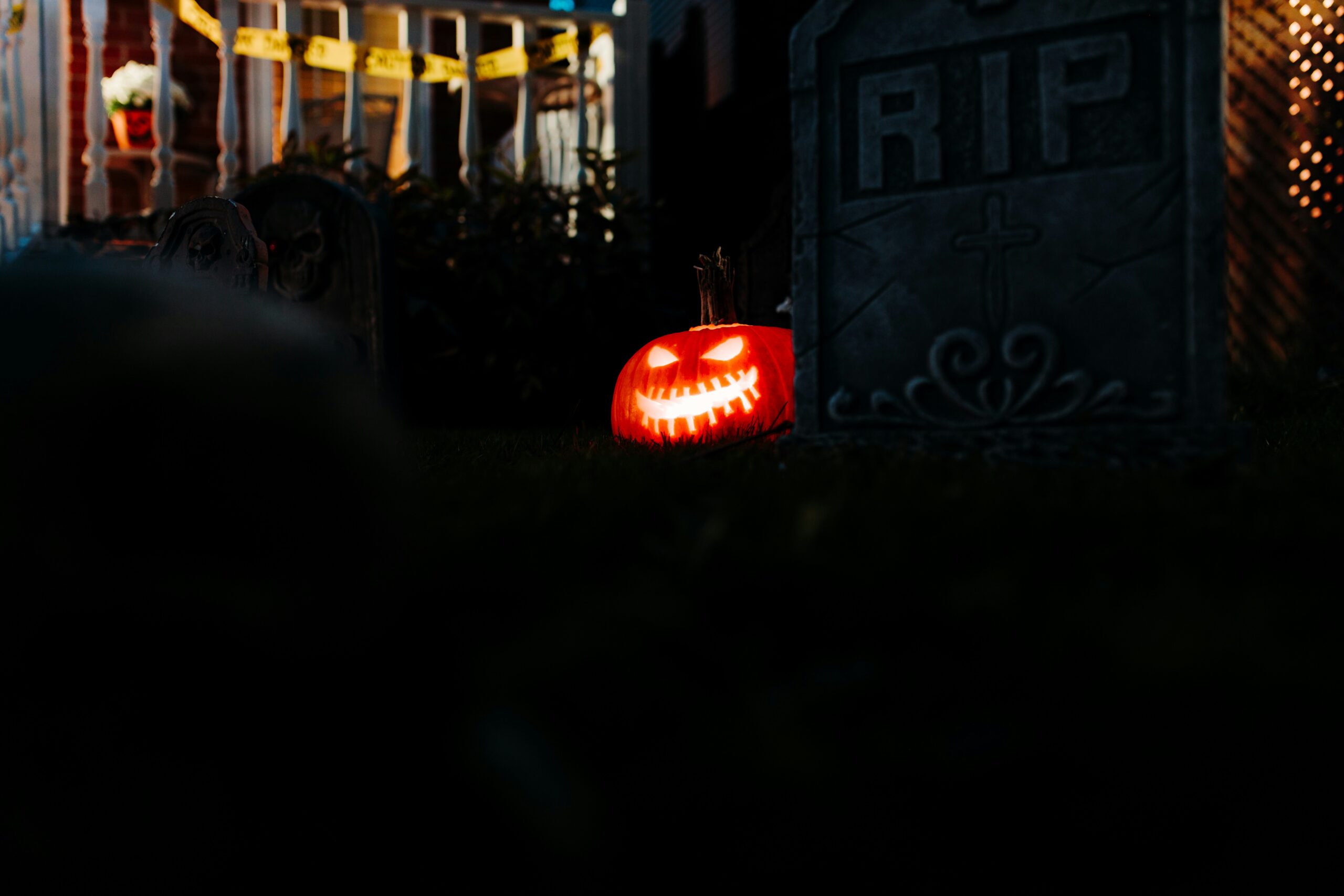
Halloween’s concentration on conjuring a fright is what makes the holiday so uniquely fun.
Despite the opinions of some, I have no doubt that fall is the best season of all. The air is brisk, the cider is warm and sweets are dashed with the cozy flavours of pumpkin spice, cinnamon and apple. Landscaped by glowing orange foliage, October brings an abundance of festivities unique to the season of fall, all of which lead up to the month’s main event: Halloween.
Though Christmas is the only other holiday I grew up celebrating that receives comparable long-term hype leading up to the day itself, Halloween is a uniquely exciting holiday because of the striking difference it bares to other holidays that I’ve celebrated in years past.
Though I grew up in a non-religious family, Christmas and Easter were observed as a time to celebrate holiness and hope, still carrying the core messages of generosity and connection from their biblical origins.
Though Halloween emphasizes generosity and connection just as much, it is uniquely characterized by unconventional personal expression and confronting fear head-on. Halloween may not be used as a time to praise holiness, but it is a time to turn fear into excitement and settle into realms of discomfort, both of which make the holiday so special.
Halloween originated through the ancient festival of Samhain, a Celtic tradition where individuals would wear costumes and light bonfires to scare away ghostly creatures. At this time, Samhain marked the end of summer’s harvest and the start of winter. The festival revolved around the ghoulish because winter was said to be a time associated with human death, so Oct. 31 functioned as a transitionary day where the veil between the living world and afterlife thinned.
Though social perceptions of Halloween have vastly changed since Samhain’s conception, its preoccupation with the undead remains a defining quality of the holiday. Where Christmas and Easter view the afterlife as heavenly and hopeful (much due to their biblical origins), Halloween pulls upon a healthy fear surrounding death, gore and ghastly beings — all core elements of what makes the holiday special.
Making space to experience fear in controlled environments is something that Halloween does best. Unlike other controlled fear-inducing activities an adrenaline junkie may frequent (like bungee jumping, cliff diving or rollercoasters), the community’s widespread participation in Halloween makes it a far more accessible time to settle into discomfort and attempt to find excitement through it.
Halloween’s providing of a space for controlled fear has deeper value than a simple adrenaline rush, as it also functions as a means to normalize fear. Some have identified that people who struggle with anxiety tend to enjoy Halloween for a variety of reasons, like turning fear into something playful or feeling a sense of control over one’s fear.
Especially with the never-ending rise of fearmongering from politicians, normalizing fear has political importance just as much as psychological significance. It is unrealistic to view the world as entirely hopeful and pure; though it is uncomfortable to recognize, frightening things are happening on the political level here in the West and globally at large. Instead of being paralyzed out of fright, accepting this fear is a way to move forward and work towards real, meaningful solutions.
Repressing this fear is what leads to spreading political misinformation and submitting uninformed votes, both of which erode democracy.
Lastly, Halloween also functions to honour unconventional forms of self-expression. Especially with regard to the ways we present ourselves in daily life, expectations of conformity constantly loom over us. Though I think that subverting conformity in daily life should be encouraged, I acknowledge that it can come with social repercussions from those who replicate dominant understandings of socially appropriate (read “conforming”) personal expression.
Whether it be simply dressing in “scary” attire, becoming your favourite pop culture persona for a day or immersing yourself in the world of your favourite characters, Halloween is a time to abandon convention and become whomever you’d like. Personally, I have been planning my Arwen Evenstar costume for months and I am thrilled to have an excuse to escape into Tolkien’s Middle-Earth for a day (post-destruction of the One Ring, of course).
All in all, Halloween is one of my favourite holidays, and it shows that our festivities do not need to revolve around holiness or hope to foster a sense of connection. All October long, I enjoy the widespread building excitement for the final day of the month. It is so joyful to watch everyone plan their costumes, indulge in healthy fear and come together to celebrate all that is unconventional, frightening and spooky — and have much fun in the process.