

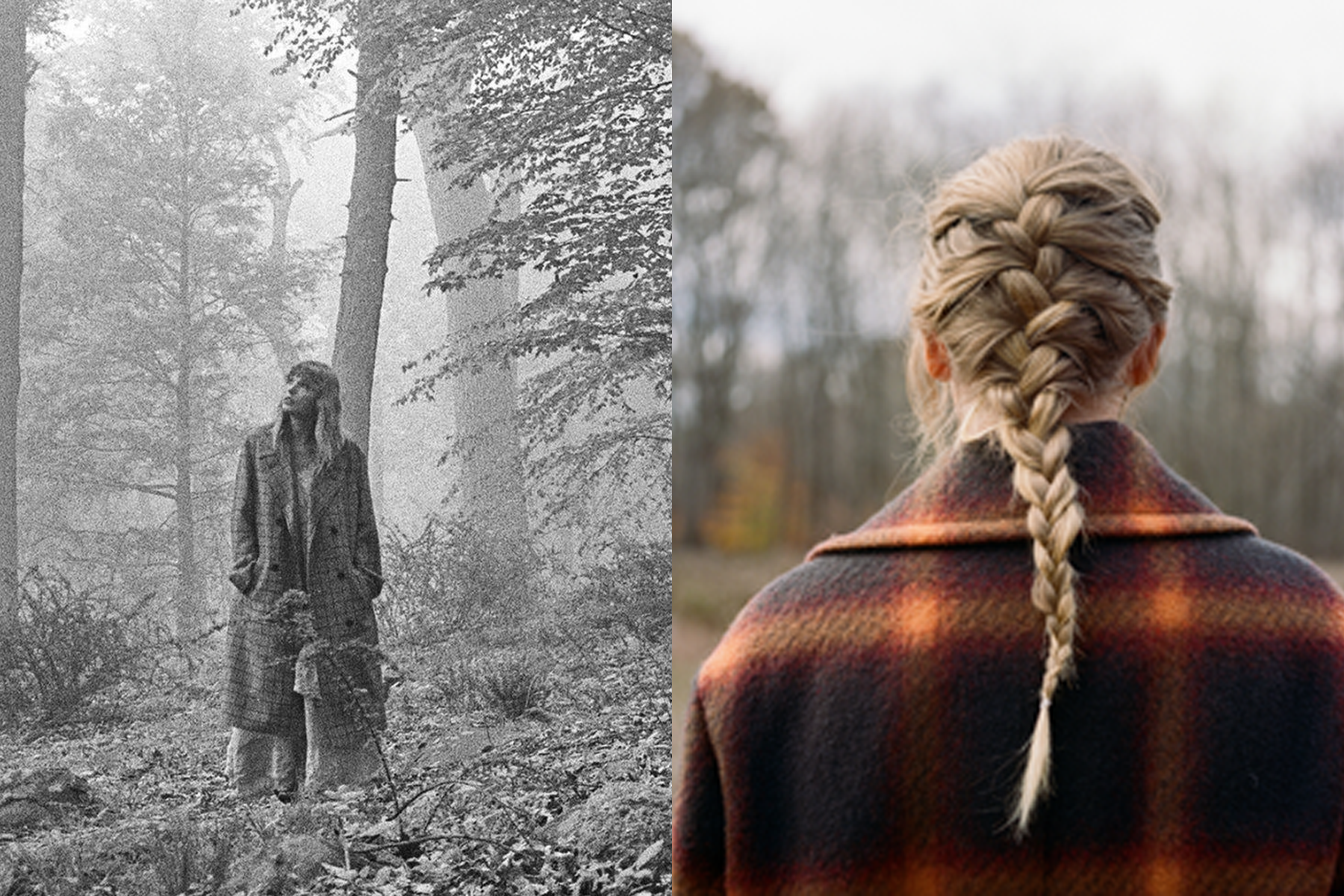
2020 was a strange year. Public life halted, yet the world kept moving. Tours and festivals shut down, school traditions were scrapped and artists were suddenly given the chance to pivot.
Taylor Swift’s pivot began in July 2020 with the surprise release of folklore, which dropped at a point in her career when the next decade seemed set in stone. Coming from Lover, the early 2020s was to be filled with a tour, more singles and the first wave of her re-releases. The brakes were quickly pulled on these plans.
The pandemic cut the Lover era short, cancelling “Loverfest” and silencing the typical Taylor Swift hype machine. Swift had two choices: hold her breath and wait for the world to reopen or ditch the era for something new. Her choice of the latter changed everything.
Critics spent the 2010s panning Swift for her relevance-chasing pop sound, predictable and avoiding risk. However, the 2020 lockdown forced her to face her biggest strength that the public had all but forgotten about — her writing. The shift from autobiographical pop to invented stories of fiction was shocking. Suddenly, she was building worlds, myths and dreamscapes instead of confessionals. In a moment where life felt frozen, she wrote about a world that persisted.
folklore
folklore was a surprise, released with little-to-no warning: a complete departure from her traditional rollout. It was cohesive and atmospheric — instantly recognizable as her strongest songwriting to date. From the first line of “the 1” — “I’m doing good, I’m on some new sh*t,” — it’s clear that Swift isn’t afraid to use profanity or curse words, often employing them to strengthen her emotion and lyrical storytelling, a career first.
folklore also marked an era of new collaborations. Though Swift had previously collaborated with Jack Antonoff on her three prior albums, the addition of Aaron Dessner of The National brought the sonic sensibility that helped shape the project’s immersive and atmospheric soundscapes.
folklore breaks from any narratives Swift tried to correct in the 2010s. She stepped away from her pre-conceived image and into an artist who cares more about her art than how she is perceived.
The time spent in lockdown gave Swift a chance to write with abandon. What came of it was a definition of Swift’s purpose and goals. Among Swifties, there’s a common view that while reputation was billed as an album about Swift’s public image, folklore is the album that defined it.
The project’s novel-like structure shows how deeply Swift leaned into storytelling. The “teenage love triangle” trilogy — “cardigan,” “august” and “betty” — illustrates her ability to hold multiple emotional truths at once. “the lakes,” featured on the deluxe edition, reads like a thesis statement — a meditation on retreat, reinvention and the sanctuary she found in creation.
Five years down the line and eight additional releases later, calling folklore Swift’s magnum opus doesn’t feel like an exaggeration. The craftsmanship and attention to detail lends a timelessness to folklore — it still feels as fresh as it did on July 24, 2020. Standing alone, it rewrote her career. It changed her trajectory and reset public perceptions of what she was allowed to do as an artist. But this transformation crystallized in her second surprise release.
evermore
If folklore is a universe, evermore is an anthology. The album trades cohesion for experimentation, dropping listeners into a new story with every track — each one cold, sharp and steeped in melancholy. Where folklore was made up of stories set in the spring and summer, Swift, alongside producers Dessner and Antonoff, crafted evermore to exist in the darker, colder months of the year.
The record opens with “willow,” which expands folklore’s sound but twists it into something more enchanting and self-aware. “champagne problems” signals the album’s true purpose. It’s not a diary, but a collection of character studies: moments in time and fragments of stories. “gold rush” returns Swift to writing about love and longing, with a clear distaste for the risks of falling in love too quickly, while “’tis the damn season” enters you into a story about bargaining for what could’ve been.
Though evermore is an anthology rooted in fiction, Swift included more references to herself throughout the album. She honours her grandmother on “marjorie,” sampling an old recording of her singing in moments of the track, and makes nods to public scrutiny and self-reflection in the titular track “evermore.” The project creates stories that exist beside her, rather than being directly about her.
Though often considered the “weaker” or “forgotten” sister, evermore is only weaker when judged by folklore’s standards. Moreover, evermore proved that folklore was not a fluke and strengthened its permanence without diluting its impact. The two albums are inseparable; folklore’s cohesion holds in part due to evermore’s boundary-pushing anthology direction.
—
By the end of 2020, Taylor Swift reshaped her identity. These sister albums pulled new listeners into the fold and brought old ones back. They ended years of narratives about Swift’s formulaic pop sound or childish country twang and proved that she is a generational songwriter.
The Eras Tour wouldn’t exist without these albums — they completed her artistic arc before Midnights had been released and brought about the reinvention that made her the most globally dominant artist in 2023.
Even five years later, I find myself returning to folklore and evermore routinely. They shift and grow with every listen. The songs and their meanings change depending on where I find myself in life — evolving with time rather than being a symptom of it.
As any Swiftie or casual listener will know, the perception of folklore and evermore is deeply personal. Part of their magic was the lack of buildup — Swift gave fans (and Spotify) just 12 hours to prepare. With no listening parties or coffee shop debates, the albums were digested privately, making each first impression uniquely intimate.
Purposefully timeless, folklore and evermore weren’t designed to represent an era; they were designed purely to exist.
While folklore is often labelled her magnum opus, it’s really the sisters together that earn that title. A once-in-a-lifetime creative burst driven by unprecedented circumstances and embraced with unprecedented fanfare.
Swift may never return to that pop-folk sound. Maybe that’s the point. These albums, born from a break in the timeline, weren’t meant to be repeated. They were meant to be remembered.
And five years later, they still are.