

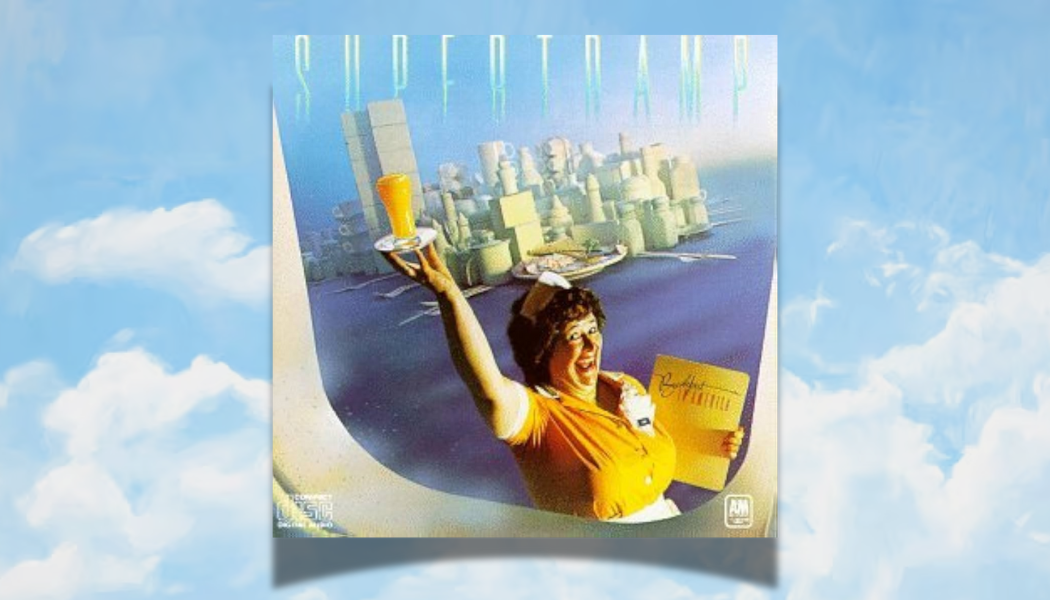
When Supertramp released Breakfast in America in 1979, they knew that they’d created something special, but few could have predicted the album’s enduring cultural presence. More than four decades later, Breakfast in America remains one of the greatest achievements of the late-’70s pop-rock, blending clever songwriting, pristine production and a distinctive tonal palette into a cohesive and joyful listening experience.
Formed in London in 1970, Supertramp is a British rock band marked by the songwriting of its founders, Roger Hodgson and Rick Davies. Known for combining progressive rock and pop styles, the band’s classic lineup (1973-1983) featured vocal and keyboardists Hodson and Davies, as well as Dougie Thomson (bass), Bob Siebenberg (drums) and John Helliwell (saxophone).
Though Supertramp was largely unsuccessful with their first two albums, changes to their lineup led to the success of their third album, Crime of the Century, in 1974. In 1979, the band reached their peak with Breakfast in America, yielding the international top 10 singles, “The Logical Song,” “Breakfast in America,” “Goodbye Stranger” and “Take the Long Way Home.” Breakfast in America is both meticulously crafted and entirely effortless: a musical postcard from an area of big ideas and even bigger hooks.
One of the most appealing aspects of the album is its clarity of sound. The producers and band members worked together to create a sonic environment that is crisp but warm, theatrical but intimate. The songs sparkle with detail: the ringing clarity of the pianos, the bright pop of Helliwell’s saxophone, paired with the intertwined vocals of both Hodgson and Davies. Every element feels placed with intention; their music is built with a craftsman’s precision, yet it never loses its buoyant charm.
Breakfast in America opens with the energetic “Gone Hollywood,” a track that sets the tone for the record’s blend of optimism, disillusionment and theatricality. Its shifting moods mirror the thrill and the cost of ambition, themes that would recur throughout the album.
But Supertramp’s real magic emerges in how they pair emotionally textured stories with melodies that lodge themselves immediately in the listener’s mind. Nowhere is this more evident than in “The Logical Song,” which is arguably the album’s signature track. It’s a pop masterpiece: catchy, complex and emotionally resonant. Hodgson’s vocals — at once light, urgent and almost otherworldly — give the song a longing quality that contrasts sharply with the brisk, upbeat instrumentation. Thematically, the song captures the alienation that comes with growing up and losing one’s sense of wonder. Musically, it’s an immaculate blend of synthesizer sparkle, saxophone punctuation and rhythmic snap. It’s no surprise that “The Logical Song” remains one of the band’s most beloved, recognizable tunes of its era.
If “The Logical Song” represents the album’s introspective heart, the title track, “Breakfast in America,” embodies its sense of playful imagination. Inspired by Hodgson’s youthful daydreams of California sunshine, the song is witty, breezy and instantly memorable — not to mention my favourite. Its piano-driven bounce and sly lyrics showcase the band’s innate ability to balance seriousness with humour. It’s a feather-light track, but it’s delivered with such precision and musical intelligence that it stands as one of the album’s brightest highlights.
The album’s midsection maintains this momentum. “Goodbye Stranger,” both upbeat and addictive, is one of Rick Davies’ best contributions to the Supertramp catalogue. With its gliding guitar lines, infectious falsetto backing vocals and lyrical focus on fleeting connection, it offers a different emotional flavour from Hodgson’s more whimsical and reflective work. This duality — two songwriters with distinct voices — gives the album its dynamic personality. Rather than clash, their styles complement each other, creating a listening experience that feels rich and textured.
Another standout, “Take the Long Way Home,” is a brilliant blend of melancholy and pop sheen. Hodgson’s harmonica and piano create a sense of emotional depth, while the lyrics explore the tension between the song’s introspective content and its lively arrangement. The song is quintessential Supertramp: serious ideas delivered with sparkling, syncopated charm.
One of the album’s greatest strengths is its flow. Even though the songs vary widely in tone, they assemble into a cohesive whole. There’s a theatrical arc that runs through Breakfast in America, as if the listener is moving through a series of interconnected emotional vignettes. The production’s consistency ties everything together, but so does the thematic exploration of identity, longing, success and the illusion of the American dream. Though the lyrics occasionally touch on darker or more contemplative sentiments, the album never dips into heaviness. Instead, it glides, propelled by the band’s inventive arrangements and innate melodic sensibility.
The closer, “Child of Vision,” is an expansive, piano-driven finale that brings the album to a contemplative and musically rich conclusion. Its extended instrumental ending — full of swirling keyboards, rhythmic intricacy and subtle improvisation — reminds the listener that Supertramp was not simply a pop band with an ear for hooks; they were sophisticated musicians capable of depth and exploration.
What makes Breakfast in America so enduring is its blend of emotional accessibility and musical craftsmanship. It’s an album that invites easy enjoyment — catchy enough to hum along with on first listen — but reveals new details with repeated plays. The band’s willingness to push the boundaries of pop-rock without sacrificing clarity of cohesion is a major reason the record is still celebrated.
More than 40 years later, Breakfast in America stands as a testament to the power of thoughtful songwriting, imaginative arrangements and near-perfect execution. It remains one of the defining albums of its era: a listening experience that continues to delight old fans and new listeners alike.