

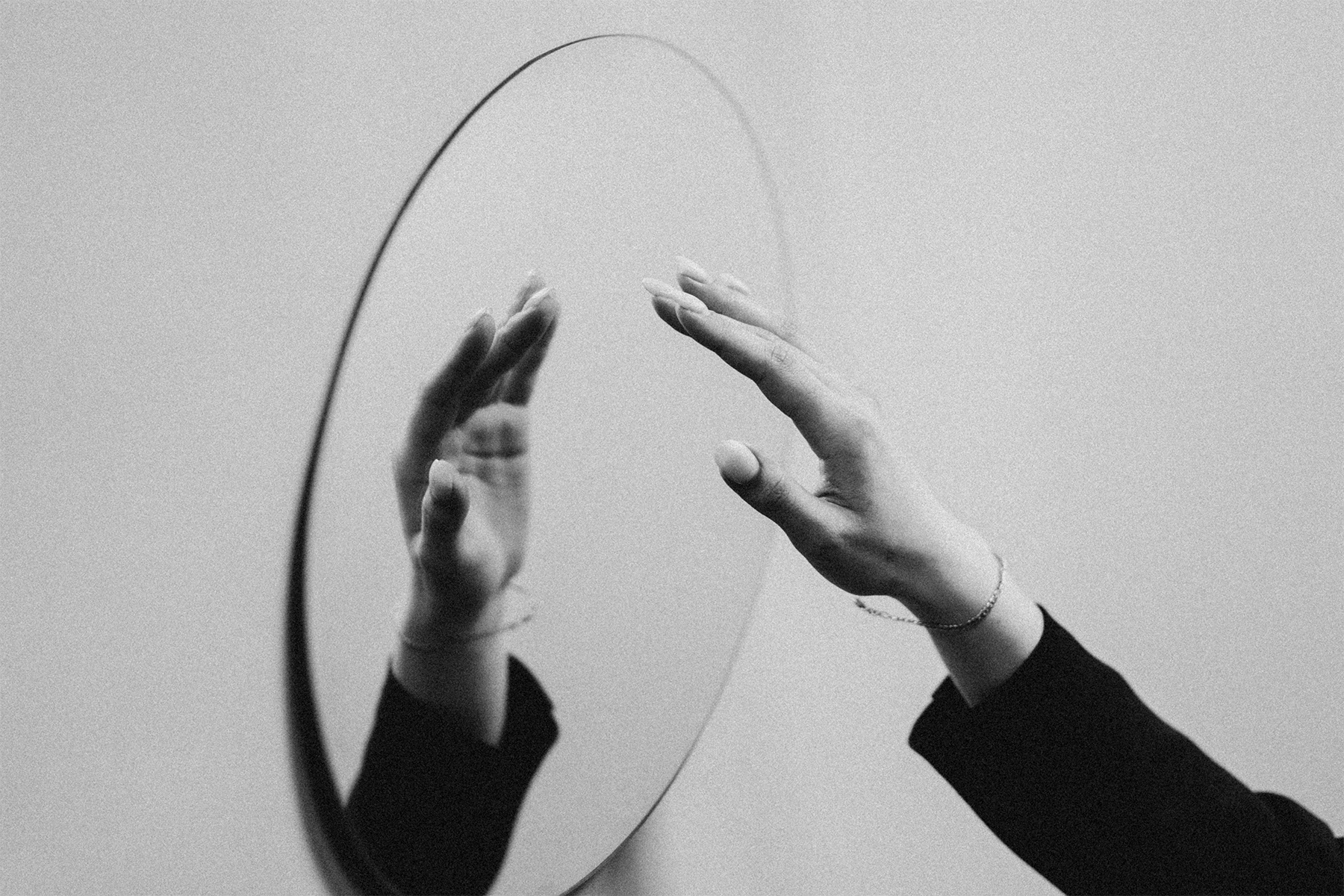
Embarrassment is usually described as an unpleasant feeling, but in today’s age of performance and perfection, the feeling of embarrassment should be something to take pride in as a signifier of personal growth.
First, we should clearly define our terms.
Embarrassment can be considered a “disturbance of the mind,” as defined by the Merriam-Webster Dictionary. This definition is distinct from shame, which is defined as “a condition of humiliating disgrace and disrepute.” The feeling of embarrassment often results from a well-meaning action, differing from shame, which usually arises from a non-well-meaning action.
Embarrassment is an unpleasant feeling because it occurs when things do not go your way. In today’s digital age, there’s an extra layer of fear immortalizing the exact moment that things took an unexpected turn.
Embarrassment, however, is an essential part of a person’s growth stage. The fear of immortalizing the awkwardness of growing as a person threatens the end of growth itself.
Perfection and performance dominate the imagination. Across nearly all social media algorithms, some forms of lifestyles, like those associated with dark academia, clean girl and alternative cultures, are performed and sold to its audiences.
Constant exposure to curated, edited and scripted performances can skew a person’s understanding of growth. The journey is always more important than the destination, and as a culture, we are currently putting too much emphasis on the destination, and not enough on the journey.
As a result, embarrassment — a natural feeling that comes with trying to grow as a person — has become a death sentence for the young and undaring. This is best embodied by the nonchalant attitude that dominates today’s youth.
To be nonchalant is to carry a non-caring attitude about what is happening around you. Nonchalance has historically been reserved for the long-lived elderly members of society, not the youth.
Yet, it’s not the fault of the youth. Nonchalance makes a lot of sense when one considers online perception: the immortalization of embarrassing moments coupled with an online culture that likes to punch down others with humour.
It is entirely valid to perform for social media as it strays further from representing reality. This is not helped by A.I. slop and an overabundance of bots programmed to boost certain types of content in the algorithm.
Nevertheless, performed perfection online still has a tangible effect on people in real life. A.I. has made it so that music, art and books may be created in seconds. Academic papers, difficult readings, and seminar participation can be passed instantly.
So, what does a frictionless performance really mean to you?
Go back to the adage of the journey versus the destination and ask yourself whether you are an on-going story, like a journey, or already defined, like the destination.
The meaning of a destination cannot truly be known without the accompanying journey. These two aspects are inseparable, so even if someone uses short cuts to achieve a perfect social performance, they cannot truly appreciate the act because they have abandoned the journey that creates real understanding.
The aspect of the journey that creates this understanding is the feeling of embarrassment. Feeling embarrassed connects a person to both the beginning and end stages of the journey of their personal growth.
It connects to the beginning by building empathy and understanding towards those who are new to the act in question and serves to de-pedestalize those who are already accomplished through the subtle recognition that they too have felt embarrassed at some point.
Embarrassment connects everyone in any one given field: it exposes the innately human aspect to labour, and when recognized, connects us to the products of our labour.
In our society, we often forget that there is more to our labour than its end products. There is a level of pride, expression and sense of purpose interwoven with our labour that makes it distinctly our own.
A key weave in the fabric of our labour is the feeling of embarrassment, which signifies personal growth and a deeper embedding of your person into the community of your craft.
Shortcuts like A.I. focus on the product that social media has conditioned us to care most about: the metaphorical destination. This objective has conditioned us to expect only the final product.
A.I. is trained on human labour and cannot exist without it. A.I. cannot evolve without new human labour and exposure to its own outputs to corrupt itself.
A person cannot truly grow without embedding themselves in the community of labour. To use shortcuts like A.I. sever the connection between the individual and the community of creators and as a result, nothing new is produced.
This leaves us as a uniquely nostalgic generation. We are always looking back, whether it be in terms of fashion, music or the strong desire to pick up analogue technology.
These are valid desires, but they lack one crucial step: we have yet to merge those aspects of the old that appeal to us with the necessary practicality of modern technology.
The feeling of embarrassment is a driver of not just personal growth, but the innovation that results from that growth. It connects individuals to their field’s community of labour, and in an age that pushes for perfect performance, emphasizing the product as opposed to nurturing the process has caused embarrassment to become essential.
Embarrassment is a sign of rebellion against a “perfect performance,” and should be worn as a hallmark of pride by today’s youth.