

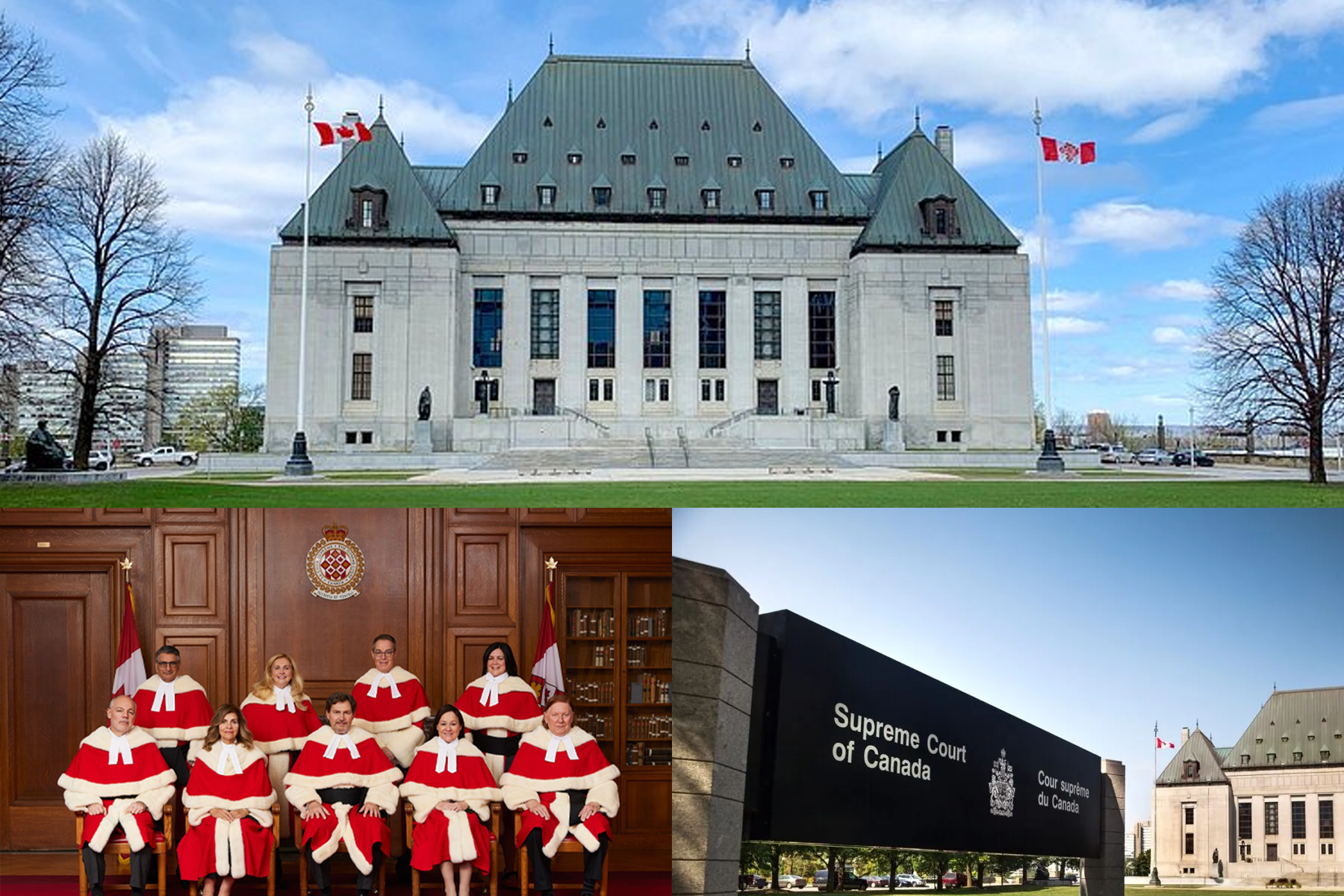
Québec’s Bill 21 on secularism and religious symbols is currently being challenged in the Canadian Supreme Court. The challenge focused on the application of section 33 of the Canadian constitution known as the notwithstanding clause. A decision from the Supreme Court is expected within the next few months.
Bill 21, titled An Act Respecting the Laicity of the State, was introduced in Québec in 2019 with the purpose of establishing the province as secular. The Bill also prohibits civil service employees in positions of authority and all teachers in the public sector from wearing religious symbols.
Bill 21 has been controversial amongst a handful of groups since passing in 2019 through limited debate.
To apply Bill 21, the Québec government had to make use of section 33 of the Canadian Constitution; the notwithstanding clause. The notwithstanding clause allows the federal and provincial governments to override certain Charter rights under specific conditions.
By invoking the notwithstanding clause, Québec preemptively shielded Bill 21 from challenges that would infringe on the Charter of Rights and Freedoms.
Rights suspended by the use of the notwithstanding clause include “section 2 (fundamental freedoms), section 7 to 14 (legal rights) and section 15 (equality rights).”
The notwithstanding clause comes with a five-year moratorium, meaning if the clause were invoked, it would only stay in effect for five years unless a future government chose to re-invoke the clause with new legislation. At the time of passing, the Québec government polled the public and found that the majority of Québécois supported banning public service employees and teachers from wearing religious symbols.
Critics of Québec’s Bill 21 claim that the secularism laws disproportionately target visible minority groups. For example, the hijab — a headscarf worn by some Muslim women as a symbol of faith and modesty — is considered a religious symbol.
Seven of the nine justices are set to hear the case. Justice Mahmud Jamal recused himself as he had “previously served on the board of directors for one of the appellants” and Justice Mary Moreau opted not to participate.
The appellants include the English Montreal School Board, The National Council of Canadian Muslims, The World Sikh Organization, The Canadian Civil Liberties Association and the Federal Government, who is also expected to intervene.
The appellants made several arguments before the court. Lawyers argued that the application of the notwithstanding clause as seen with Québec’s Bill 21 could make it easier for future potential authoritarian governments to emulate “everything that is currently happening” in the United States under the Trump administration.
Guy Pratte, a lawyer for the attorney general of Canada, argued that without restrictions on the notwithstanding clause, the government “could adopt laws that would reinstate arbitrary execution, slavery, or that would attempt to categorically and absolutely eliminate any right to equality.”
Pratte was not suggesting that any government was intending to enact such laws but that without limits, these types of laws would technically be legal.
Sahar Talebi, representing the Canadian Council of Muslim Women, stated that “Muslim women in Québec are the face of Bill 21’s exclusion. They face increased prejudice, harassment and hate crimes.”
Talebi argued that Muslim women have their religious identities “weaponized, policed and forbidden in certain spaces” to detrimental impacts.
Isabelle Brunet, representing the Québec government, argued that the notwithstanding clause and its use as presented in the constitution should be respected the same as “other rights and freedoms mentioned therein.”
Brunet stated that “we must trust our democracy. Elected representatives and the electorate are also guardians of the Constitution, and we must assume that the government will govern in the public interest.”
The Supreme Court is expected to deliver a decision on the use of the notwithstanding clause in the case of Québec’s Bill 21 in the coming months.