

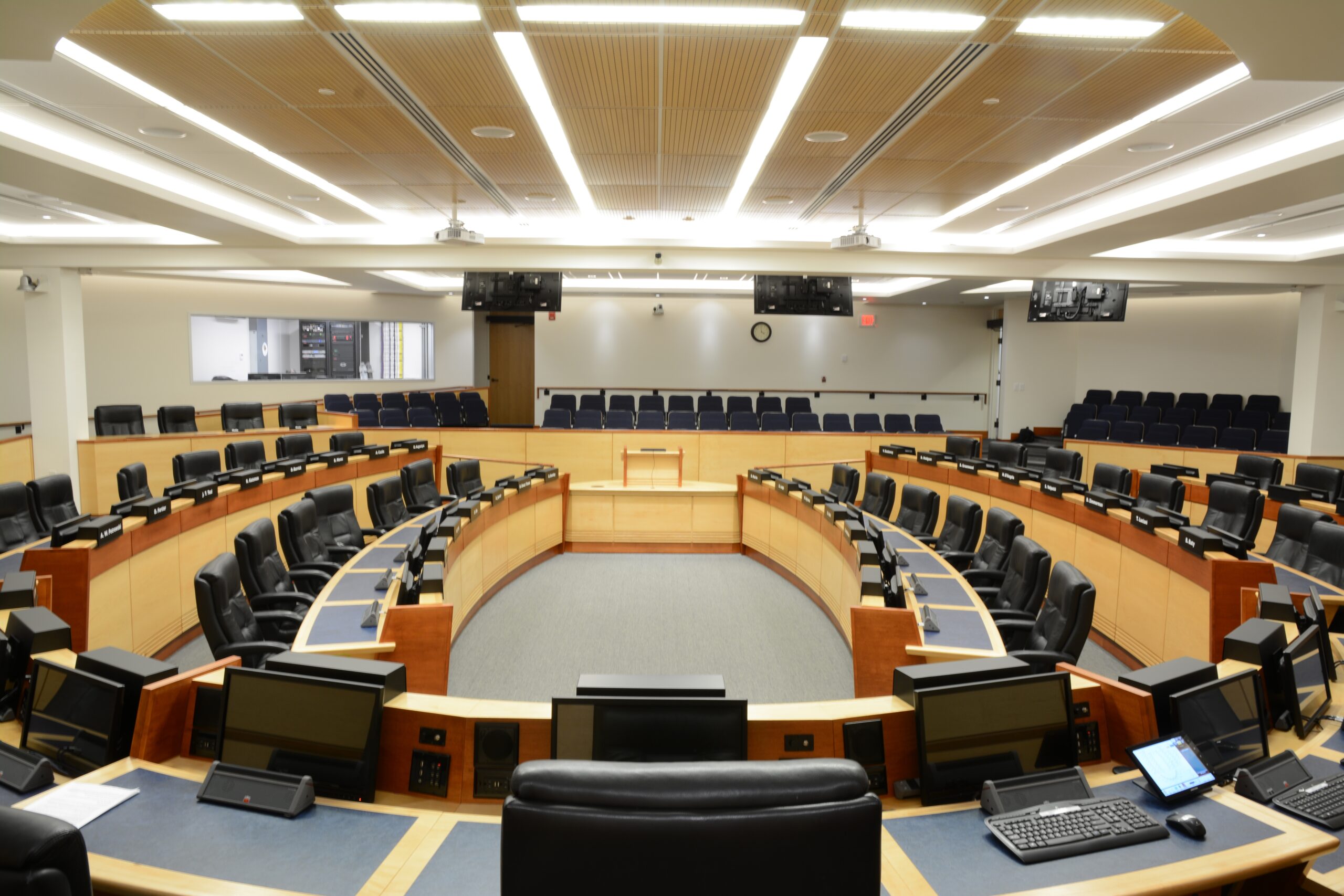
After amalgamation disputes and a scandal involving the former Regional Chair, Bob Gale, the Niagara Regional Council is now facing structural changes proposed by the provincial government.
On April 2, Ontario’s Minister of Municipal Affairs and Housing, Rob Flack, held a press conference outlining new legislation introduced by the Ford government.
The proposed Better Regional Governance Act would allow the province to reduce Niagara’s regional council from 32 members to 13, consisting solely of the mayors from each of Niagara’s 12 municipalities and a chair appointed by the provincial government.
During the press conference, Minister Flack stated, “a regional government laser-focused on provincial priorities is crucial to our long-term success.” He later justified the reduction in council size, saying, “local officials know this causes inefficiency, and they want to offer a solution that provides better value for taxpayers and enables them to act quickly on matters of importance.”
After reducing the council by more than half, the provincial government also introduced the concept of weighted voting in upper-tier municipalities. Under this system, each member is assigned a different number of votes.
Details on how voting shares will be distributed across Niagara have yet to be finalized. In a media briefing, the Ontario government stated it would look to “develop a weighted voting framework to facilitate the transition to the new council structure in the region and ensure appropriate and effective representation.”
When asked about the proposed legislation, Niagara Falls Mayor Jim Diodati told CHCH, “anything that gets rid of politicians is a good move. We have far too many politicians — far more than any other area.”
These changes are expected to take effect during the upcoming autumn municipal elections in the Niagara Region. The province has not yet indicated when a new chair will be appointed. However, alongside the restructuring of council, the government has granted regional chairs “strong chair powers.”
These powers mirror those granted to strong mayors and include the authority to appoint or dismiss the region’s Chief Administrative Officer, hire or remove division heads, bring forward matters aligned with provincial priorities and propose or veto certain by-laws if the chair believes they could advance or interfere with those priorities.
The province justified these powers as a way to accelerate decision-making, reduce dysfunction at the regional level, advance provincial priorities and create conditions to expedite housing and infrastructure development.
In contrast, Fort Erie Mayor Wayne Redekopp criticized the move, calling the implementation of strong chair powers undemocratic. He stated, “this regional chair would be empowered to veto decisions of the duly elected council that do not meet ‘provincial policy,’ with the support of one-third of council votes. This is undemocratic.”
Provincial NDP Leader Marit Stiles also raised concerns about transparency and accountability, stating, “clearly, this is a pathway to corruption because, once again, you have a government appointing insiders — conservative insiders — and who knows who else.”
Minister Flack described the bill as “another step in our government’s commitment to protect Ontario.”
The proposed changes to Niagara’s regional governance reflect a broader shift in how the province approaches local decision-making. While the government has introduced these reforms as necessary to streamline processes and accelerate development, critics argue they risk concentrating power and weakening democratic accountability.
As details around weighted voting and leadership appointments remain unclear, the long-term impact of these changes will depend not just on how the system is designed, but who is elected and how this newly proposed power is ultimately used.