

With Ontario’s municipal elections approaching on Oct. 26, eligible Niagara Falls residents are encouraged to register to vote and make their voices heard in determining the city’s future. The Brock Press has previously published an article outlining everything you need to know before you vote.
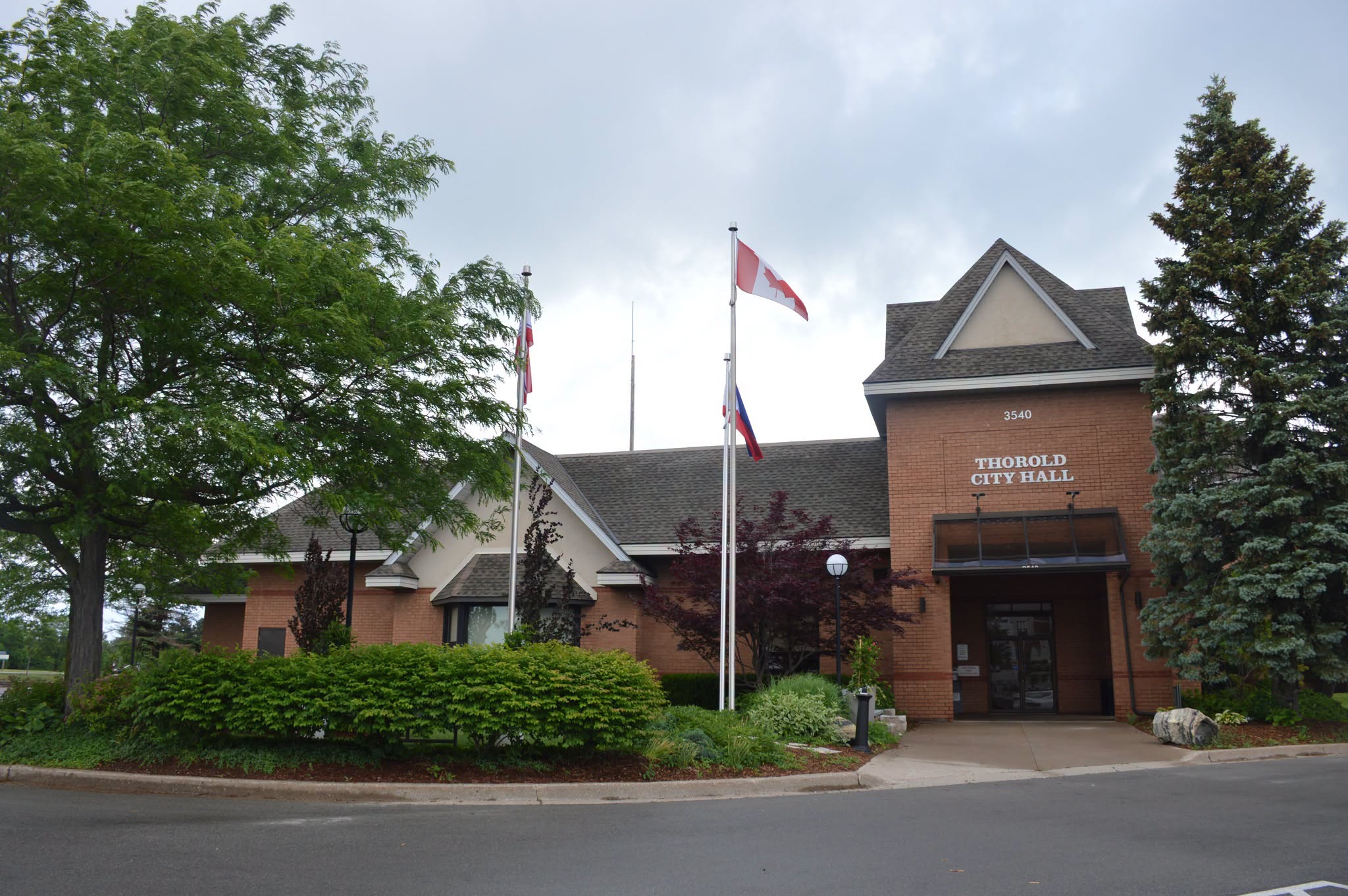
The Brock Press (TBP) interviewed both candidates running for mayor of Thorold: former mayor and current city councillor Henry D’Angela and current Niagara regional councillor Tim Whalen.
With incumbent Mayor Terry Ugulini not seeking re-election, both candidates are competing for the opportunity to lead Thorold through a period of changing regional representation and continuing municipal growth.
Although D’Angela and Whalen share concerns about affordability, infrastructure and protecting Thorold’s independence, their interviews revealed different areas of emphasis and approaches to municipal leadership.
For D’Angela, returning to the mayor’s office represents an opportunity to draw on his previous experience in local and regional government at a time when the responsibilities of Niagara’s mayors are changing.
D’Angela previously served as Thorold’s mayor from 2006 to 2010 before serving on Niagara Regional Council. He later returned to Thorold City Council.
During his interview with TBP, D’Angela discussed his recent retirement from the Canadian Mental Health Association, where he had worked for approximately four years.
He explained that retirement would allow him to dedicate more time to the mayor’s position, which he considers particularly important given the changes to Niagara’s regional governance structure.
Under the provincial government’s restructuring, Niagara’s separately elected regional councillor positions are being eliminated, leaving local mayors responsible for representing their municipalities at the regional level.
D’Angela argued that this change will significantly increase the demands placed on mayors, making previous municipal and regional experience valuable.
He described having previously attended regional meetings and fulfilled regional responsibilities while serving as mayor, experience he believes would help him navigate the new arrangement.
Whalen, meanwhile, emphasized his long-standing connection to Thorold and his commitment to the community’s future.
He told TBP that his family has nearly 200 years of history in Thorold and that his motivation for running is closely connected to ensuring the city remains a place where future generations can build their lives.
Whalen discussed wanting to contribute to a brighter future for his grandchildren and great-grandchildren, reflecting his emphasis on the city’s long-term well-being.
Having served on Thorold City Council and Niagara Regional Council, Whalen also brings experience in municipal governance to the election.
Both candidates therefore enter the race with backgrounds in local government, although their interviews emphasized different aspects of their experience and priorities for the coming term.
One of the most prominent issues discussed was municipal amalgamation, which has generated considerable debate throughout Niagara amid changes to regional political representation.
D’Angela expressed firm opposition to forced amalgamation, arguing that Thorold should maintain its municipal independence while continuing to cooperate with neighbouring communities.
He told TBP that Thorold has its own priorities, financial position and community identity, which could be diminished if the city were absorbed into a larger municipality.
D’Angela pointed to what he described as Thorold’s relatively low debt and substantial municipal reserves as examples of the importance of maintaining independent financial decision-making.
He discussed how the municipality has used its reserves and internal financing arrangements to support community projects, arguing that these financial practices allow Thorold to make investments suited to its own needs.
According to D’Angela, combining Thorold with larger municipalities could reduce its influence over spending decisions and the amenities residents consider important.
He emphasized that municipalities throughout Niagara have different economic characteristics, with some focusing on tourism and others on industrial, agricultural or waterfront activities.
For D’Angela, these differences demonstrate why municipalities should retain control over local priorities rather than being governed through a single administrative structure.
However, he distinguished his opposition to amalgamation from an opposition to intermunicipal cooperation.
D’Angela argued that Thorold should continue sharing services and working with neighbouring communities wherever doing so produces mutual benefits.
Whalen also expressed opposition to amalgamation during his interview.
His position emphasized maintaining Thorold’s identity and ensuring that the municipality continues to have a meaningful voice in regional decision-making.
While recognizing the importance of working with neighbouring municipalities, Whalen did not present amalgamation as the appropriate solution to Thorold’s challenges.
His comments also reflected concern about how municipal decisions will be made as Niagara’s governance structure changes.
With the regional councillor positions being eliminated, the next mayor will become Thorold’s principal elected representative at the regional level, creating additional responsibilities involving regional services and negotiations with other municipalities.
These changes are particularly significant because decisions concerning public transportation, infrastructure and other regional services can have substantial consequences for Thorold residents.
Beyond governance, both candidates discussed the financial pressures facing households.
As housing, groceries and other necessities become increasingly expensive, municipal taxation and the management of public resources have become important election concerns.
D’Angela emphasized the need for municipal budgets to prioritize essential services while avoiding unnecessary expenditures.
Drawing on his background in accounting, he argued that municipal officials should consistently examine whether proposed projects deliver sufficient value for taxpayers.
D’Angela described his approach as distinguishing between what the municipality needs and what residents might want, arguing that the city must ensure its essential responsibilities are adequately funded before pursuing less urgent projects.
He also stressed that municipal spending should be reviewed carefully when projects exceed their original budgets.
In such cases, D’Angela suggested that council should consider whether the expenditure is urgent, whether less expensive alternatives exist or whether the project could be postponed without creating significant problems.
As an example, he discussed a proposed pedestrian infrastructure project where he believed a less costly sidewalk arrangement could meet the same accessibility and safety objectives.
He argued that examining alternatives could reduce expenditures without compromising the purpose of municipal projects.
D’Angela also referred to a community survey he conducted during his campaign, identifying taxation, road infrastructure and water and sewer systems as among residents’ leading concerns.
In his view, municipal budgets should reflect these priorities.
Whalen similarly acknowledged the financial challenges facing Thorold residents, including students struggling to afford rent and groceries.
He discussed the importance of ensuring that housing and other essential services remain accessible as the city continues to grow.
Whalen also recognized the relationship between housing costs and food insecurity, particularly when residents must devote substantial portions of their income to rent.
His responses focused on the need for cooperation and practical improvements rather than outlining a detailed new municipal housing or taxation program.
The cost-of-living discussion also extended to homelessness, addiction and mental health, issues affecting Thorold and the broader Niagara region.
D’Angela acknowledged that municipal governments have limited authority over many factors contributing to rising living costs.
He argued that local government should focus on controlling the costs within its jurisdiction while working with regional, provincial and federal governments to address broader social and economic challenges.
For D’Angela, this includes avoiding unnecessary duplication between levels of government and ensuring that public resources are spent efficiently.
He emphasized that municipalities cannot independently resolve major affordability and social service challenges, making cooperation essential.
Whalen also recognized the need for stronger support for people experiencing homelessness, addiction and mental health challenges.
He discussed the importance of working with individuals and service providers to help people access assistance and regain stability.
His responses suggested that the municipality should work with organizations and other levels of government rather than attempting to address these interconnected challenges independently.
Neither candidate specified any detailed housing or treatment plans. Instead, their responses largely emphasized cooperation, responsible management of municipal resources and the importance of maintaining access to essential services.
Another significant concern for Thorold residents is the condition of the city’s infrastructure.
With ongoing development, changing weather patterns and growing demand for municipal services, road maintenance, drainage and sewer capacity have become increasingly important.
D’Angela identified roads as one of his highest priorities.
He discussed the need to maintain and upgrade existing streets while ensuring new infrastructure supports the municipality’s continued growth.
D’Angela highlighted projects involving road reconstruction, sidewalks, cycling infrastructure and improvements to transportation connections.
Among these was work along the Townline corridor, which he described as an example of how infrastructure investment can improve accessibility for motorists, pedestrians and cyclists.
He emphasized that road projects should not focus exclusively on vehicle traffic but should also consider sidewalks, cycling routes and connections between neighbourhoods.
D’Angela also discussed the importance of upgrading water and sewer infrastructure.
He pointed to recent flooding and sewer backups as evidence that certain areas of Thorold require additional improvements.
Drawing on his previous experience as mayor, D’Angela described municipal investments in overflow storage infrastructure designed to manage excess water during heavy rainfall.
He explained that these systems can temporarily store additional water and release it more gradually, reducing pressure on sewer systems during severe weather events.
Whalen also identified infrastructure as an important municipal responsibility, particularly roads, water systems and other essential services.
He emphasized the need to ensure that Thorold’s infrastructure keeps pace with development and continues to meet the needs of residents.
Whalen also discussed the importance of green spaces, walkable communities and neighbourhood amenities when considering future development.
His remarks reflected concern about maintaining the character and accessibility of Thorold as the city expands.
Rather than treating growth exclusively as an opportunity to increase construction, Whalen suggested that development should be considered alongside the infrastructure and community spaces needed to support it.
For students, these decisions affect more than the condition of roads and utilities.
Safe pedestrian routes, cycling infrastructure and accessible neighbourhoods can determine how easily students travel between housing, campuses, workplaces and essential services.
Public transportation was another major topic addressed during the interviews.
For Brock University and Niagara College students, Thorold’s transportation network can be particularly challenging outside neighbourhoods with direct connections to campus.
Although the regional transit system connects major destinations, residents in some parts of Thorold have limited access to nearby bus stops or face lengthy journeys when travelling between municipalities.
D’Angela expressed support for regional public transportation, describing improved connections between Niagara’s municipalities as an important objective.
He discussed previous work with neighbouring municipalities to expand transit connections and improve accessibility for people travelling for employment, education and other purposes.
D’Angela argued that increased cooperation between municipalities can help improve ridership and make services more practical for residents.
However, he acknowledged that some areas of Thorold remain underserved.
D’Angela also raised the possibility of reviewing service hours, noting that reduced schedules outside the academic year may not reflect the transportation needs of all residents.
He suggested that the municipality should work with Niagara Region Transit to identify service gaps, improve access and ensure residents are aware of the routes available to them.
D’Angela emphasized that developing a stronger regional transportation network requires cooperation and sustained planning rather than relying on individual municipalities to address transportation needs independently.
Whalen also acknowledged the continuing shortcomings of regional transit.
He suggested that although the system has undergone significant changes, improvements have not necessarily reached all communities or made transportation sufficiently convenient for residents.
Whalen emphasized the need for better transit coverage and continued work to make the regional network more accessible.
He recognized that students and workers rely on public transportation to travel throughout Niagara and that existing routes do not always meet those needs and supported improving the system’s reach and effectiveness.
Both candidates therefore recognized regional transit as an area requiring further attention.
D’Angela discussed specific opportunities for improving routes, schedules and intermunicipal partnerships, while Whalen emphasized a broader need to make the regional system more effective for residents.
Government accountability and transparency emerged as another important issue, particularly as Thorold prepares for changes to its municipal council and regional representation.
D’Angela advocated for greater public involvement in major municipal decisions.
He emphasized that residents should have opportunities to provide input before projects are finalized rather than learning about decisions after significant commitments have already been made.
Drawing on his previous experience in municipal government, he criticized instances in which projects were advanced with insufficient public consultation.
D’Angela argued that major developments should involve public information sessions throughout the planning process, allowing residents to understand proposals and raise concerns before decisions become difficult to reverse.
He highlighted plans for a museum and cultural centre, along with improvements to McMillan Park, as examples of projects where public consultation can help guide municipal decisions.
D’Angela also discussed the possibility of introducing a ward system for municipal elections.
Thorold currently elects its councillors at large, meaning candidates run across the entire municipality rather than representing specific geographic wards. D’Angela suggested that a ward system could potentially improve representation by ensuring different neighbourhoods have a more direct voice on council.
However, he emphasized that such a change would require public discussion and consultation before proceeding.
He also advocated for developing a municipal strategic plan early in the next council term, with input from residents and elected officials helping establish priorities for the following four years.
For D’Angela, transparency involves both making information accessible and allowing the public to influence decisions before they are finalized.
Whalen also emphasized the importance of openness and maintaining a connection between elected representatives and residents.
His interview focused on ensuring that local concerns are heard and that municipal government remains accessible to the people it serves.
He discussed wanting residents to feel welcome and included within Thorold’s community, particularly as the city continues to grow and attract new residents.
Whalen’s remarks emphasized responsiveness and the importance of elected officials remaining connected to the community.
Beyond individual municipal policies, both candidates discussed Thorold’s broader future and the importance of representing the city in regional and provincial discussions.
D’Angela emphasized the need to secure external funding for municipal infrastructure and community projects. He highlighted the role that provincial and federal grants can play in reducing the financial burden on local taxpayers.
As an example, he discussed planned improvements to McMillan Park involving a partnership with the District School Board of Niagara.
D’Angela described the project as one that involves several million dollars in investment, with contributions from the school board and the municipality.
He argued that provincial funding could help cover a portion of the city’s costs and potentially allow improvements to proceed more quickly.
D’Angela also highlighted work toward developing a museum and cultural centre, including federal funding secured for the project.
He emphasized that accessing government grants and working with other levels of government would remain important to the municipality’s ability to complete infrastructure and community projects.
D’Angela also discussed the importance of maintaining relationships with Brock University students.
He referred to previous conversations involving student representatives and transportation or cycling infrastructure, emphasizing that student concerns should be considered alongside those of other residents.
Whalen similarly discussed the importance of advocating for Thorold’s needs within Niagara Region and at the provincial level.
His priorities included maintaining essential infrastructure, protecting community spaces and ensuring that development supports the municipality’s long-term needs.
He emphasized walkable communities, green space and infrastructure that supports residents’ everyday lives.
Whalen’s commented further regarding his broader motivation for running, preserving the qualities that make Thorold a community where families can remain across generations.
He also expressed an interest in ensuring that students and newcomers feel welcomed within the municipality.
As Thorold continues to develop, these priorities raise questions about how the city will balance new housing and economic activity with the preservation of existing neighbourhoods and public spaces.
Throughout the interviews, both D’Angela and Whalen emphasized the importance of Thorold maintaining control over its future while cooperating with neighbouring municipalities and higher levels of government.
However, their responses highlighted different approaches to the responsibilities of the next mayor.
D’Angela is campaigning on his experience as a former mayor, regional councillor and city councillor, emphasizing municipal finances, infrastructure renewal, public consultation and protecting Thorold’s independence.
Whalen is emphasizing his long-standing relationship with the community, municipal and regional experience, infrastructure, neighbourhood development and the importance of ensuring Thorold remains a welcoming and sustainable place for future generations.
For Brock University and Niagara College students, the outcome of Thorold’s election will have implications beyond City Hall.
Municipal budgeting determines how resources are allocated to roads, community spaces and essential services. Infrastructure planning influences the safety and accessibility of residential neighbourhoods. Regional transit decisions affect how easily students can travel between school, work and home.
Meanwhile, changes to Niagara’s regional government mean the next mayor will play an important role in representing Thorold’s interests in decisions affecting transportation and other regional services.
With only two candidates seeking the mayor’s office, Thorold residents face a choice between two individuals with extensive experience in municipal politics, but differing priorities for how that experience should guide the city’s next four years.
Although municipal elections often receive less attention than provincial and federal politics, the issues discussed by the candidates demonstrate how directly local government influences residents’ everyday lives.
With election day scheduled for Oct. 26, eligible Thorold voters have an opportunity to determine which priorities will guide the city through a period of continued growth and changing regional representation.
For students living in Thorold, understanding these proposals offers an opportunity to become more informed about the decisions affecting their communities and to participate in shaping the city they call home.