

With Ontario’s municipal elections approaching on Oct. 26, eligible Niagara Falls residents are encouraged to register to vote and make their voices heard in determining the city’s future. The Brock Press has previously published an article outlining everything you need to know before you vote.
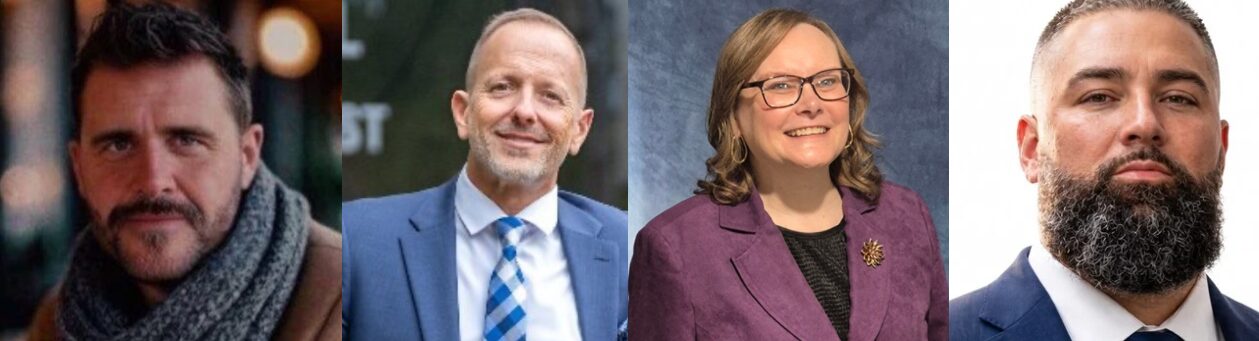
Five candidates are running for mayor of Niagara Falls, including incumbent Jim Diodati, Lori Lococo, Michael Lucid, Paul Manning and Kevin Martineau. The Brock Press (TBP) reached out to all five candidates.
Manning had initially responded to the message and agreed to do an interview over the phone, TBP sent him possible dates and times for an interview on Sept. 19, to which Manning responded with 3 laughing emojis and a message writing “You’re pretty open then,” on Sept. 20. TBP followed up asking if any of the times worked on Sept. 21, and sent a follow up message on Oct. 1, but has not received a response as of writing.
Martineau had responded agreeing to an interview over email. TBP sent the questions on Oct. 6 with agreement that Martineau would email back their response by Oct. 9. After no response from Martineau, TBP sent a follow up email Oct. 11, asking if he was still interested in the interview and if so to please send his answers by Oct. 13. Unfortunately, Martineau did not respond by that time. When Martineau did respond, he expressed concerns about the questions being “divisive or biased,” despite TBP asking the same questions to every candidate. TBP has asked him for elaboration on his concerns but have not received a response as of writing.
The other three candidates were interviewed to discuss their platforms, priorities and plans for Niagara Falls, particularly on issues affecting Brock University and Niagara College students.
Although the three candidates share concerns about the direction of Niagara Falls, their interviews revealed notably different approaches to municipal leadership, economic development, social services and government accountability.
For Diodati, the election represents an opportunity to complete the major projects he has spent years developing. Having served as mayor for 16 years, Diodati told TBP that this would be his final campaign, explaining that his experience working with successive provincial and federal governments has allowed him to secure significant investments for the city.
Among these investments is the new Niagara Falls hospital, which Diodati described as a $3.5 billion project currently under construction. He also highlighted his involvement in bringing GO train service to Niagara Falls, as well as efforts to expand the Niagara District Airport to accommodate regular passenger flights.
Diodati emphasized that maintaining relationships with governments of different political affiliations has been essential to advancing these projects. He argued that his established connections and familiarity with municipal processes make him particularly well-positioned to complete them.
“This is my last run,” Diodati said, explaining that he wants one final term to finish what he started.
Lococo, who has served two terms and eight years on city council, expressed a different motivation for seeking the mayor’s office. She told TBP that residents have been asking for change and that her experience on council has prepared her to provide it.
Throughout her interview, Lococo emphasized the importance of municipal accountability, responsible spending and ensuring residents receive adequate services from City Hall. She argued that although Niagara Falls has significant revenue coming in, the city needs to reconsider how that money is being spent and whether existing initiatives are producing meaningful results.
Lucid, a Brock University alumnus, offered a more sweeping criticism of the current political system. He argued that governments at all levels have become too large, expensive and involved in people’s everyday lives, contributing to declining public safety and worsening economic conditions.
Lucid described Niagara Falls as underperforming and identified public safety as his primary motivation for running. He was particularly critical of federal and provincial immigration policies, the international student recruitment system and municipal relationships with private educational institutions.
While Diodati emphasized continuity and Lococo advocated for changes to municipal operations, Lucid presented his candidacy as an opportunity for a fundamental reconsideration of the role of government.
One of the most pressing concerns discussed in all three interviews was affordability, particularly the difficulties facing students and young people who are struggling to afford housing, groceries and other necessities.
Diodati argued that increasing the housing supply is among the most effective ways to address these pressures. He pointed to the city’s partnerships with private developers, including a 10-storey, 362-unit apartment development downtown, which he said would designate 20 per cent of its units as affordable or attainable housing.
According to Diodati, expanding the availability of housing would help address the imbalance between supply and demand that has contributed to rising rental and property costs.
He also suggested that recent reductions in immigration have helped ease some of the pressure on Canada’s housing market, although he maintained that constructing additional housing remains essential.
Lococo similarly recognized the need for more affordable housing but questioned whether the city is making the most effective use of its financial resources.
She highlighted an initiative in Welland that she said produced 83 affordable housing units through a $2 million investment, contrasting this with Niagara Falls’ community improvement programs that provide incentives to renovate vacant spaces above commercial buildings.
These claims cannot be verified, there are reports of Welland investing $31 million for 83 housing units and $2 million for 9 townhouses, Lococo was reached out by TBP for clarification on Oct. 20 but have not received a response as of writing.
Lococo acknowledged that converting unused commercial properties into housing could benefit students and other residents but questioned whether the city had adequately established how many new units its investments would produce.
For Lococo, the issue reflects a broader concern about the need to measure the effectiveness of municipal spending.
She advocated for zero-based budgeting, a process through which every municipal expenditure would be reviewed and justified rather than simply carrying forward spending from previous years. Lococo argued that this approach would allow the city to identify unnecessary expenses, direct funding toward more effective programs and potentially reduce the financial pressures placed on taxpayers.
Although municipalities have limited control over the price of essentials such as groceries and gasoline, Lococo suggested that more responsible municipal spending could improve affordability by reducing tax pressures that may ultimately affect renters.
She also emphasized the importance of partnerships with non-profit organizations, developers and other levels of government to increase the availability of housing that residents can realistically afford.
Lucid connected Niagara’s affordability challenges to broader government policies concerning immigration, post-secondary education and economic growth.
He argued that international student recruitment practices and temporary immigration programs have contributed to housing pressures while exposing students and newcomers to financial exploitation.
Lucid spoke on his opposition to the University of Niagara Falls Canada and its relationship with Global University Systems.
He accused private educational institutions of taking advantage of international students through high tuition fees and questioned the public benefits of municipal partnerships with these organizations.
Lucid also made allegations about potential conflicts of interest involving municipal officials and organizations associated with the university. The Brock Press has not found information that substantiates these claims.
Rather than proposing a specific municipal housing construction program, Lucid focused on changing government priorities, reducing what he considers excessive public spending and reconsidering the city’s approach to development.
The conversation surrounding affordability also extended to homelessness, addiction and mental health, with the candidates presenting some of their most significant policy disagreements.
Diodati expressed frustration with existing approaches to addiction and homelessness, arguing that current policies are failing both vulnerable individuals and the broader community. He was particularly critical of low-barrier shelters, which allow individuals experiencing addiction to access shelter without requiring sobriety. Diodati argued that “the reward for being clean should be […] a warm bed, nice food, shower and protection.”
He also expressed opposition to supervised consumption sites and support for mandatory or involuntary treatment, advocating for a “tough love” approach.
According to Diodati, individuals experiencing severe addiction or mental health crises are not always capable of making decisions that protect their well-being, making stronger intervention necessary. He described incidents of repeated overdoses requiring emergency services and raised concerns about the strain it places on hospitals, first responders and municipal resources.
Diodati also pointed to the effects of encampments and public substance use on local businesses and residential neighbourhoods.
When TBP raised concerns that stricter shelter rules could lead to more unhoused individuals seeking refuge in hospital emergency departments, Diodati acknowledged the possibility of unintended consequences. However, he maintained that current policies have not adequately addressed the crisis and suggested that Niagara Falls could pilot alternative shelter and treatment policies before evaluating their effectiveness.
Lococo approached the issue differently, particularly regarding involuntary treatment. She argued that Niagara’s existing mental health and addiction services are already struggling to accommodate people who actively seek assistance.
Lococo described situations in which individuals requesting rehabilitation cannot access treatment because facilities are full, while those experiencing homelessness face similarly limited housing options.
In her view, governments should prioritize expanding voluntary treatment and housing resources before introducing more coercive interventions.
“Don’t jump to crisis; fix the solutions first,” Lococo said.
She emphasized that homelessness, addiction and mental illness frequently overlap, making it essential to address them through coordinated services rather than treating them as isolated problems.
Lococo also stressed that many of these services fall under provincial jurisdiction, with funding administered through Niagara Region. As mayor, she said she would advocate for additional provincial resources and stronger partnerships to address gaps in treatment and housing.
Lucid proposed a more enforcement-oriented approach centred on law enforcement, personal responsibility and rehabilitation through nature. He discussed establishing an outdoor rehabilitation facility, which he described as a “boot camp,” for individuals involved in unlawful activities and substance use.
Lucid suggested that people could be directed to such a facility as an alternative to incarceration, although implementing this type of program would require cooperation with higher levels of government. He advocated for a strict environment with limited amenities, arguing that physical hardship and time spent outdoors could encourage behavioural changes.
Lucid also emphasized his intention to work closely with police officers and proposed additional training to help law enforcement address social and behavioural issues before individuals enter the criminal justice system. His approach reflects his broader view that restoring respect for police and enforcing shared community standards are necessary to improve public safety.
While all three candidates acknowledged the seriousness of Niagara’s homelessness and addiction crises, their proposals revealed fundamentally different perspectives on the balance between access to services, personal autonomy and government intervention.
Another major concern for students is Niagara Region Transit (NRT), which has faced criticism over route availability, service frequency and the difficulty of travelling between municipalities. For many Brock University and Niagara College students, commuting can involve lengthy transfers and significant waiting periods, particularly when travelling from communities outside St. Catharines.
Diodati acknowledged that regional transportation remains a challenge but emphasized that consolidating separate municipal transit systems in 2023 was an important first step toward improving accessibility.
He noted that Niagara Falls, St. Catharines and Welland previously operated separate transit services, making regional travel more complicated. Although Diodati argued that integration has improved transportation, he recognized that Niagara’s dispersed population makes expanding conventional bus service difficult and expensive. He suggested exploring partnerships with transportation services such as Uber to improve access in underserved areas.
Diodati also discussed the importance of working with Brock University and Niagara College to establish more predictable transit funding through student pass arrangements, which could help support additional service.
Lococo similarly acknowledged the operational difficulties involved in merging separate transit systems, including differences in vehicles, fares and routes.
However, she argued that the region should move beyond the challenges of integration and focus on improving the service itself.
Lococo expressed concern about students spending nearly two hours travelling between destinations that would take considerably less time to reach by car. She emphasized the importance of improving both geographic coverage and service frequency, although she recognized that these changes would require balancing costs between transit users and taxpayers.
Lucid suggested that transit improvements should be guided more directly by the experiences of riders. He proposed creating a database through which residents could submit their preferred routes, schedules and commuting needs, allowing planners to identify gaps in service. He also discussed using artificial intelligence and data analysis to evaluate transportation patterns and improve efficiency.
Despite their different proposals, all three candidates recognized that public transit is essential not only for students but also for workers and residents who depend on it to access employment, education and essential services.
Beyond transit, the candidates were questioned about Niagara Region’s political restructuring and the ongoing debate surrounding municipal amalgamation.
Under the provincial government’s restructuring plans discussed during the interviews, Niagara’s regional council would consist of the region’s 12 mayors, eliminating the separately elected regional councillor positions.
Diodati expressed support for reducing the number of elected officials and restructuring municipal government to eliminate duplication. He argued that Niagara’s two-tier municipal system creates overlapping responsibilities in areas such as planning, infrastructure and economic development, resulting in unnecessary administrative expenses.
Diodati suggested that amalgamating municipalities into a smaller number of larger cities could improve efficiency and reduce costs while preserving the identities of existing communities.
Lococo was more cautious about the changes, particularly regarding their implications for democratic representation. She noted that Niagara Falls previously had several representatives at the regional table, allowing councillors to bring different perspectives and concerns forward. Under the new arrangement, responsibility for representing the city’s interests would fall primarily on the mayor. Lococo questioned whether this reduction in representation could weaken the diversity of perspectives influencing regional decisions.
She also raised concerns about the future of regional committees responsible for homelessness, addiction, mental health, childcare and seniors’ services. If city councillors were expected to assume these responsibilities, Lococo questioned whether their positions would become significantly more demanding. Alternatively, transferring responsibilities to municipal staff could increase administrative costs while removing elected representatives from important decisions.
Lococo also criticized previous consultations surrounding amalgamation for providing insufficient opportunities for residents to participate directly. She suggested that further restructuring could occur during the next council term, making public consultation and political accountability particularly important.
Lucid opposed further amalgamation, arguing that restructuring government does not necessarily resolve existing problems. He expressed concern that larger municipal structures could distance residents from decisionmakers and potentially create further opportunities for political favouritism. Instead, Lucid advocated for improving the performance and accountability of existing municipal institutions.
The candidates were also asked about artificial intelligence and the possibility of A.I. data centres being developed in Niagara Falls.
Diodati expressed both interest in technological innovation and concern about its potential consequences.
He discussed A.I.’s possible benefits in medicine, research and problem-solving while also describing it as a potentially serious threat if technological development outpaces society’s ability to manage it.
Regarding data centres specifically, Diodati acknowledged concerns about electricity and water consumption but suggested that newer technologies might reduce these demands.
He said Niagara Falls had not received a concrete data centre proposal at the time of the interview and that municipal leaders needed more information before taking a definitive position.
Lococo also advocated for further research.
She explained that she had previously brought forward a motion requesting a municipal staff report on A.I. data centres, but the motion did not receive sufficient support to pass. Lococo raised concerns about electricity usage, water consumption, environmental impacts and the possibility that increased infrastructure demands could affect utility costs for residents.
She also questioned the long-term employment benefits of these facilities, noting that construction jobs may not translate into substantial permanent employment. However, she acknowledged potential advantages associated with Canadian data-processing infrastructure and argued that imposing an immediate moratorium without sufficient information would be premature.
Lucid was more firmly opposed to A.I. data centre development in Niagara Falls.
He criticized the potential environmental impacts of these facilities and questioned whether the city should prioritize large technological developments while existing water, wastewater and infrastructure challenges remain unresolved.
His position reflected a broader emphasis on environmental preservation and improving quality of life rather than pursuing development primarily for economic growth.
The interviews also addressed concerns about extremist groups operating in Niagara Region and their rising popularity, including Second Sons, Atomwaffen Division and Dominion Society.
Diodati stated that he would not tolerate hatred or violence directed toward any community. Although he suggested that these organizations had not established a particularly significant presence within Niagara Falls itself, he maintained that he would speak out against discriminatory and hateful behaviour.
Lococo similarly expressed opposition to extremist groups but argued that municipal responses would depend on the specific circumstances. She emphasized that freedom of expression is an important right while maintaining that a distinction must be drawn when speech becomes abusive, harassing or harmful to others.
Lucid approached the discussion through the concepts of social isolation, mentorship and integration.
He suggested that individuals involved in extremist movements are influenced by a lack of mentorship, saying, “those people didn’t have a daddy, just like a lot of people that identify as black that are incarcerated. They didn’t have mentorship. Those guys need a purpose.”
During the discussion, Lucid said he did not know if the aforementioned extremist groups could be considered white supremacists and repeatedly raised concerns about Islamist extremism and non-western ideologies — all of which to argue that newcomers should be supported in adapting to Canadian laws and social expectations.
Lucid then discussed his broader opposition to diversity, equity and inclusion (DEI) programming.
Lucid argued that DEI policies encourage governments to categorize individuals according to identity and advocated for eliminating such initiatives from municipal operations. He criticized certain policies concerning gender identity and religious accommodation, arguing that government institutions should focus on treating individuals equally without identity-based programming.
Lucid said, “we’re Canadian and we’re going to come back to everybody is created equal. We are going to come back where there’s two genders. There are men and there’s men with wombs, and then we shorten that to womb man and then to woman. A woman has a sacred period every month. And it is emotional and it is sad, that the reproductive system didn’t fulfil what it wanted to do at that time. A lady has a baby; she has a womb. To convolute that and say, now we’re going to accommodate men that want to pretend that they have this sacred period and that they have the sacred womb is completely out of control. There’s no reason for DEI. The identity is the ego. We’re not going to pre-program people into negative self-belief.”
His position differed from those expressed by Diodati and Lococo, who emphasized opposition to hatred and discrimination without advocating for the elimination of municipal DEI initiatives.
Government transparency and accountability emerged as another central theme, with all three candidates emphasizing the importance of communication between City Hall and residents.
For Lococo, ensuring that no resident “slips through the cracks” is a major campaign priority.
She described receiving complaints from residents who had repeatedly contacted municipal departments without receiving responses to their telephone calls or emails. Although Niagara Falls introduced a centralized customer service platform intended to simplify communication between residents and municipal departments, Lococo said she continued to hear complaints about lengthy waiting periods and unanswered inquiries. She proposed reviewing the system to identify problems and improve responsiveness.
Lococo also emphasized the importance of accessibility for seniors and residents who may not have internet access or feel comfortable using online municipal services. In her view, responding to residents should be a basic responsibility of municipal government rather than something that requires intervention from an elected councillor.
Diodati defended his administration’s transparency record, pointing to his accessibility, social media presence and publicly available financial information. He highlighted the renegotiation of Niagara Falls’ casino-hosting agreement, which he said has generated approximately $200 million in additional revenue for infrastructure and other municipal priorities.
Diodati maintained that information about municipal spending is available to the public and that residents have opportunities to participate in consultations and other civic processes.
However, he acknowledged the continuing challenge of encouraging residents to vote in municipal elections. He expressed concern about low voter turnout and discussed efforts to improve engagement through social media, public communication and youth advisory initiatives.
Lucid proposed a more direct form of public accountability through regular meetings between the mayor and residents.
He suggested holding public meetings at the MacBain Community Centre from Monday through Thursday, between 10 a.m. and noon, allowing residents to raise concerns without relying on private appointments or informal political connections.
He also advocated for greater scrutiny of municipal business agreements and public-private partnerships.
Lucid criticized Niagara Falls’ involvement with the University of Niagara Falls Canada and Niagara Falls Innovation Hub, questioning whether these relationships provide sufficient public benefits.
He advocated for ending the city’s support for Global University Systems and reconsidering the Innovation Hub’s role.
Lucid made additional allegations concerning the conduct of public officials and private organizations involved in these projects. These claims are not verified and would require further research and responses from the individuals and organizations concerned.
While the candidates disagreed about the effectiveness of the current administration, each recognized that restoring or maintaining public confidence requires stronger communication between government and residents.
The interviews concluded with discussions about the long-term development of Niagara Falls and the priorities each candidate would advocate for at the regional and provincial levels.
For Diodati, transportation and infrastructure are among the most important priorities. He discussed expanding GO train service toward hourly frequency, improving regional roads and extending the Niagara District Airport runway by approximately 3,000 feet to accommodate regular passenger flights. Diodati argued that better connections between roads, rail, transit and air travel would improve accessibility for residents and visitors while strengthening the regional economy. He also reiterated the importance of completing the new hospital, describing the project as a major investment in Niagara’s future.
Lococo emphasized the importance of strategic infrastructure planning, particularly considering provincial discussions about significantly increasing tourism in Niagara Falls. She questioned whether the city’s roads, sewers and aging infrastructure could accommodate millions of additional visitors without substantial improvements. Lococo argued that infrastructure maintenance and long-term planning must accompany economic expansion.
She also expressed concern about municipalities increasingly contributing funding to services that fall under provincial responsibility, including hospitals, public health, hospice care and physician recruitment. As an example, she discussed financial incentives offered by municipalities to attract family doctors, suggesting that competition between communities may increase costs without addressing the broader shortage of healthcare professionals. Lococo argued that the province should assume greater responsibility for funding these services rather than placing additional financial burdens on municipalities.
She also emphasized the importance of preserving green spaces and protecting Niagara’s environment.
Economic diversification was another major priority. While acknowledging tourism’s importance to Niagara Falls, Lococo argued that the COVID-19 pandemic demonstrated the risks of relying too heavily on a single industry. She advocated for attracting businesses and creating well-paying employment opportunities outside tourism, particularly to encourage Brock University and Niagara College graduates to remain in Niagara after completing their studies.
Lucid similarly discussed the need to reconsider the city’s approach to economic development, although his vision focused more heavily on tourism, wellness and the natural environment.
Drawing on his experience in tourism-related business, Lucid proposed developing Niagara Falls as a destination for music, recreation and health-oriented experiences. He argued that the city’s internationally recognized natural attractions should be used to create more meaningful experiences for visitors rather than focusing primarily on attracting larger numbers of tourists.
Lucid also emphasized the importance of protecting the environment and pursuing educational partnerships that he believes would better serve local residents. In particular, he advocated for replacing the city’s existing relationship with Global University Systems with partnerships involving established post-secondary institutions.
Together, the interviews reveal three distinct visions for Niagara Falls at a time when the city is facing significant economic, social and political changes.
Diodati is seeking to continue his administration’s work, emphasizing his experience and the completion of major infrastructure projects. Lococo is advocating for greater fiscal accountability, more responsive municipal services, improved social supports and a more diversified local economy. Lucid is proposing substantial changes to government operations, public safety, post-secondary education and the city’s development priorities.
For Brock University and Niagara College students, these competing visions carry consequences beyond the mayor’s office.
Municipal housing policies influence whether students can afford to live near their campuses. Transit planning determines their ability to travel between school, work and home. Economic development shapes the availability of employment after graduation, while decisions concerning social services affect the broader communities in which students live.
Meanwhile, changes to Niagara’s regional governance structure could place greater responsibility on municipal mayors for decisions affecting transportation, healthcare, housing and other essential services.
Although municipal elections frequently receive less attention than provincial and federal politics, the issues discussed by the candidates demonstrate how directly local government influences everyday life.
With Niagara Falls residents heading to the polls on Oct. 26, eligible voters have an opportunity to determine which vision will guide the city over the next four years.
For students hoping to build their futures in Niagara, understanding the candidates’ priorities and participating in the municipal election offers an opportunity to influence the communities in which they live, study and work.