

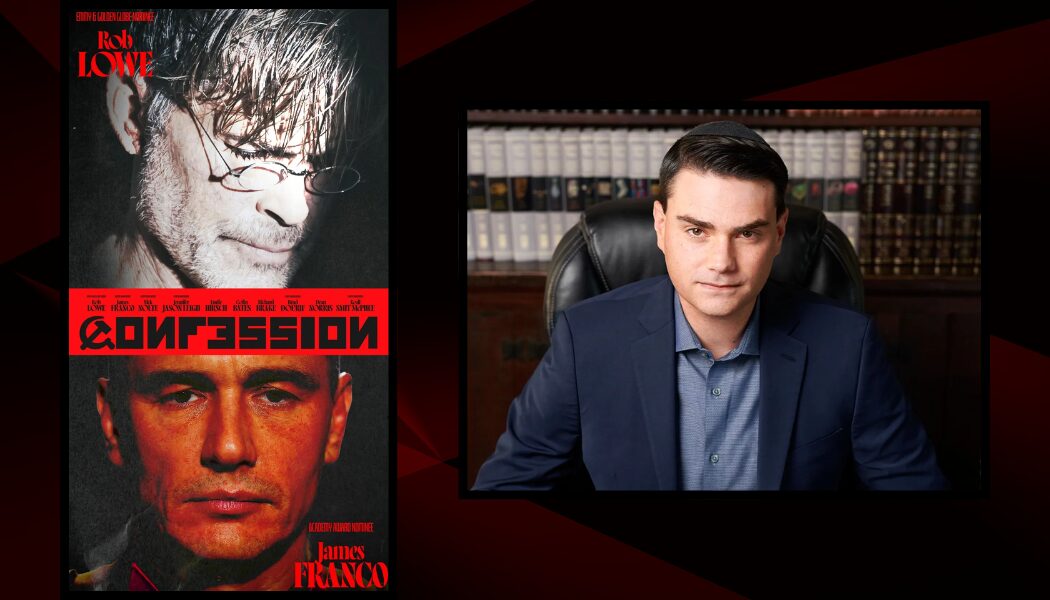
During the peak of Donald Trump’s first presidency, the political landscape became rife with a culture war of left vs. right and good vs. evil.
The blue-haired liberal became a pariah, and the dignified debate lord grew in prevalence online. Facts didn’t care about your feelings, and conservative commentary was the dominant voice in political culture. Among the most prevalent of these voices was Ben Shapiro.
Ben Shapiro has been trying to seep his political commentary into the art world for years, but it has never seemed to land with mainstream audiences. That is until now, with his next film set to come out in November, boasting a Hollywood-branded cast.
Shapiro rose in popularity on the internet in 2016, when his commentary was based heavily on divisive, reactionary issues like gender politics and racism. Most of his content revolved around so-called hard-hitting journalism, like reacting to “woke” TikToks, and brash and immodest music videos and celebrity gossip. You may recognize him most from his viral video, reacting to “WAP” by Cardi B and Megan Thee Stallion.
The formula of content like this relies heavily on making the left appear radical and irrational. For the most part, this tactic has proved successful for Shapiro, amassing nearly five billion total views on his YouTube channel alone.
But within the somewhat shallow commentary on the descent of Western culture, more sinister language lurks. Shapiro has denied police brutality on several occasions, most notably in the death of Trayvon Martin, a 17-year-old killed by police in 2012. Shapiro has also been a staunch advocate against transgender identity and abortion.
In 2015, Ben Shapiro co-founded The Daily Wire, a self-described counter-culture media outlet. The company has since grown, distributing news, books, shows and of course, films.
Though unabashed in his conservatism, it always seemed that Shapiro’s real dream was to be an artist. In 2020, he produced a film called Run, Hide, Fight, in which a school shooting takes place, and one student — the daughter of an army sniper — must save her classmates. The sentiment mimics a distinctly American anxiety while also subtly endorsing the popular pro-gun sentiment, “the only thing that stops a bad guy with a gun is a good guy with a gun,” popularized by Wayne Lapierre, then Executive Vice President of the National Rifle Association.
Confession is Shapiro’s first official screenwriting credit. While most people have to slum it in the arts for the first years of their career, Shapiro begins his experience as a screenwriter with a star-studded cast. The film stars Rob Lowe and James Franco, with actors like Jennifer Jason Leigh and Dean Norris alongside them. The film is set in 1938 communist Moscow, where a former literature professor, played by Rob Lowe, is interrogated for conspiracy by his former student, who is played by James Franco.
In a statement, Rob Lowe described the film as “an incredible story of the human spirit and its survival against those who would crush it.”
Other artists participating in the film have not been vocal about their involvement.
Perhaps Ben Shapiro is offering an oasis for actors who have been pushed out of the industry for various reasons or cancelled by the public, like James Franco, who has been accused of sexual misconduct.
The film and the prevalence of the actors in it raise the question of what this means for culture and tolerance of conservatism in the mainstream. A political worldview that might otherwise only be encountered through commentary, debate or social media can instead arrive through familiar actors and the conventions of a feature film. This counterculture attempts to effectively normalize these ideas in the mainstream. However inflammatory the creation behind the film may be, it still must stand on its own artistic merit.
Though Confession is likely to turn out to be an unremarkable film, its normalization within entertainment still raises concerns about the insertion of these politics into mainstream culture.