

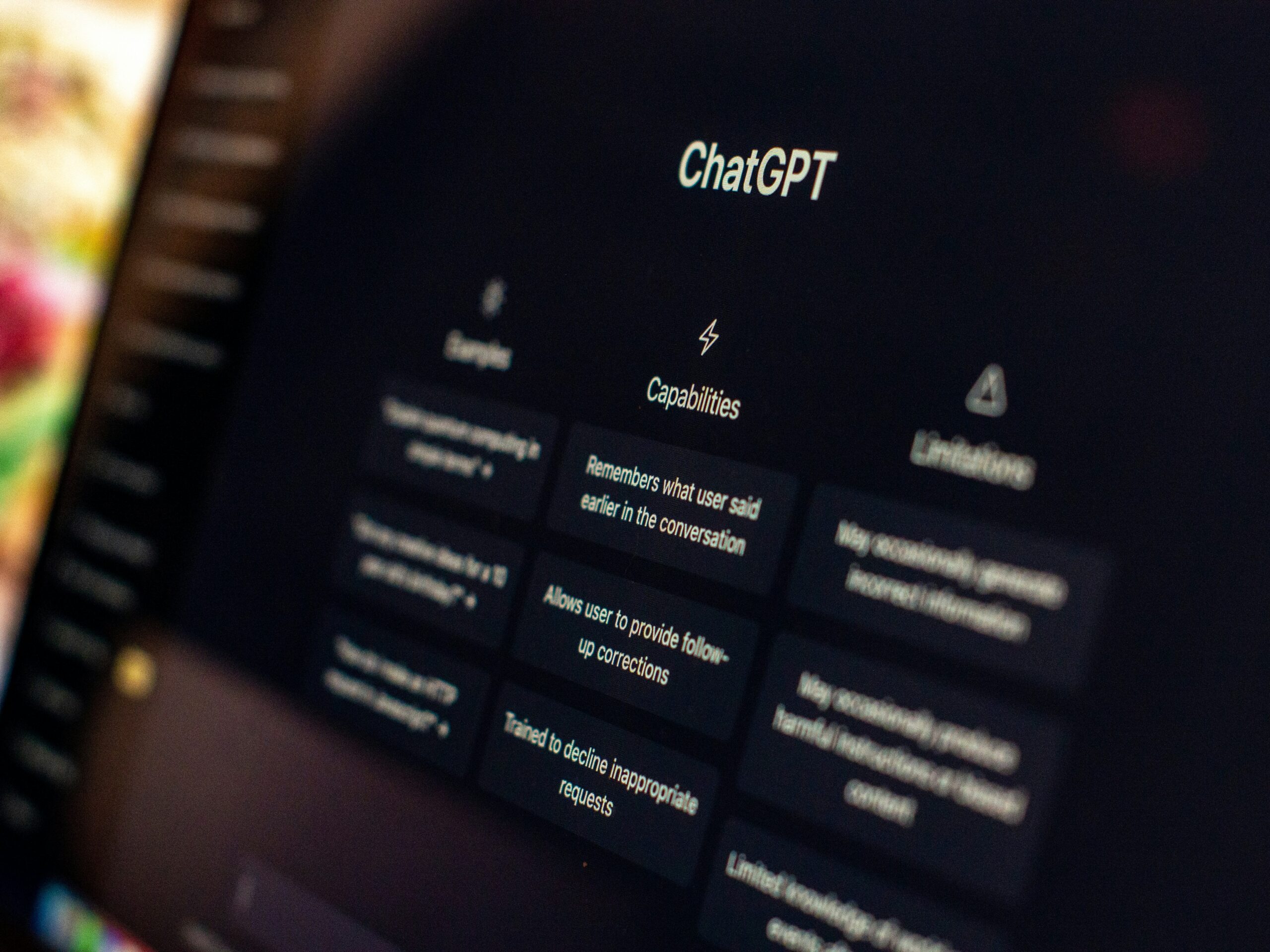
It tends to be a surprise when you have leaders in any industry telling the government they want more regulation — and it’s often the industry clamouring for less regulation — but Anthropic CEO Dario Amodie claiming that “for too long, the industry lied,” in regard to the risk of artificial intelligence (A.I.), and that it could “kill us all,” is reason enough to pause and take a step back.
Not only did the CEO of one of the world’s biggest A.I. companies warn us, but former engineers at Anthropic have said that the industry is gambling with the lives of its users and many media reports are filled with apocalyptic doom — think Ultron, Terminator and Dune.
Unlike these films of near-human-extinction, we’re not quite in the jaws of doom just yet. However, we are entering a cultural turning point.
Without any regulation, as it is currently, A.I. has become somewhat of a persistent pest within our lives. I cannot count how many times I have heard “Google it” become “Chat it” or “ask Chat.” You may be asking yourself what on earth would culture have to do with regulation on a policy level? Well, quite a lot, actually.
Due to a plethora of reasons, mostly ignorance, governments — including ours — have not been keen on regulating A.I., leaving it up to the curious minds of tech to cause people (like you and me) to go nuts. Some may think A.I. is a recent phenomenon that came with Siri, Alexa and Google Home — but that would be a limiting view.
Since the ‘50s and dawn of computers, there have been some who have been obsessed with creating a computer that can compute and learn like our brains — a notion I find equally repulsive and fascinating. This constant fascination with making a brain equal to that of a human is beginning to sound less like a boondoggle and more like fanaticism.
As Geoffrey Hinton, the godfather of A.I., puts it: “we need to slow down.” We are on the road to creating something more intelligent than us — creating a dynamic in which humans are two-year-olds and A.I. is the adult. It’s a terrifying reality, but if you think A.I. going rogue is some far-off event that won’t affect you anytime soon, the Government of Australia recently shared that a seemingly “rogue” OpenAI agent hacked its medicare website.
As said above, we may not be staring down the barrel of a terminator’s shotgun, but we are on track to making one, which is why I suggest we need to focus on two points. Firstly, people need to stop being so dependent on A.I. since our brains are the most powerful computing devices we have. Why not use them, rather than an unfeeling machine, to gain more knowledge?
Secondly, the need to push for regulation is something that cannot be stressed enough. We need the government to ensure that this technology — “Super Intelligence,” as U.S. President Donald Trump calls it — does not get out of hand and become akin to some omniscient being considering us to be pests. We need to get a handle on it and ensure it doesn’t backfire on us… not to mention the host of environmental issues that come along with A.I. data centres, which is an article for another time.
In the end, we need to hold ourselves beyond the level we hold to A.I. and not allow ourselves to become mediocre, lazy and submissive to a technology of our own creation. We need to prevent ourselves from racing into extinction and remember that our greatest computers are the ones in our heads. So, let’s use them.