
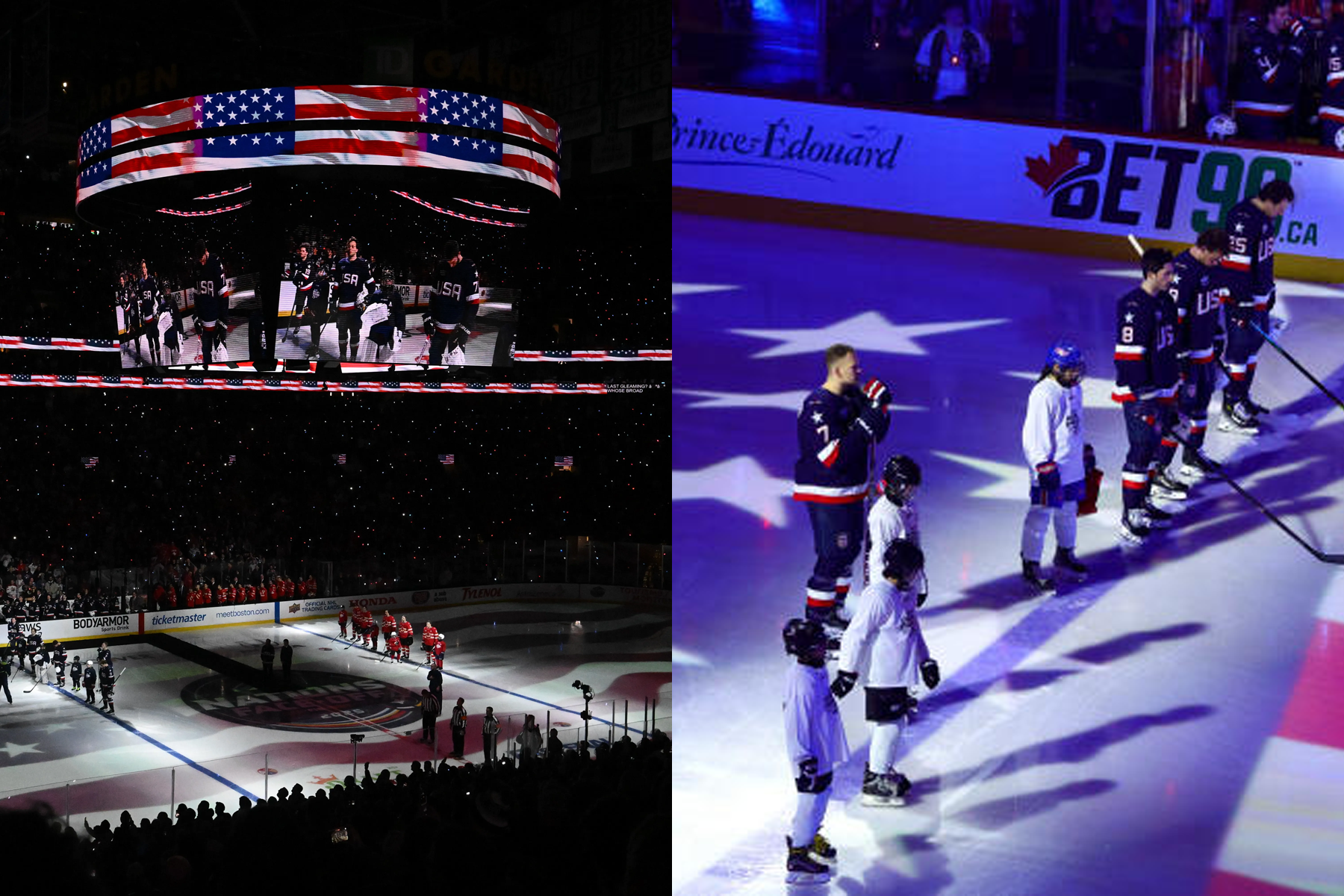
Over the last month, Canadians have gone viral for booing the U.S. national anthem at major sports games, and it’s hard to blame them.
After the first month of Donald Trump’s presidency proved to be tumultuous for relations between Canada and their long-standing southern ally, tensions continued to flare at the Canada-U.S. 4 Nations hockey game in Montreal on Feb. 15, where clips of Canadian fans loudly booing the American anthem went viral.
The angry spectators voiced their disdain despite public address announcer Michel Lacroix’s request that fans respect both teams’ anthems.
The disapproval from the crowd is yet another example of growing Canadian nationalism in the past few months, spurred on by Trump’s continual mockery of Canada’s sovereignty and repeatedly expressed desires to transform the country into America’s “51st state.” It also comes in the face of heavy tariffs imposed by Trump towards Canada, as well as the president’s repeated falsehood that Canada plays a major role in the U.S.’s current fentanyl crisis, when only 0.2 per cent of U.S. border fentanyl seizures happen at the Canadian border.
So, tell me: Why, after all these verbal attacks and lies toward a country that has always been one of the U.S.’s greatest allies, Canadians should be expected to sit idly by and pretend that everything is hunky-dory? The American president has repeatedly mocked and belittled Canadians and the country they call home — if that’s not a reason to boo the American anthem, I’m not sure what is.
Some critics have expressed disapproval toward this sudden shift in Canadian expression, which has often been stereotyped as “people pleasing” and defined by a tendency to over-apologize.
Booing the American anthem isn’t an act of protest, it’s “rude,” wrote one critic for the London Free Press.
“This is why no one likes Canada,” wrote one enraged American hockey fan on social media.
Professional American hockey player Cole Caufield echoed this criticism, calling the behaviour “disrespectful” and admitting it “bothers [him] a bit.”
There’s something that these critics need to understand, however. I believe it’s fair to say that the average Canadian who boos the American anthem isn’t launching an attack on the average American, nor are they voicing disapproval toward long-standing American values. They’re directly responding to a flurry of attacks from the new American president, who is threatening to destroy Canadian sovereignty while actively making life harder for millions of Canadians through tariffs. They’re not booing “The Star-Spangled Banner” because they woke up one day and randomly decided to hate America; they’re doing it because they rightfully feel attacked by the person who represents America on the global stage.
It’s true that there’s a common joke that Canadians are over-apologizers who just want to make everyone happy, and based on my personal experience, I’d say this stereotype holds at least some merit. Keeping this in mind, then, we shouldn’t be questioning whether Canadians have simply become more disagreeable — we should wonder how badly Donald Trump had to screw up in order for Canadians to become this collectively and outwardly upset.
I understand that everyday Americans might feel attacked by the booing of their national anthem. It’s a symbol of national pride, after all, and it’s understandable why they might disapprove of this behaviour when relations between Canada and the U.S. have usually been cordial.
But to those who feel attacked, I ask you to look at this situation from the Canadian perspective: imagine a long-term allied nation suddenly began mocking your country, imposing heavy tariffs on your business based on lies and openly throwing around the idea of annexing your country. Would you just sit by and take it? Or would you feel somewhat compelled to voice your disapproval when that country’s anthem started belting out?
The thing is, this isn’t an attack on the American people, as much as it might seem like it. It’s a fair and totally reasonable response to a country’s new leader betraying Canada through his words while doing everything in his power to make Canadians miserable. To my fellow Canadians: if you’re not already booing, you should probably start.
Now, it’s important to note that there’s a difference between booing the American anthem and actually treating our neighbours poorly. While it’s acceptable to voice your disdain toward the actions of the American government, we should be mindful not to risk becoming the aggressors in this situation. We should continue treating individual Americans with respect and not begin to look down upon people simply because of where they’re from. Remember that Donald Trump is the one who’s been attacking us, not the everyday Americans who will also find themselves struggling under his tariffs.
Many Americans are victims of Trump too, and we should continue treating them with the dignity and respect that we always have. But booing the American anthem doesn’t disgrace the average American, it simply expresses disdain toward the destructive behaviour of their corrupt leader.
We might be a country known for apologizing, but we won’t idly stand by and watch our country’s identity be diminished. We’ve got 157 years of history, and while our legacy is far from perfect, we should know in the face of Donald Trump that we have something worth standing up for.
It’s not disrespectful to stand up for it.