

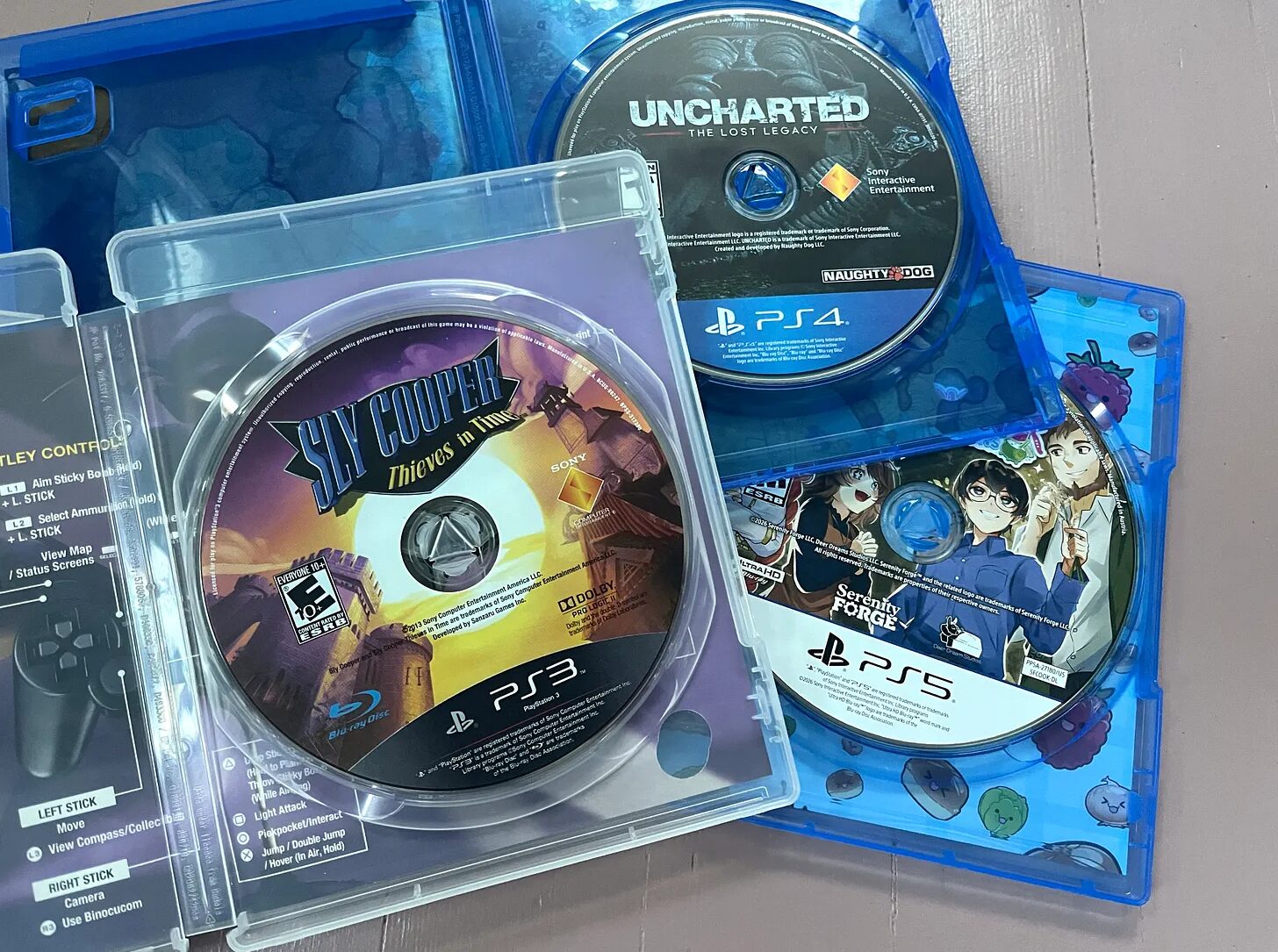
In March, I wrote an article outlining the importance of physical media, arguing that the corporate shift toward subscription services and digital purchases indicates the erosion of true ownership for consumers. What I did not expect was that within a mere four months of that article’s publication, Sony would announce their plan to completely cease physical disc production for PlayStation titles releasing in January 2028 and beyond.
If you are even remotely tuned in to gaming discourse online, you’re probably already well aware of this development given the intense controversy it immediately ignited across social media. If you’re not, it may surprise you to learn that one of the largest console manufacturers to ever exist is eliminating a key touchpoint for consumers to access their games — and one that’s proven incredibly beloved, at that.
Let’s be clear about what this means: you cannot own PlayStation games that release in 2028 or later.
To understand this, we need to define ownership. When you own something, it is the state of possessing and controlling something that is definitively yours, irrevocably and indisputably. If you truly own something, then it is up to you to decide what to do with it — whether you use it for its intended purpose, box it up and keep it in your basement or choose to eventually sell it. You have a rightful expectation that the things you own cannot be taken from you from anyone, including the party that originally produced it.
This is where physical media differs from content offered through, say, a subscription service. If you own a DVD, then you own the copy of that content and can access it anytime you’d like. The movie has been physically stamped into the disc, and as long as you have devices that can read and display that content, you can enjoy it. Because the content has been pressed into the disc itself, you never need to worry about a digital update that renders the disc’s content unwatchable.
When you sign up for a streaming service like Disney+, you gain immediate access to a wide variety of content that you can view on several devices. But you don’t actually own any of that content — because it’s all accessed digitally, Disney has the ability (and the right) to remove or alter their content at any time, changing what you have access to. This isn’t some hypothetical doomsday scenario, either; it’s something that happens quite frequently due to licensing agreements and shifts in which company holds the rights to each piece of content.
This is possible because subscription services do not grant you ownership over the content that you’re viewing. Instead, you get a revocable license to access that content. In other words, the company has given you permission to access it for the time being, but they maintain the right to remove your access at any time, for any reason.
Digital purchases work the same way. In fact, we should probably stop using the term “digital purchases” entirely, since the word “purchase” is inherently misleading when you don’t own the content you’re paying for. A more accurate phrase for digital purchasing would be an “extended rental,” but as you can imagine, that’s not exactly the message that companies want to send to consumers.
If you’ve amassed a digital collection of games on any console or platform, unfortunately, you haven’t technically created a collection of games at all. You’ve built a collection of revocable licenses in which you are being permitted to access the content, rather than actually owning the content itself.
I’m not saying this to disparage or insult anyone’s collection of digital licenses. If you value convenience above ownership, that’s completely understandable. Yet, to pretend that digital “purchases” equate to ownership would be disingenuous, and it’s important for consumers to understand the difference.
Sony understands the difference, but they’re hoping you won’t. Despite 44 instances of Sony’s own wording implying (or directly stating) that you own your digital purchases — including phrases like “Buy Now,” “Confirm Purchase,” and “digital PS4 game[s] you already own,” Sony’s lawyers have quietly argued that “reasonable consumers” know that they don’t own their digital games.
That’s right. If you believe Sony’s (likely intentionally) misleading phrasing across their press statements and digital store, the company believes you to be unreasonable.
As if to self-parody, three days before they announced that physical games would be ceased, Sony deleted 551 movies and TV shows that people had digitally purchased for their PlayStation systems, including John Wick, Paddington, and Terminator 2. If you paid for those movies on PlayStation expecting to keep them in your digital library, too bad: they were instantaneously deleted from every PlayStation that had them, and no refunds were offered.
And if that didn’t sting enough, Sony made a concurrent announcement on July 1 announcing that the PS3 and PS Vita digital stores would be closed in all regions across 2026 and 2027. If PS3 and PS Vita games didn’t have physical copies, there would be no way for new players to access that content after the digital stores are shut down — and this is exactly what will happen to PS5 games released in 2028 and beyond.
At this point, I have to wonder what on earth Sony is thinking. And I’m not alone: Shawn Layden, President and CEO of Sony Interactive Entertainment America from 2014 to 2018, slammed the company’s decision to punish those who prefer physical media, calling them PlayStation’s “most faithful” community.
“[They are] the people who buy two copies of every game. One never gets out of the shrink wrap, and you play the other one. It’s just like comic book collectors,” Layden said on The Expansion Pass podcast. “We are an acquisitive collecting sort of people, and we like to show off our stuff. Look at my stuff! So, for those reasons, I don’t agree with that decision.”
While Sony’s announcement claims that their shift to all-digital media is “in response to shifting trends in consumer preference,” it doesn’t take a genius to see that this isn’t what it’s really about. This change is about increasing profit and reducing the rights of consumers. Games not being sold in physical stores means less spent on packaging, shipments and retail cuts — games journalist Jason Schreier revealed that Sony earns 54 per cent more for each full-price first-party digital purchase compared to physical — and it means that Sony has complete control over which content they’re able to remove or restrict you from playing, much like the movies and TV shows that they deleted from systems. This also means that Sony has complete control over the pricing and sales of their content — say goodbye to physical retail deals and the option to resell titles that you’ve already enjoyed.
Sony is correct that consumer trends have largely shifted toward digital licensing rather than physical purchasing. Sony’s financial results for their fiscal year 2026 show that 85 per cent of game purchases were digital in Q4 of last year, and this trend isn’t limited to just PlayStation. But removing a key choice in how players can purchase titles, and one that coincidentally eliminates any possibility of owning your games, should still be considered an attack on every PlayStation fan.
If anything positive has come out of Sony’s decision, it’s that other key players in the gaming industry have taken this as an opportunity to highlight or expand their focus on physical media as a timely jab at PlayStation.
Over the past weeks, Nintendo made a post on X showing off the limited edition foil packaging for the upcoming remake of The Legend of Zelda: Ocarina of Time, and Microsoft announced an initiative that will allow Xbox players to claim digital licenses for their physical discs, effectively offering consumers the best of both worlds between digital convenience and physical ownership.
But that doesn’t necessarily mean smooth sailing ahead for Nintendo and Xbox fans. Plenty of Nintendo Switch 2 titles have released in the infamous game-key card format that requires a digital download to play the content once the cartridge is inserted, and there’s no guarantee that the next-gen Xbox will include a disc drive at all, especially as the supply chain for optical disc drives continues to collapse.
One thing is for certain, though: Sony’s decision to eliminate ownership of their media has only exacerbated this problem, and the industry’s other major players will no doubt be keeping a close eye on whether their decision makes any meaningful impact on PlayStation game sales going forward.
In a world where consumers continue to lose traditional protections and the corporate grip on what you’re able to own grows tighter, it’s depressing to see. Whether you’re a physical media advocate or opt for the convenience of digital, Sony has made their stance clear:
You will own nothing and be happy.