

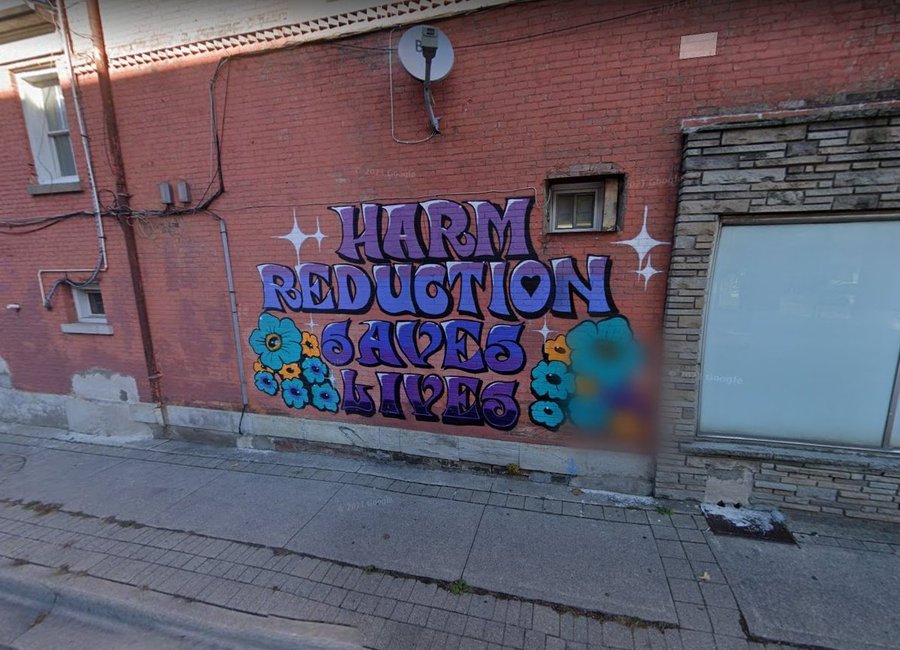
Defunding safe consumption sites will only devastate communities and increase harm — but Ford couldn’t care less.
At the beginning of March, Premier Doug Ford notified Ontario’s remaining safe consumption sites that the province would be cutting their funding entirely by June 13. Ontario’s safe consumption sites have already faced attacks from the provincial government in recent years. Just last year, Ontario saw the closure of 10 of the province’s 23 safe consumption sites following a province-wide ban on sites within 200 metres of schools or childcare facilities.
Even then, Ford made his stance on the initiative clear, declaring that he “just [doesn’t] believe in safe consumption sites.” So, it isn’t much of a shock to see Ontario defund their remaining safe consumption sites. What is a shock, however, is how Ford seems to feel so nonchalant about removing a life-saving initiative from Ontario’s communities.
If safe consumption sites have proven to be anything, it is that they are certainly lifesaving.
And this isn’t an unsubstantiated claim; safe consumption sites have been continuously proven to rapidly decrease drug-related deaths. In the five-year period between March 2020 and November 2025, safe consumption sites nation-wide reported no fatal overdoses, while reporting 51,858 non-fatal overdoses. Clearly, the reason why the sites reported zero fatal overdoses is that staff were able to intervene in times of crisis and ensure that individuals using substances received immediate care.
Safe consumption sites are also integral in matters of public health. Not only have the presence of safe consumption sites in communities been found to reduce overdose-related ambulance calls by 67 per cent, but the facilities also led to a reduction in sharing needles for injectable substances — a practice that can rapidly increase the spread of infectious diseases, like HIV and hepatitis C.
Another meaningful product of safe consumption sites is the increased feelings of wellbeing and improvements in self-worth reported by individuals who visited the sites.
“[It was] nice to be treated like a human being in here,” commented a community member attending a safe consumption site.
Despite their evidence-based approach and the endless research emphasizing their importance to communities, the premier doesn’t see their value. Curiously, Ford argues that safe consumption sites simply do not work.
“Giving someone, an addict, a place to do their injections, we haven’t seen it get better. This was supposed to be the greatest thing since sliced bread. It’s the worst thing that could ever happen to a community to have one of these safe injection sites in their neighbourhood,” said Ford.
Other than the blatant lie that safe consumption sites are not extraordinarily crucial to the wellbeing of individuals using drugs, Ford’s assertion that safe consumption sites are “the worst thing that could ever happen to a community” reveals his positionality perhaps more clearly than he’d like.
With this statement, the question becomes, which community members is Ford aiming to protect? How could safe consumption sites be “the worst thing” to a community when some members might have had lifesaving experiences at these facilities?
Over a year ago, I wrote about the horrific, unsubstantiated fearmongering surrounding safe consumption sites conducted by Canadian Conservative politicians, namely Ford himself and Conservative Party leader Pierre Poilievre. It is tragic to see that absolutely nothing has changed.
In these statements alone, Ford demonstrates loud and clear that he is not making his governance decisions based on facts, evidence or logic. He’s implementing policy on the basis of neoliberal individualism, fearmongering and stigma.
There isn’t any other way to say it: Ford is trying to appeal to voters who simply don’t want to look at the safe consumption sites because they are too spineless to have empathy for those who are struggling with the insanely difficult and distressing world of addiction. Ford is appealing to voters who only care about their property values being reduced if a safe consumption site ends up in their neighbourhood, voters who will not take it upon themselves to research Ford’s claims and realize that he relies on their political negligence because there are simply no facts behind his words.
Ford is speaking to people who would rather see drug users die than have to drive past a safe consumption site on their way to work. Ford being able to get to the point where he is defunding these facilities has all been because of the spread of incredibly selfish, shameful and disgusting discourses that cannot even be backed up by facts.
Ultimately, narratives of individualism kill democracy. Ford’s choice to pull funding from lifesaving facilities demonstrates that he is only willing to “protect” a select few Ontarians who can make it past his class-based stigmas.