
Whether it’s to get through a long day of classes or a workout, I drink a lot of water. Though I’ve been known to enjoy other beverages (a crisp Diet Coke can really take the edge off), something about water keeps me coming back. The urge to drink it feels almost primal, built into my nervous system.
I wouldn’t consider myself a water sommelier by any means, and I’m never going to be someone who prefers Evian to Voss or Eska, but I do know good water from bad. After drinking nearly 10 litres of Brock water a week, I can definitively say our fountains suck.
From being too warm and failing to shut off, or carrying an off-putting metallic or old taste, I’ve started asking the baristas at Starbucks to fill my mammoth mug between lectures. Brock’s fountains make hydration a chore.
What’s fascinating is how inconsistent they are. Depending on the building, two fountains can taste dramatically different. In newer spaces like the Cairns building, the water tastes clean, albeit warm, while older buildings such as Tower or Mackenzie Chown have room temperature water with a tin-like flavor.
For those looking to blame municipal water as the culprit, that doesn’t tell the whole story. Niagara’s water undergoes frequent testing — Brock receives its supply from the DeCew water treatment plant, and their most recent report from September shows all parameters to be within safe ranges. Thankfully, the most harmful containments — lead, E. coli and vinyl chloride — were undetected. In short: Niagara water is safe and, at home, it’s delicious.
So, if the water coming into Brock is the same water I fondly enjoy at home, what’s making Brock’s water taste so bad? I have reason to believe the answer may be Brock’s age.
Source Omega, a North American fountain manufacturer, points to a few clear culprits of poor tasting water: old iron or cast-iron pipes and copper tanks inside water fountains. From personal testing, there isn’t one water fountain that tastes particularly heinous. Logic seems to point to underused fountains in older buildings, but warm and overflowing fountains plague high-traffic areas all the same.
With Brock’s aging infrastructure, it’s unlikely that old buildings have seen much plumbing modernization, as evidenced by the sinks in certain underused washrooms (Thistle’s third floor looks like a 1970s time capsule). Old pipes feeding stagnant water to seldom-used fountains can leave a stale, metallic taste — turning a refreshing necessity into an unpleasant mouthful of pennies.
But the fountain itself may be a bigger issue than the building. While you’d expect old pipes to be the problem, Brock’s newer buildings like Cairns still produce some of the worst-tasting water I’ve ever had the displeasure of subjecting my emotional support water bottle to. Perhaps seems the true issue isn’t the pipes; it’s the fountains.
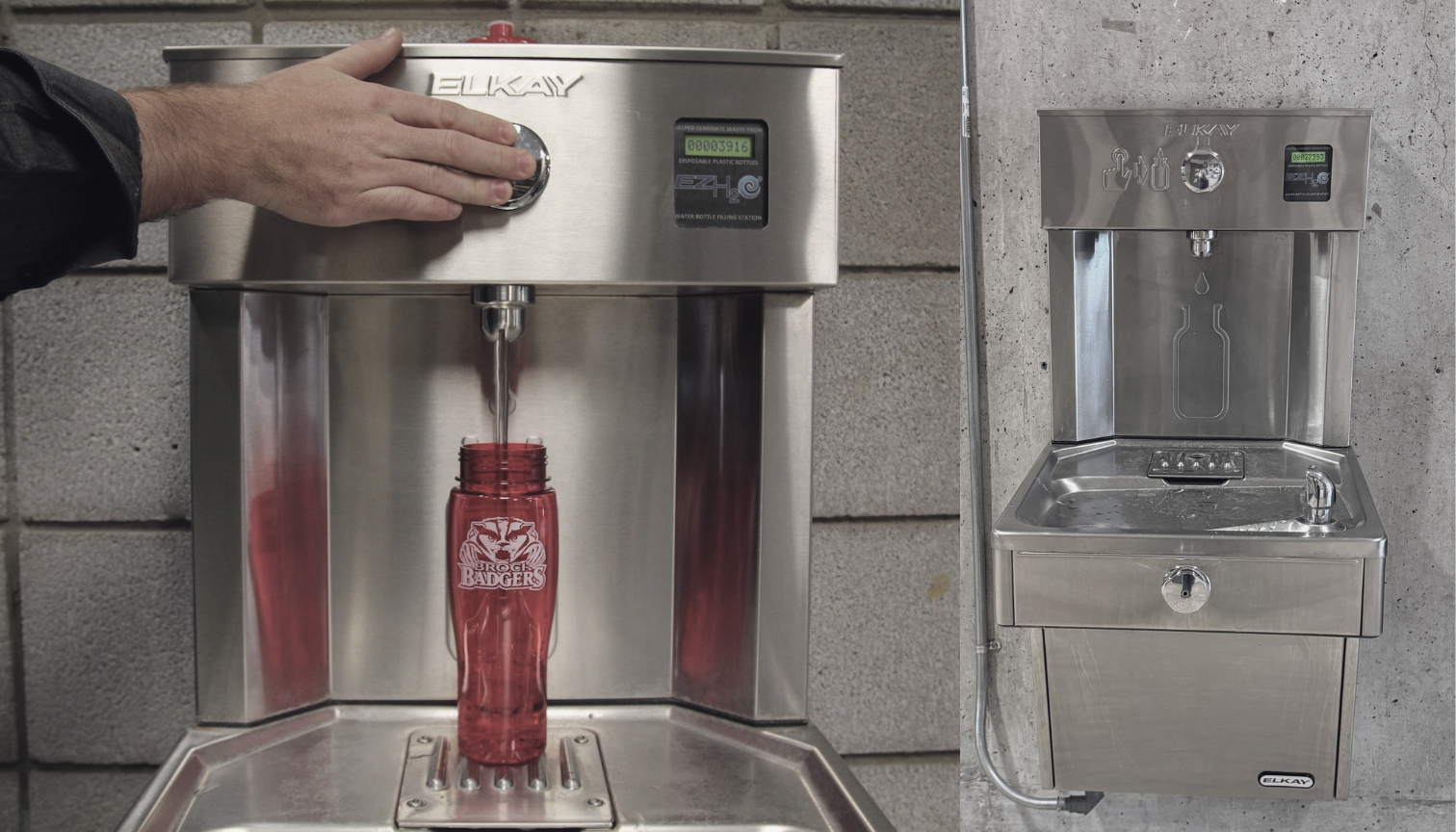
Brock mainly uses two fountain models from Elkay: the Non-Filtered, Non-Refrigerated Stainless fountain (the shiny push-button ones) and the Filtered Refrigerated Stainless fountain (the automatic ones with the three lights). According to Brock, the carbon filters in the automatic models are replaced every six months, depending on use. But most of these fountains are in high-traffic areas, meaning those filters can easily exceed their 11,500-litre lifespan long before they’re swapped out.
As any student with a Brita knows, when a carbon filter overstays its welcome, your water will be the first to tell you. Metallic, chlorinated or musty tasting water are symptoms of an overused filter. Speaking from personal experience, if left to fester further, you get a weird wet-dog smell — likely from nonpathogenic bacteria buildup, something I have yet to see on campus. While each unit has a light indicator for filter lifespan, they can be manually reset if the schedule doesn’t align, meaning they’re not always reliable indicators of a fountain’s cleanliness.
This is why newer buildings like Cairns or renovated spaces like Market Hall — with mixed plumbing — can still share the same unpleasant, metallic taste. Copper tanks used for refrigeration can add to that flavor.
There are currently 44 refill stations scattered across Brock’s campuses — a genuine sustainability success and a clear effort to reduce single-use plastics while promoting reusable bottles and hydration among students, staff and faculty.
The experience of using them, however, doesn’t always match the intention. Some stations have faulty buttons or sensors that fail to activate or shut off, leading to puddles of wasted water: extra work for Brock’s vigilant maintenance teams and a hazard for passersby.
The issue of Brock’s horrible-tasting water might seem small, but it says a lot about campus life. Brock has made real strides in modernizing its infrastructure and promoting sustainability, yet the simple act of getting a cold, clean drink still feels like a gamble. Many students would rather risk dehydration or buy bottled water — ironically undermining Brock’s own sustainability goals.
Dehydration and an overall disdain for water seem to be on the rise. Brock’s official refill numbers (from bottles saved indicators) haven’t bounced back to pre-COVID levels despite new stations being added and more students on campus. It’s not that students don’t care about their health — it’s that the fountains make it hard to.
Most of us will keep drinking from them because, well, we have to. But for a university that prides itself on student life and experience, it’s telling when the little things — like drinkable water — get overlooked or undermined. Sometimes, ensuring the water doesn’t taste like a ring of keys can make all the difference.
Until then, I’ll keep filling up at home, rationing water between lectures and hoping that someday Brock’s water will taste as fresh — and as expensive — as our tuition.