
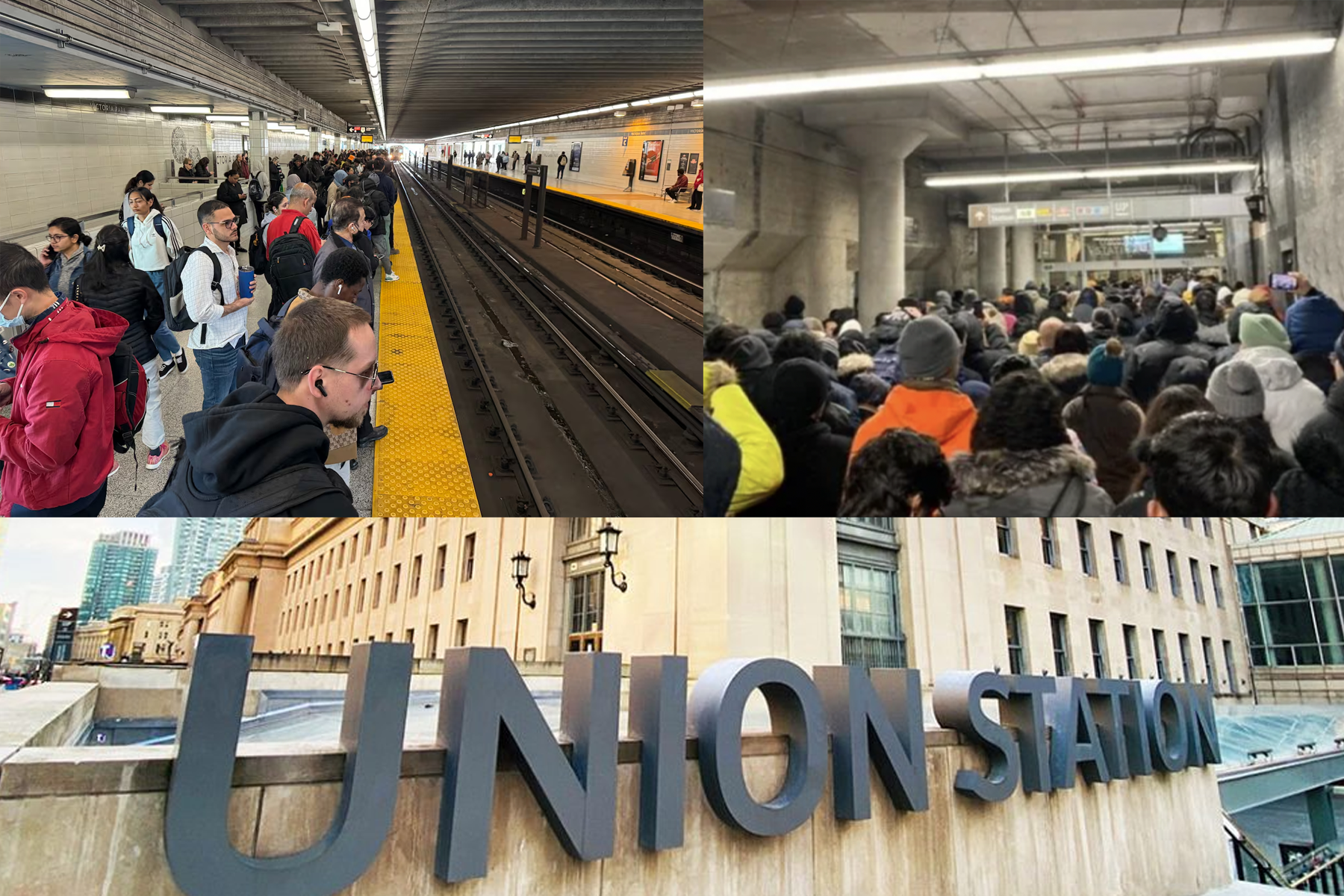
Return-to-office mandates are a public policy failure on nearly every imaginable front. They serve to placate the feelings of an older voting and managerial class that are simply out of touch with the functions of the modern workplace.
Allowing feelings to drive policy is not a good idea, and return-to-office (RTO) mandates are a prime example. They create backsteps on affordability, urban-rural representation and the environment, all while failing at the mandate’s presumed saving grace: increasing productivity for the Ontario Public Service (OPS).
As it stands, all major banks, law firms, the Federal Government and the Ontario Provincial Government have ordered workers to return to downtown and suburban office buildings, primarily located in two cities: Toronto and Ottawa.
Specifically for the Federal Government, this move has been made to address stagnant productivity numbers in the public service. The data from a Macdonald-Laurier parliamentary think tank paper claims that over the course of a decade, productivity for the public service has declined by 0.3 per cent annually, whereas the business sector rose by 0.5 per cent annually in the same time period.
In addressing a key point in the analysis of this statistic, remote work is not faulted for this decline in productivity. The decline in productivity began under former Prime Minister Justin Trudeau’s 10-year reign in which the Federal Public Service saw the fastest growth in employees in history, with McDonald-Laurier claiming it grew twice as fast as the Canadian population.
It is important to note that the data suggests over-employment was the main issue affecting productivity, not remote workers “slacking off.”
So, what about the Ontario Provincial Government? Well, the government’s official reason for requiring OPS employees to RTO is not productivity concerns, but rather a desire to “value office work” and a desire to bring downtown businesses more foot traffic.
Regarding remote work, Premier Doug Ford said, “how do you mentor someone over the phone? You can’t. You’ve got to look them eye to eye.” In this statement, Ford provides a perfect example of the first and most fundamental issue with the proponents of RTO mandates. RTO decision makers, like Ford, are digitally illiterate. They have never worked with or been trained in modern technology and are out of touch with how modern offices communicate.
Most offices deal with solely digital documents and files, meaning that in-person training, at best, can only really be done over the shoulder with fingers pointing at a screen. When it comes to teaching someone the ins and outs of a program or task, it’s far simpler to do this digitally, using tools like screenshare and demonstrating through programs like Microsoft Teams or providing pre-recorded video modules.
Most modern companies use digital video modules that are interactive and assigned to employees to complete independently. This in itself is a boost in efficiency, and begs the question: when was the last time that Ford actually worked in an office?
Second, long gone are the days of clunky and grainy cell phone calls. Microsoft Teams calls are clear, crisp and serve to connect colleagues across the globe, allowing corporations to access a wider talent pool.
This point is especially important for the public service, and is one that has been raised in some online spaces: shouldn’t the public service be made up of people who live outside of Ottawa, Toronto and other major cities?
There lies a vast potential to open up public service employment to the vast majority of Canadians who live in ridings outside of government population centers, closing the distance in the collective psyche of this vast nation and brining the government to people’s hometowns.
Public service jobs should not be gatekept to just a handful of affluent cities, as this alienates the vast majority. In a time of unity crises, the government should be embracing remote work to make its presence felt in the rural areas of Canada.
To address affordability, for most of human history, people’s lives have been tied to their place of employment. Advances in technology have allowed people to move further away from their hometowns, access more living space and secure cheaper housing. The highways and high-speed rail systems of the world are a testament to this.
Infrastructure, however, takes time and political will to bring to fruition. In many cases, it negatively intersects with other goals, evident in the case of highway expansion and protecting the environment.
Remote work, however, provides an instantaneous relief to the cost-of-living crisis. It isn’t a full solution, but it creates new opportunities for both citizens and developers alike.
Enabling remote work temporarily reduces the stress on existing infrastructure for major population centers, like Toronto, by reducing overcrowding on highways, the TTC and GO Transit.
It also opens up the suburbs for development, allowing for infrastructure outside of bedroom communities in the heart of downtown Toronto, which lets people work where they live and spurs business growth outside of the big city.
Remote work gives people the choice to live where they actually want to. For those who like the city, it reduces the artificial need to have people live near where they work, reducing demand and opening the market. And for those who would rather be anywhere else, remote work makes it possible to live and work anywhere that has reliable internet.
To get more specific, remote work reduces the amount of money that people need to spend on fuel, car maintenance, eating out, transit fares, parking, and consumables like office clothing or bags.
This money instead goes back into the pockets of employees. For citizens, remote work also has the potential to lower taxes, as it takes policy externalities into account through the climate.
Remote work reduces wear on roads and transit infrastructure and delays the need to expand infrastructure capacity which could be grounds for tax relocations or deductions.
Additionally, climate is an obvious benefactor from remote work. Having thousands of people who work on a computer commute a couple dozen kilometers to work on the same computer, just in an office, is simply idiotic.
It wastes fuel, increases road ware and speeds up the need for infrastructure expansion through overcrowding. Even if we were to build an expansive transit network — which would take decades — we would still be sacrificing decades of burning gas for no tangible benefit.
To address the elephant in the room: are RTO policies even about returning to the office, or are they just a ploy to silently fire workers so governments and corporations don’t have to pay severance?
Silent firing is a tactic in which employers purposefully make the lives of employees more miserable in the hope that they will quit and find work elsewhere, usually in a bid to reduce employee numbers.
Coincidentally, both the federal and provincial governments have announced planned reductions in their respective public services, the feds by 15 per cent and the province by 10 per cent.
RTO mandates have been listed amongst the key tactics for the 2025 silent firing year, begging the question that it’s not actually about the merits of remote work at all.
Honesty needs to be had over the true intentions of RTO mandates, as by every conventional metric, it’s a policy failure. Gone are the antiquated happy days of the office and in comes the office as a tool of silent, unpleasant workforce slashings.