

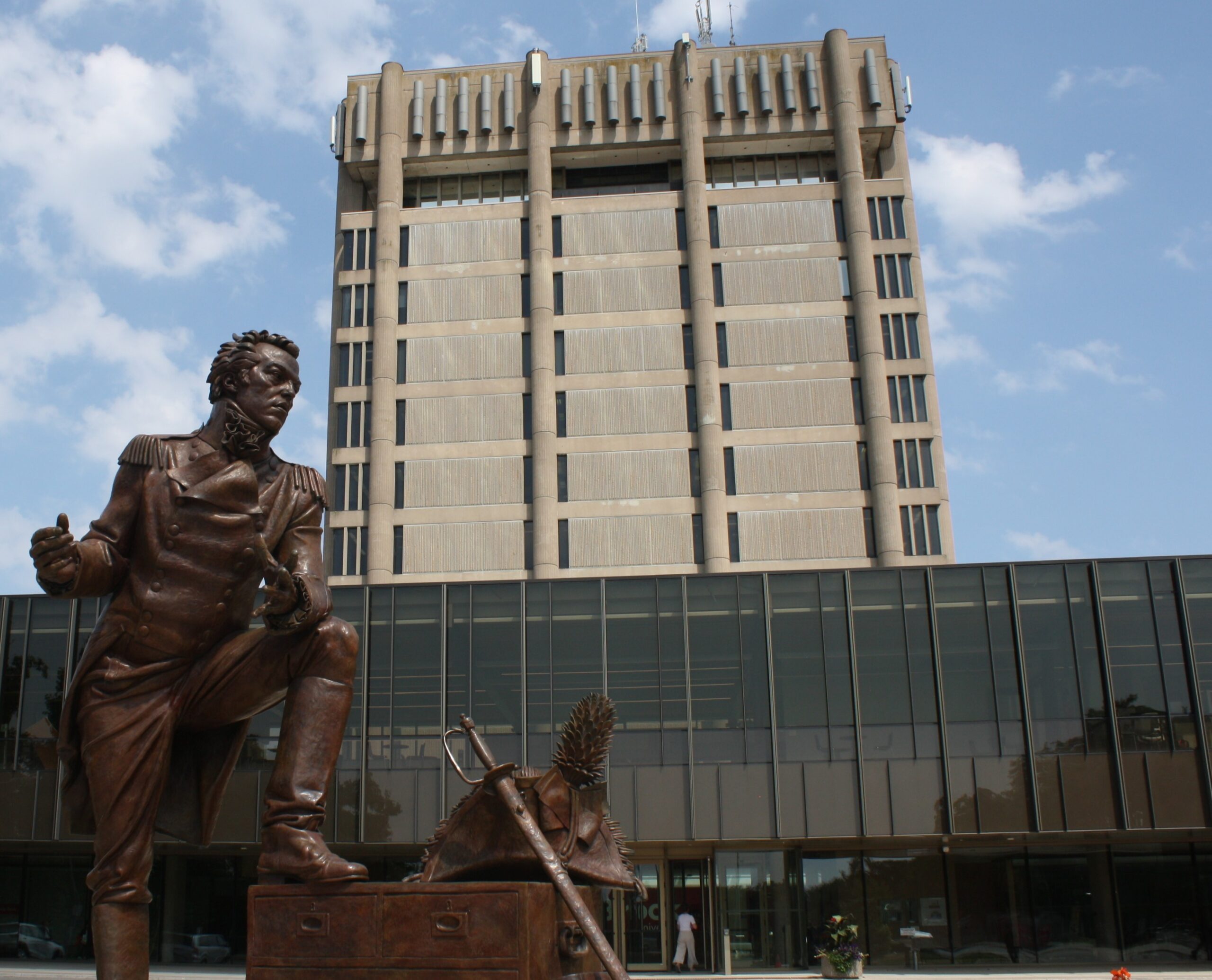
The walk across the stage at the Ian Beddis Gymnasium is a fleeting moment — a few seconds of brisk treading, a firm handshake and the heavy weight of a degree. But for those of us graduating this spring, that walk represents the culmination of years of late nights in the James A. Gibson Library, early morning drives or bus rides to campus and the steady transformation of who we were into who we have become.
As I sit down to write this, looking out across the Niagara landscape that has served as the backdrop for my early adulthood, I find myself grappling with the same question that every relative, neighbour and barista has asked me for the last three months:
“So, what’s next?”
It is a question that carries a peculiar kind of weight. It feels less like a casual inquiry and more like a request for a roadmap. In our culture of productivity, there is a pervasive myth that if you don’t have a five-year plan mapped out by the time you toss your cap, you’ve somehow fallen behind. But standing here at the finish line of my undergraduate career, I’ve realized that the most important thing my undergrad taught me wasn’t just how to analyze a research study or write a report — it was how to navigate the “in-between.”
We often view university as a conveyor belt designed to drop us directly into a career. We treat our degrees like keys that should immediately unlock specific doors. However, the reality of graduating in 2026 is that the doors are shifting, the locks are changing and the answer to “what’s next?” is rarely a straight line.
Reflecting on my undergrad, I think of the moments that didn’t make it onto my transcript. I think of the hours spent wandering around campus searching for the perfect study spot, the cold winters where the wind whipped across the escarpment and the communal sighs of relief when reading week finally came. Those moments weren’t just fillers between classes; they were the foundation of our resilience.
If you are feeling a sense of vertigo as you look at the calendar, know that it is not a sign of failure: it is a sign of transition. We are moving from a world of structured syllabi and (usually) clear rubrics into a landscape that is messy, unpredictable and largely uncurated. The “what’s next” isn’t a destination; it’s a practice of self-trust.
For many of us, the pressure to land the “perfect” job right out of the gate is suffocating. We compare our day one to someone else’s day 1,000. But “what’s next” doesn’t have to be a prestigious title or a six-figure salary.
Maybe “what’s next” for you is a season of rest; a time to decompress for the burnout of a four-year spring. Or maybe it’s a pivot, realizing that the field you studied isn’t where your passion lies and having the courage to start something new. It could even be exploration, taking the time to travel, volunteer or simply staying in Niagara a bit longer to see who you are when you’re not a student. And if you’re anything like me, “what’s next” may be the hustle; taking that entry-level position that may feel small but offers the room to grow into something significant.
Success is often portrayed as a vertical climb, but in my time at Brock, I’ve learned it looks much more like a mosaic. Every experience — even the ones that feel like “detours” — adds a piece to the larger picture of your life.
The class of 2026 is a unique cohort. We have navigated global shifts, technological revolutions and the evolving landscape of what it means to be a member of a community. We have sat in seminars where we challenged each other’s perspectives and stood on the sidelines of sports games cheering for the Badgers. We have built a home here.
As each of us prepares to move on to “what’s next,” I want to challenge you to hold onto the curiosity that you brought here in the first place. When people ask you “what’s next,” you don’t need to give them a title. You can tell them you are becoming. You are exploring. You are figuring it out.
The “Surgite!” motto — Latin for “Push On!” — is not just about moving upward; it is about moving forward, regardless of the pace. It is about the persistence to keep seeking your place in the world even when the path isn’t lit by a streetlamp.
The degree you will be holding in your hand in just two short months is proof that you can finish what you start. It is proof that you can handle rigorous deadlines, complex problems and the occasional existential crisis. You are more prepared than you feel.
So, to my fellow graduates: take a deep breath. Look back at the Schmon Tower one last time. Be proud of the version of yourself that survived the late nights and the heavy workloads. The world outside of university is vast and occasionally intimidating, but you have already proven that you belong in the room.
The question isn’t whether you will find your way — it’s how many interesting paths you’ll take before you get there. So, congratulations class of 2026. Your “what’s next” is whatever you decide it needs to be.
In the wise words of Maya Angelou in her famous poem, “On the Pulse of Morning”:
“The horizon leans forward, offering you space to place new steps of change.”