

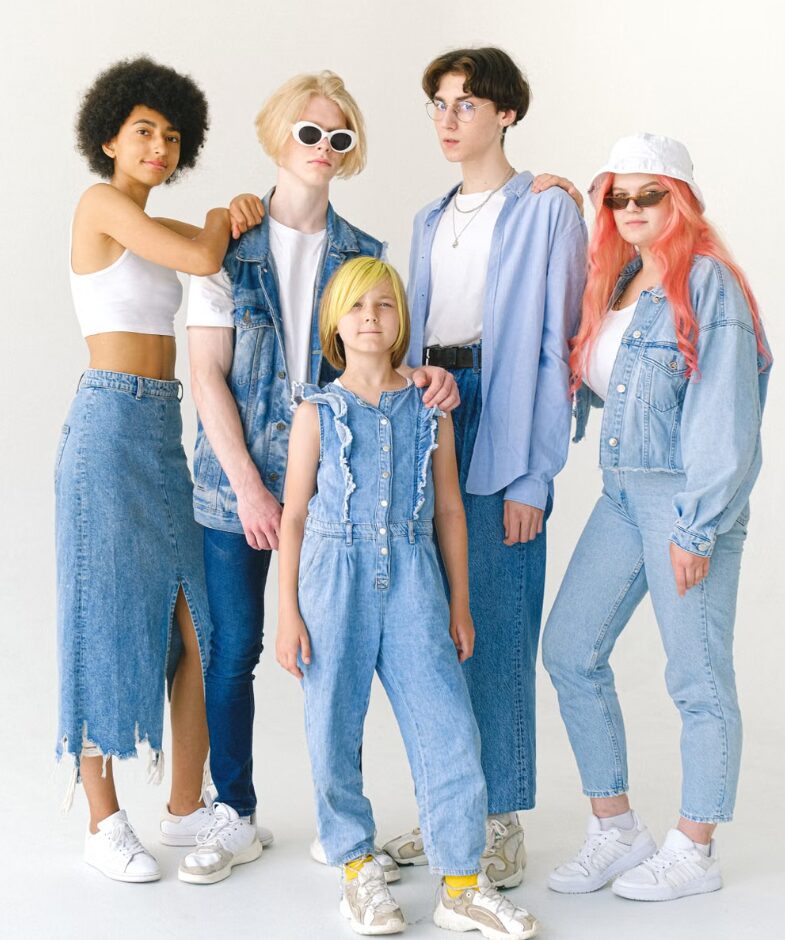
If you’ve ever used the internet, there’s a good chance that you’ve heard the phrase ‘there is no original experience.’ Well, that’s because we’re all slowly becoming the same.
Think back to when you were young, before we had social scripts and “proper” ways to respond; when someone would ask you if you liked something, you had a strong answer for them. There was no need to explain why or reason with yourself. It was simply a “no, not for me.”
So, what has changed to make us all so indecisive? There never used to be fear of disappointment or criticism. There is a very real possibility that we can never truly represent ourselves better than we did as children.
When people say “be yourself,” it sounds like a passive statement. It should be quite easy — just do what feels right — but you actually have to make active decisions to accomplish this. You can’t be afraid to disagree and you can’t wait for someone to give you permission to buy something you think is cool. You should start things because they’re fun, not because you think you could be good at it.
Who you are is shaped by the decisions you make, not what you think.
The biggest fixture in our lives shaping how we make decisions is undoubtedly our smartphones. These blocks of technology now control our thinking, movement, sleep, relaxation levels, anxiety — and the list is never-ending. It is important to realize that our phones are mirrors; what we see and post is a reflection of ourselves, but they are also what is shaping us.
A video essay by Brynn Valentine discusses this notion. She states:
“Set against a social media backdrop, which is largely governed by algorithmic feeds; many feel we are in an individuality crisis, whereby the threat of trend cycles, pre-made templates and perspective taste has overcome one’s own interests and uniqueness.”
It’s important to note that this crisis has appeared to rise more in later years. If you walk into a classroom, it’s almost guaranteed that, in my estimation, 70 per cent of students will be wearing similar outfits. These normally reflect what’s trending during the time, whether that be the cheetah print that reigned all through 2025 or the newfound trend of tabi shoes.
A big reason for this has come from the change in influencers. The influencers of our childhood generally had a quirky nature; we followed people for their unique personalities. Makeup influencers truly loved makeup and made content focusing on hacks or tips for application.
In today’s social media landscape, influencers are marketing products and lifestyles. Instead of showcasing techniques to achieve something, they are now selling you the next big thing.
Societies driven by social media create an illusion of choice, with overwhelming options presented by influencers,’ personalities become dumbed down to “cores,” such as “cottagecore.”
This idea of sameness extends beyond what we wear or buy. Digital columnist Kyle Chayka describes a similar phenomenon through what he calls “airspace,” a homogenized aesthetic that has spread through coffee shops, apartments, offices and other public spaces.
In his book, The Longing for Less, Chayka examines how minimalism, originally simply associated with having less, has now transformed into something that can be bought or sold. Minimalist furniture, neutral clothing, carefully designed coffee shops and even “minimalist” lifestyles can all become products. This inevitably creates a commodification of aesthetics again, turning something that was a way to live into something that we need to obtain.
What makes Chayka’s idea interesting is that this sameness does not always feel like conformity. We are given thousands of choices, but many lead towards one outcome or “rebrand.” A coffee shop here in Niagara can look almost identical to one across the world: reclaimed wood, neutral colours, industrial lighting and a space designed to look effortlessly curated.
The internet does not just show us what is considered desirable; it can influence the physical environments we create around ourselves. The result is an aesthetic monoculture where individuality is increasingly difficult to distinguish from a trend.
The average person seeing content geared towards a certain brand or aesthetic consistently starts to view the lives and spending habits of influencers as the norm. In this, the pressure to conform arises.
Our appearance becomes the ultimate goal in our lives; individual expression, however, declines when we are focused on our “brand” or how people perceive us. This performance we mirror from the influencers we deem cool or trendy begins to bleed into who we are. It becomes impossible to separate the opinions of the “ideal girl” and the opinions we make for ourselves.
These attempts to change how we are perceived, also known in popular culture as “rebrands,” come from a fear of not being adequate. We become so attached to the idea of being perfect that there is no room for error. Even change itself has become something to perform. We do not simply evolve; we announce the evolution, while making sure we check all the right angles.
An article on Substack written by Chloe Belle discusses this idea, suggesting that a rebrand functions as a need to redesign the self. Real change is rarely a neat and orderly process. When this transformation is packaged into a recognizable aesthetic, it stops being personal. We are no longer creating ourselves from scratch; we are choosing from templates that already exist.
Change your clothes, habits, hobbies and routine, and suddenly you have become a new person. The only question is whether that person really reflects yourself or just someone you’ve already seen?
Philosopher Slavoj Žižek’s work offers an interesting way to understand this obsession with self-perception. Drawing on psychoanalyst Adam Phillips, Žižek challenges the idea that understanding ourselves completely is the key to living a better life. Instead, he argues that the self being at the center of everything forms an obsessive desire to know oneself.
Žižek writes, “the obsessive desire to know yourself is itself a pathology. You’re not healed when you wholly understand yourself, but when you don’t matter to yourself anymore.”
To expand on this, it seems that in a world where we see all the different lives we can live, we could be the “cool girl,” “gym girl, “girl’s girl,”we become so focused on becoming something that we forget what we do day-to-day is who we are. The desire to change who we are constantly and become the best version of ourselves overrides our desire to simply experience.
Žižek’s idea feels especially relevant in a social media culture where we are constantly deciding what our aesthetic is, who we are, and what we need to do to become the version of ourselves we desperately want people to see. Self-discovery feels like a never-ending project that inevitably comes from everything but ourselves.
His solution for this can be summed up as “forgetting oneself.” It is done by becoming less concerned with constantly monitoring and explaining yourself. There comes a notion that you know yourself better when you think about yourself less. As it was in childhood, your interests, opinions and likes should be intrinsic knowledge.
Social media makes this distinction increasingly difficult. Every choice is evidence of who we are. The clothes we wear, the music we listen to, the places we go and even the hobbies we pick up can become part of a carefully constructed identity.
What is accepted as cool or trendy is now decided by brands and influencers who profit from the rest of us scrambling to keep up. This need to wear or act in a way that will cue others into you being a part of an idealized club creates a world where we are all buying, reading and doing the same things.
We see this in how hobbies become microtrends; everyone is now knitting or creating analog bags and leaving behind journaling, which was the thing to do in 2025. It seems like we are all falling into a society that needs to give us permission to enjoy things.
This commodification of hobbies has also turned them into a business tool of sorts. If your personal brand improves from becoming a reader, that is simply what you do. With people using this as a new outlet to control the way they are perceived, we see a rise in the acquisition of a hobby instead of actual practice.
Continuing with the example of literature, the major impact social media has on the literary space is through “BookTok,” a community on the TikTok app. As the number of influencers promoting their favourite books continues to grow, we begin to see more and more recommendation videos. After being in the space for a while, it becomes an echo chamber of the same ‘trending’ books being shoved at the viewer. Bookstores have even hopped on this wave, having whole sections of books popular on the app.
While this doesn’t sound horrible, it can have impacts. What we read has the power to change the way we think, and if we all read the same, you can argue we will start to have similar outlooks on things.
That is also only books that are in fact being read; there are now popular haul-style videos showcasing a BookTok influencer purchasing large quantities of books. These can be seen on profiles on a regular basis, making me question, “Is it even possible to read that many books within the year?”
This is similar to Chayka’s idea of “Airspace”: the algorithm does not need to explicitly tell us what to like for our choices to begin looking the same. When the same books, aesthetics and hobbies are repeatedly presented as desirable, they can move from being online trends to becoming part of the physical world around us. What begins as a recommendation on a screen can eventually determine what sits on bookstore shelves, what people buy and ultimately what becomes culturally visible.
It seems that, along with our personal brands, hobbies have become another way of conforming to what society tells us we should do. In some cases, the purchasing of the hobby becomes the focal point itself.
Through all the different hobbies or personality traits available to us, it is normal to experience personality fatigue; the question we should be asking after this is: what can we do about this?
When we were children, we did not need a reason to like something. We did not need a personality quiz, a Pinterest board or a seven-step guide to tell us who we were. We simply knew what we liked, and we liked it.
Somewhere along the way, we began to believe that knowing ourselves meant constantly examining ourselves. That every interest needed an explanation, every change needed an announcement and every version of ourselves needed to be better than the last.
We do not need to become the coolest, smartest or most interesting version of ourselves. We don’t need to be hot all the time. We need to stop treating our lives like something that needs to be constantly improved for an audience. Read the book because you want to. Wear the outfit because you like it. Try something you might be terrible at. Let yourself change without needing to announce it.
This may mean taking conscious efforts to check the reasoning behind why you want certain things or consuming media intentionally, but it is important that you create a sense of assurance that doesn’t need to be confirmed by others.
As Mary Oliver writes in her famous poem “The Journey”: “But little by little, / as you left their voices behind, / the stars began to burn / through the sheets of clouds, / and there was a new voice / which you slowly / recognized as your own.”
Maybe being yourself is not about finding the perfect identity. Maybe it is about making enough decisions that are truly yours that, eventually, you no longer need to ask who you are.
You already know.