

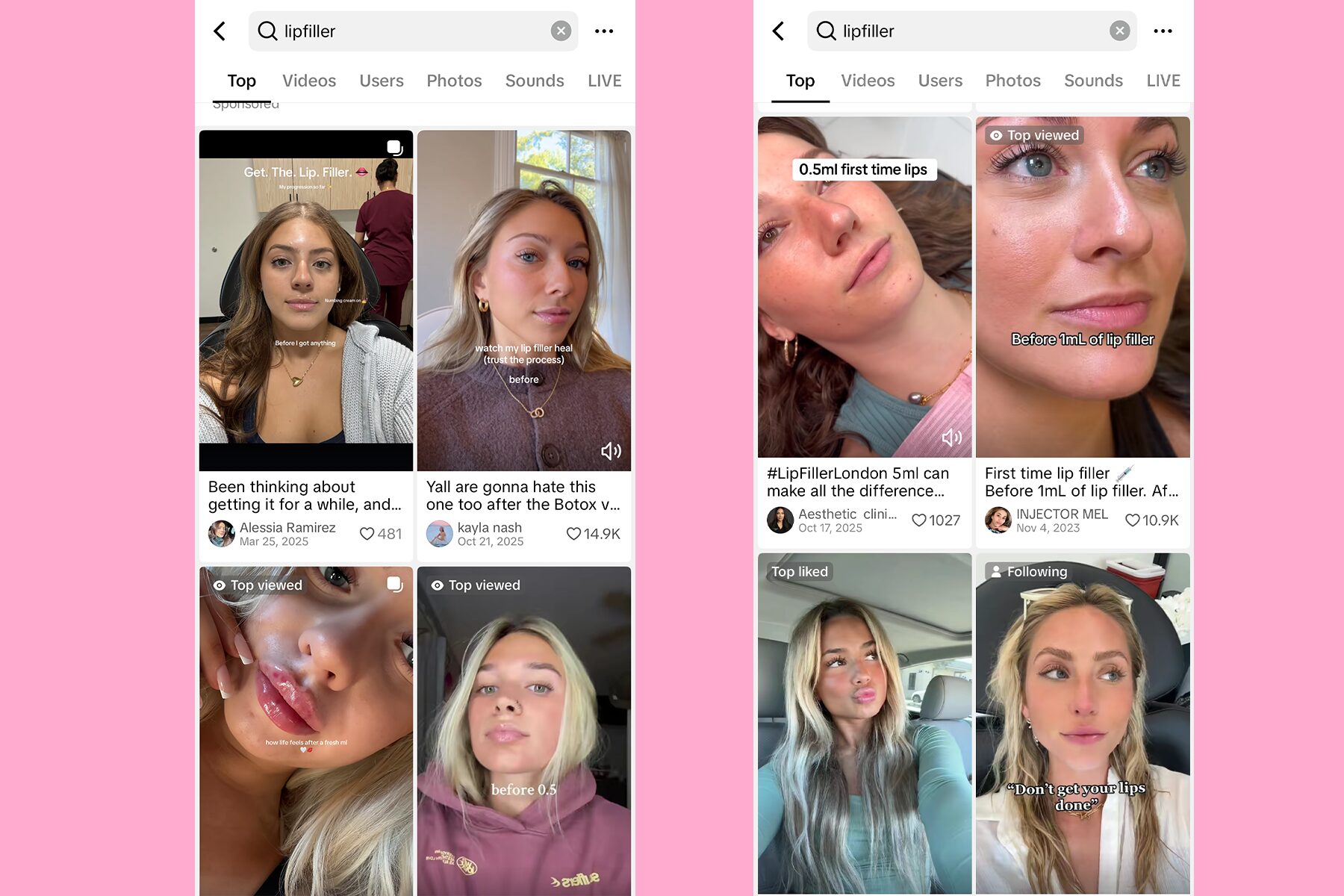
The ever-increasing popularity of preventative Botox, filler and other anti-aging pursuits is not apolitical. Normalizing cosmetic work only strengthens patriarchal notions of beauty.
It is obvious that beauty standards come in cycles. Whether it be the rise of micro trends, constantly changing feminine body ideals or the political dog whistles hiding behind the aesthetics directed towards women online, consumerism and social media ensure that many aspects of our beauty ideals never remain timeless.
And cosmetic fillers are not exempt from this principle.
Throughout the past decade, cosmetic injectables like Botox or other fillers have continued to rise in popularity, with their sustained popularity often attributed to the procedures being “minimally invasive,” somewhat temporary, requiring short recovery time and bringing quick results. Not to mention, injectables remain on the lower end of the cost spectrum for cosmetic work, ranging from $100 to slightly over $1,000 per session, depending on one’s area of concern. When compared to actual cosmetic surgeries, which can surge up to tens of thousands of dollars in price, lower-cost injectables have made facial work far more accessible to the middle classes.
Injectables have become so popular, that in fact, they have been normalized into plainly becoming just another part one’s beauty regimen. What was once taboo and exclusive to elite classes has become as casual as a trip to the hair salon.
The widespread use of filler among women has resulted in what writer Ellen Atlanta dubs “homogenous beauty.” The term refers to how filler is used to achieve ideals that can only be reached using cosmetic work itself, leading those who pursue these ideals to share resemblance between one another. Simone Boyce, a user on TikTok reviewing Atlanta’s book Pixel Flesh: How Toxic Beauty Culture Harms Women, perfectly articulates the iconography of this ideal, which includes “impossibly smooth glass skin, high cheekbones, [a] slimmed down nose and plump lips.”
As Boyce notes, the ever-growing accessibility of injectables ensures that “anyone can buy their way into homogeneity.”
Injectables have become so accessible, in fact, that even a smaller city like St. Catharines has over 20 medical spas providing Botox services.
Even the name of the facilities that provide injectable treatments, “medical spas,” points towards the rhetorical framing of cosmetic work as just another form of luxurious relaxation, simply trading facials and massages for the luxury of abiding by homogenous beauty standards.
And yet, I cannot agree with the statement the consumers who keep these industries alive are to blame.
Anti-aging regimens and products are plastered all over beauty advertising; even a simple trip to Shoppers Drug Mart will force consumers to be confronted with advertisement messaging about how undesirable the natural aging process is — specifically for women.
With all this messaging pushed into the faces of women of all ages, it is hard not to internalize the feelings that aging will make you, frankly, lose all your beauty. Sometimes, I even find myself concerned about how my tattoos might look like as I age, even though I have no desire to remove any of my tattoos for aesthetic reasons. This is the internalization of patriarchal standards at work.
This internalization is absolutely critical to cosmetic industries. If, say, I was not aware of how my internalization of patriarchal beauty standards manufactured my concerns about aging and tattoos, this internalization could easily slip by, seeming to be an original thought built from my own, personal views on what is beautiful and what is undesirable.
This is why it is difficult for me to contend with the claim that injectables can be reclaimed as simply acts of free will by women who choose to get filler or Botox, making them, in some roundabout way, “feminist.” Now, I do not think that simply the act of getting filler is a crime of anti-feminism. This line of thinking would assume that it is the consumer’s fault for adding $200 to a multi-billion-dollar industry; it would assume that women are at fault for internalizing the constant messaging that the capitalist patriarchy spews at them.
However, the idea that, because a woman is choosing to get filler, the choice is inherently feminist, is most definitely a prime example of “choice feminism”— the assumption that any choice a woman makes is inherently “feminist” because she is a woman assumed to have total free will, unbarred by the patriarchy.
As Laur Fitch articulates in her essay “The Cult of Choice Feminism,” choice feminism was born from interjecting consumption into notions of feminism — a completely ahistorical act given the aims of much third-wave feminism was to consider how class functions as a core oppressor under the patriarchy.
Fitch writes, “choice feminism is an overwhelmingly capitalist ideal. Corporations don’t want women to eschew the products that led to our oppression, nor do they want poor, working class women to escape poverty.”
“Choice feminism argues, for instance, that a woman’s decision to stay at home is equally as feminist as another woman’s decision to work because they are both exercising their right to choose,” Fitch continued. “I unequivocally support the rights and dignity of stay-at-home moms and housewives, but their choices were not formed in a vacuum; like all of ours, they were shaped by years of socialization under patriarchy. It isn’t productive to uncritically laud each choice a woman makes while ignoring the factors that led up to it.”
That being said, the choice to get filler is inseparable from patriarchal notions of beauty, and it would be hard to argue that the urge to get filler is ever “natural,” in that it does not root from any natural conception of beauty separated from the patriarchy.
I am well aware that filler and Botox can bring social capital and a sort of power in embodying a feminine ideal, which, I would argue, is why the cosmetic industry is so wildly successful. Though, once again, power — even the marginal (and often oppressive and objectifying) type — gained from upholding beauty ideals is gained through patriarchal means.
Some argue that the choice to get filler isn’t any more ideologically loaded than the choice to wear makeup, style one’s hair in particular ways, dress according to patriarchal standards, among other choices relating to how we construct our own visual aesthetics.
And this argument is not entirely problematic.
The core thing that unites all of these choices is that they all root from exploitative industries that manufacture needs that women must attend to: the need to never leave the house without makeup, abide by an in-depth skincare routine, keep up on hair maintenance and continue to consume clothing — even though it is estimated that we have enough clothing to dress the next six generations.
This argument is exemplified in a TikTok wherein a user claims that these other industries — namely those of makeup, skincare, hairstyling and clothing — serve as logical fallacies in the claim that the cosmetic industry goes against feminist values, meaning that we cannot interrogate the choice to get filler without interrogating every choice that goes into our visual aesthetics. Though I sometimes feel like these kinds of arguments function to elide injectables from any meaningful criticism, there is a point to be had about how patriarchal consumerism is deeply ingrained in our manufactured notions of beauty.
In the comment section, however, another user makes the critical point that these other products can also serve as “vehicles for creative expression,” where injectables cannot, as they are often designed to serve solely patriarchal ideals. Though I contend that consumerism is laced within these industries, I agree that these products certainly have more capacity to be used for creative means, giving them more room to be reclaimed.
Criticisms of the injectables industry can be very contentious in that they often skillfully end up on the shoulders of the women who choose to get filler, instead of looking towards the millions spent on anti-aging advertising. Ultimately, it is of more importance to always be aware of how these oppressive systems can internalize views within us that entirely alter our perceptions of beauty, identity and free will.