
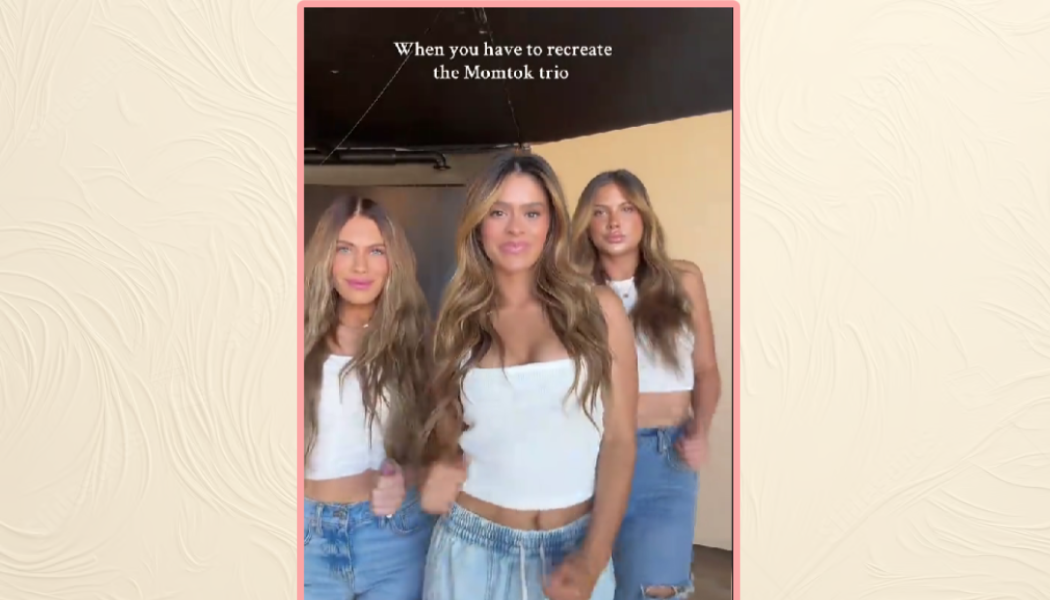
Motherhood has always been a complicated space in Western culture — revered, idealized, scrutinized and often commercialized. On TikTok, where authenticity and aesthetics collide at high speed, motherhood has become something else entirely: a brand.
There is no corner of TikTok that embodies this transformation more vividly than what is referred to online as “MomTok”: a loose collective of largely Utah-based mothers — many of which are current or ex members of The Church of Jesus Christ of Latter-day Saints — who have turned their domestic life, faith and female friendships into viral content, lucrative partnerships and public scandal. What started as a seemingly wholesome space to share parenting tips and lighthearted family videos has evolved into a glossy ecosystem where motherhood is marketed, curated and monetized, often at the cost of reality.
“MomTok” taps into a distinctly modern fantasy: the effortless mom. She is stylish, stressed but smiling, messy, yet remarkably photogenic. She manages school drop-off, pilates, meal prep, carpool karaoke and flawless skincare routines with cinematic ease. Her faith plays in the background like soft instrumental music. Her home is immaculately neutral-toned, and her children match perfectly in drab colours — fueling the “sad beige” memes, which poke fun at the boring monochromatic clothing and toys that many chronically-online parents now plague their young children with.
However, the rise of “MomTok” is not only a cultural observation, but a business model.
At its core, “MomTok” functions as a marketing machine built on the promise of relatability. Relatable moms get followers. Followers bring sponsorships. Sponsorships bring income. Income encourages more content, collaborations and pressure to maintain the illusion of a balanced and beautiful domestic life.
When relatability begins to fade, drama fills the gap. After all, virality requires momentum, and momentum comes from emotion — joy, envy, admiration or scandal. This is why the most explosive narratives emerging from MomTok — friendship fallouts, marriage fractures, religious contradictions and rumours of soft-swinging — are not merely side-effects of online visibility but part of the ecosystem itself. Drama engages, and engagement monetizes. For many influencers, the line between their personal life and branded content becomes increasingly blurry. Moments that would have once remained private — marital disputes (including infidelity), parenting missteps and moral dilemmas — are now carefully packaged into multi-part storytimes for millions of online viewers.
Yet, the deeper implications of “MomTok” extend beyond audience entertainment or influencer strategy. As polished motherhood becomes increasingly commodified, the cultural impact is twofold: it reinforces impossible expectations while simultaneously reshaping motherhood into something performative.
The first implication is psychological. The curated perfection of “MomTok” inevitably breeds comparison, especially among new mothers who are already navigating the pressures of parenting. Social media has long played a role in creating unrealistic benchmarks — body image, wealth and lifestyle, to name a few — but “MomTok” adds a new dimension: maternal performance. In these feeds, motherhood appears manageable with the right attitude, the right Amazon finds, the right colour palette and the right affiliate links. Struggle becomes aesthetic, hardship becomes a branding opportunity and exhaustion becomes something that can be fixed with a “self-care day” sponsored by some skincare line.
This performance is not only exhausting for viewers, but for the creators themselves. Influencers must maintain a delicate balance between aspirational and approachable. If they appear too perfect, they are alienating; if they’re too messy, they risk losing brand partnerships. What results is a subtle manipulation of narrative: vulnerability that looks good on camera, honesty softened by filters and chaos that conveniently fits within a 15-second timeframe. Maybe it’s not deceitful by design, but it is curated, and curation inevitably distorts reality.
The second implication is cultural. “MomTok” subtly reframes motherhood as a marketable identity rather than a personal role. Historically, mothers have been central to consumer culture — advertisers have long targeted them — but platforms like TikTok allow mothers to become their own vehicle for advertising. Their homes become their set, while their families are cast as supporting characters and their personal lives become content calendars. In this environment, motherhood ceases to be private labour and instead becomes public performance.
This shift is particularly visible within “MomTok” as it dabbles in wider media — from reality television to influencer-led product lines to entire micro-industries of merchandise, meetups and paid subscriptions. The more influential a “MomTok” creator becomes, the more motherhood is shaped to fit the demands of the platform, not the other way around. The result is a constantly reinforced cultural narrative that motherhood can and should be “optimized,” aesthetically pleasing and financially leveraged.
Perhaps the most telling aspect of “MomTok” is how it reflects the contradictions of contemporary womanhood. These influencers are often celebrated as entrepreneurs, which they undeniably are. They generate real income, build communities and create content that grabs the attention of millions. Yet the aesthetic they sell — traditional femininity framed within a digital hustle — suggests that even in supposedly post-patriarchal spaces, the cultural expectations of motherhood remain remarkably narrow. It’s empowerment packaged in homogeneity.
This doesn’t mean “MomTok” is harmful by definition. Many viewers find genuine joy in the community: the humour, the creativity, the shared experiences of parenting and the depictions of female friendship. A lot of creators are earnest, imaginative and emotionally open. But the monetization model underlying the movement shapes the content more than most viewers realize — and more than many creators may consciously acknowledge.
“MomTok” represents a new era of motherhood: one that is filtered through algorithms, softened by brand deals, sharpened by virality and shaped by the economic incentives of attention. It’s a space where the boundaries between life and lifestyle blur, where authenticity is both the selling point and the commodity.
Motherhood deserves representation — representation that is messy, diverse and honest. But when the representation becomes a product, we must ask ourselves who benefits and who feels left behind. “MomTok” did not invent the commercialization of motherhood, but it has certainly rebranded it for a generation raised on social media. As with all rebrands, the packaging may be sleek, but the implications are far more complicated.