

This article contains spoilers for Twin Peaks seasons one and two.
Since its debut on cable television 35 years ago, the Twin Peaks series has continued to resonate with contemporary viewers thanks to its alluring atmosphere, iconic characters and harrowing secrets.
On April 8, 1990, the Twin Peaks pilot aired on ABC. With themes that land the show across the genres of soap opera, detective mystery, drama and plain psychological horror, Twin Peaks is a series that eludes a consistent categorization. The series’ elusive nature makes sense knowing that it was conceived by legendary filmmaker David Lynch and lore mastermind Mark Frost.
Lynch is best known for his take on surrealist filmmaking. Directing hit films such as Eraserhead, Blue Velvet and Mulholland Drive, Lynch’s creative approach to filmmaking is so uniquely identifiable that it sparked use of the word “Lynchian.” Though the term’s definition has been contested and tends to resonate differently for each of his viewers, to me, “Lynchian” represents Lynch’s creative throughline in much of his work, wherein he draws out the disturbing things lingering around our everyday lives — with much of this unsettlement garnered by his scene choices shifting from depictions of simple, or somewhat humorous, daily interactions juxtaposed with long, drawn out, frightening scenes soundtracked by disjointing white noise.
Twin Peaks stands apart from Lynch’s other films for the obvious reason that it is a television series — and its longer-form delivery is exactly what made the show so successful in drawing viewers in and disturbing them to their core.
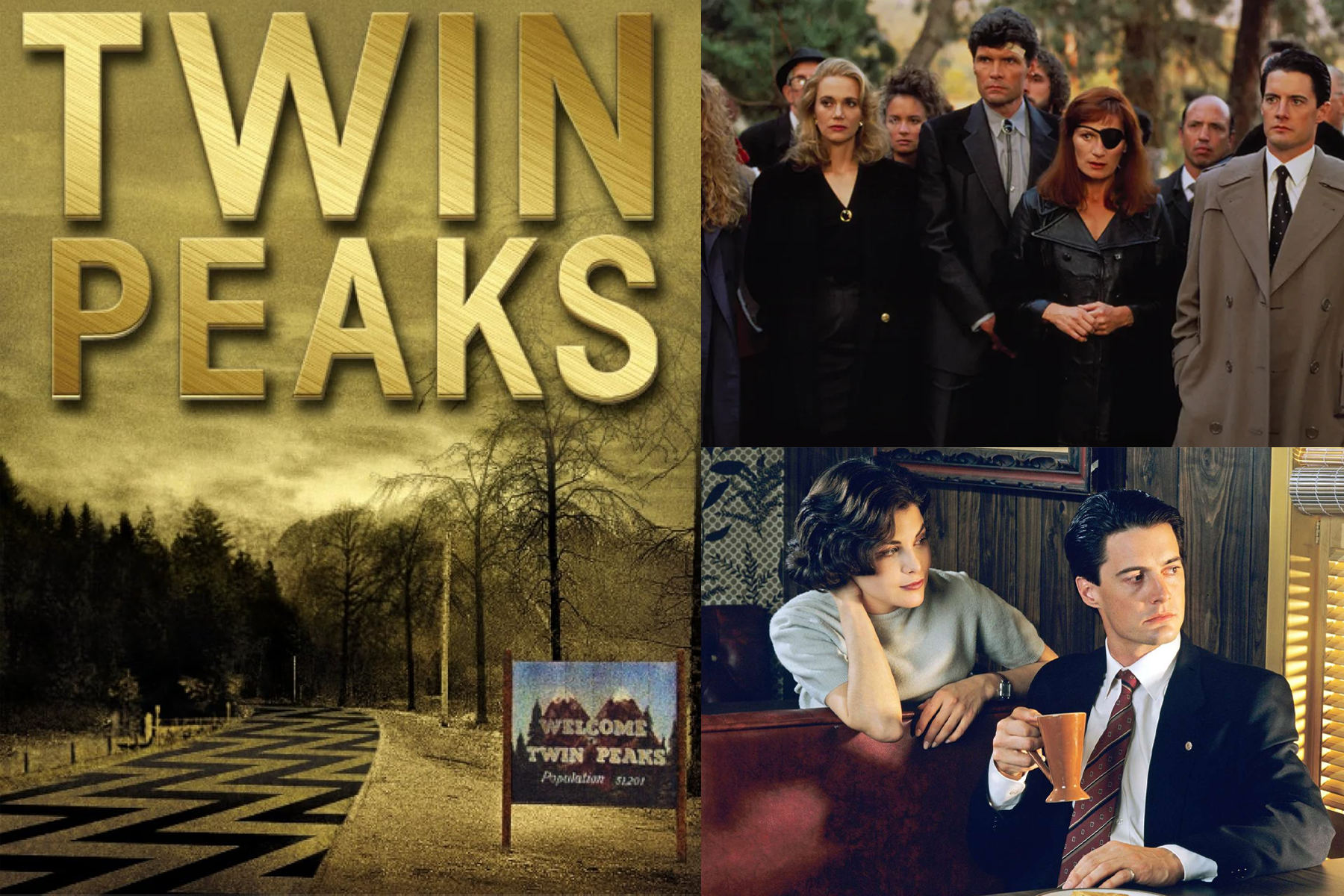
Twin Peaks is set in a fictional small town of the same name in a rural area of Washington. The series was actually filmed in a few small towns in Washington, such as Snoqualmie and North Bend, which helped cultivate the show’s cozy atmosphere through beautiful forestry landscapes, many log cabins and a realistic depiction of a quaint, quiet town. Of course, in true Lynchian fashion, all of this coziness was meticulously cultivated just for its own destruction.
The series begins with the body of local teenager Laura Palmer (Sheryl Lee) washing up on the town’s shore encased in a sheet of plastic. Palmer is found by Pete Martell (Jack Nance), a character whose comedic relief is appreciated throughout the unsettling series. However, he is also the character to open up the endless world of the horror that lays within the town of Twin Peaks, delivering the iconic opening line by calling the town sheriff to notify him that “she’s dead… wrapped in plastic.”
Opening the series with the finding of a dead body instead of first introducing Laura or orienting the viewer in the town whatsoever might seem like a jarring start, but as the story unfolds, it is clear that no introduction could ever prepare the viewers for the horrors to come anyways.
To all the townsfolk, Laura is the pinnacle of innocence and perfection: she tutors other kids at school, volunteers for a meal delivery program, and respects those around her — all while being perfectly sweet and charismatic. However, each episode continues to reveal that Laura had secrets that went against her veil of innocence assumed by the town: she struggled with drug abuse, saw several men outside of her relationship, and entered sex work at merely 18 years old. Even by the second episode, Laura becomes a forever untangling mystery while audiences are left wondering if they’ll ever understand her true life.
Luckily, FBI Special Agent Dale Cooper is the key to solving Laura’s mystery. While initially on track to find her murderer and move onto the next town disturbed by crime, Cooper (Kyle MacLachlan) finds himself interlaced in Laura’s life and death, getting his case-cracking intel not just from fingerprints or DNA tests, but instead from psychic visions and dreams that bring him to Laura herself — and the evil paranormal forces that continue to trap her in torment.
The skillful organization of the tremendous amount of lore behind Twin Peaks can be attributed to Mark Frost. The screenwriter and director made the town of Twin Peaks into an unimaginable world of its own, with lore that stretches before Laura and persists across time.
Frost flips the murder mystery genre onto its head, leaving the answer to the show’s central question — “who killed Laura Palmer?” — unclear. The killer is revealed to be BOB, a demon of sorts possessing one of the characters, causing them to abuse Laura her whole life before eventually killing her. Even though there’s a spoiler warning above, on the slight chance you haven’t watched Twin Peaks, I’ll keep the character’s physical identity anonymous. However, Lynch never even intended to reveal Laura’s killer; he was forced by the show’s cable network with the fear that Twin Peaks would lose viewership if a big reveal never came. The reveal would be what ended up getting the show cancelled, as viewership rapidly declined following the seeming end to the mystery. It is unfortunate that many viewers gave up here, as Laura’s murder merely scratches the surface of Twin Peaks lore and horror.
A line delivered by FBI Forensic Specialist Albert Rosenfield (Miguel Ferrer) delivered later in the series draws out Lynch’s point that, despite it being the prominent narrative arc for the show, Laura’s killer isn’t the centre of the story. After discovering BOB’s physical identity, the detectives are trying to reckon with the fact that Laura’s story is far more vast, frightening and otherworldly than they initially thought.
In this discussion, Albert suggests that “maybe that is all BOB is: the evil that men do.”
Laura’s story is not one of a typical soap opera or murder mystery; a victim of gender-based violence, familial abuse and sexual exploitation, Laura draws out the realities of so-called picture-perfect small-town life for many women and other groups marginalized across identity lines.
It is by virtue of her status as a woman that her dead body is not seen as disturbing because it is the gruesome aftermath of abuse, but instead she is continually described as beautiful, with several male characters exclaiming their love for her after her death. However, the show aims to demonstrate that Laura could not access such love as it only lays on the surface. Instead of showing Laura genuine love, she was deemed as perfect and exploited for it.
Despite 35 years passing since its pilot, Twin Peaks continues to be thought provoking because it rings endlessly relevant. Though at times the show seems zany or peculiar, its odd comedy is much needed for such a heavy storyline. However, in persisting to tell Laura’s story, Lynch and Frost demonstrate that — despite the paranormal entities involved in Laura’s demise — peeling back the curtains on small town suburbia might show that Laura’s story isn’t peculiar at all.