

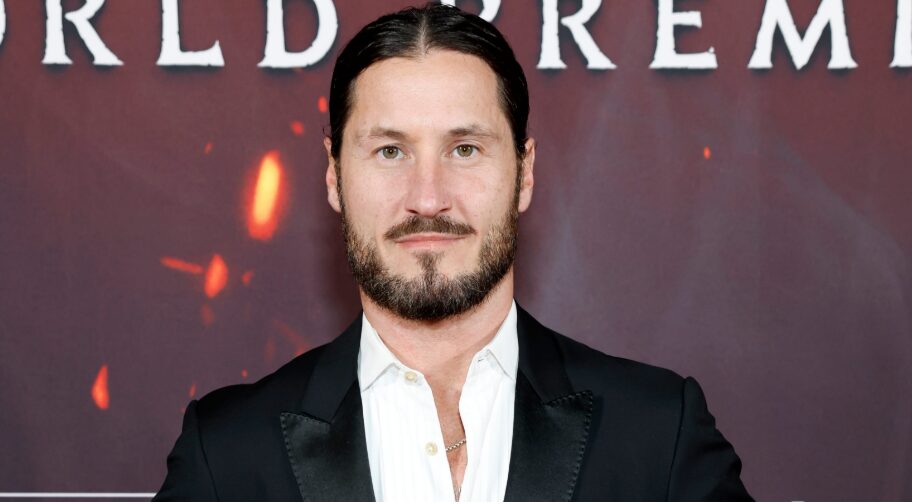
Dancing with the Stars pro Val Chmerkovskiy’s recent suspension is just another example of the increasingly casual nature in pop culture’s response to violence against women.
Chmerkovskiy has been suspended for all of one week after posting an unnecessarily aggressive comment about female judge Carrie Ann Inaba, narrowing the already minuscule scope of punishment towards violent men.
“You almost saw Fresh Prince enter the ballroom last night,” wrote Chmerkovskiy in a now-deleted TikTok post, referring to the infamous Chris Rock slap at the 2022 Grammy Awards.
While many fans of Chmerkovskiy claim this is in reference to only Will Smith’s proclamation, “get my wife’s name out [of] your f—ing mouth,” I would argue one couldn’t make the comment without understanding its violent implications.
This public comment was the result of Inaba judging after Chmerkovich’s wife, Jenna Johnson, performed.
Following Johnson’s and her partner’s dance, Inaba praised its entertainment value, stating, “If that was a halftime show, amazing. I loved every minute of it.” She then went on to say that the dance didn’t follow the elements of a samba, which was their style for the week.
The real tension occurred when Inaba mentioned there was a lift, which is strictly prohibited in the rules for a samba; this would be something that a professional like Johnson should be aware of.
The dancer responded by questioning, “a lift?” leading Inaba to read the rules to her.
In this context, many viewers see this as Val coming to his wife’s defense. Instead of simply disagreeing with her assessment, Chmerkovskiy referenced an incident in which a man physically assaulted another person on live television. Whether or not he intended the comment as a literal threat, the reference relied on the threat of violence to make its point.
The growing reaction from fans calling the ABC series “soft” for suspending the well-loved pro is quite ironic, considering the threat stemmed from Inaba simply doing her job, whether it was said with an attitude or not. You would think Chmerkovskiy was being “too soft” in his outrage.
This isn’t the first time Chmerkovskiy has made a questionable comment about Inaba’s judging. Just earlier this season, during a post-show interview, the pro stated, “I know where she parks her car.”
While the comment may have been intended as a joke, its implications become harder to dismiss when viewed alongside his previous remarks. Knowing where a colleague parks her car is not inherently threatening but bringing it up in the context of criticism directed at a judge raises questions about where the line between playful banter and intimidation is drawn.
The problem is not that Chmerkovskiy disagreed with Inaba’s judging. Professional dancers should be able to challenge a judge’s assessment, and fans are entitled to disagree with the scores their favourites receive. The problem is the way that disagreement is expressed, particularly when it invokes violence against a woman for doing her job.
Popular culture has repeatedly framed male aggression as an expression of desirable masculinity, particularly when violence is presented as a means of protecting or defending women. Research on representations of gender in entertainment has found that aggression against women can be portrayed as socially acceptable masculine behaviour, while films such as Taken frame male violence as a form of protection.
Chmerkovskiy’s comment fits into this broader cultural pattern: aggression is easier to dismiss as humour when it is framed as a man defending someone he loves.
This humor defense creates an environment where these comments become increasingly casual.
What makes Chmerkovskiy’s comment particularly concerning is how casually some fans have dismissed it, while others have called for him to be fired. The debate itself is telling. A reference to a man physically assaulting another person on live television has become a question of whether a beloved celebrity deserves to face consequences, rather than why that kind of aggression is considered an acceptable response to begin with.
Certain fan reactions show another concerning element of this dismissal of aggression; many are now placing blame on Inaba, filling her Instagram comments with retribution comments: “wish you got suspended instead of Val,” and “how can we vote you off” were among the top-liked comments.
While this is definitely not all fans of the show, with many speaking out in support of the female judge, this response reflects a broader cultural tendency to scrutinize women’s reactions to aggression more than the aggression itself.
My biggest concern with this outrage is that when violence is dismissed as a joke or an overreaction, it is much easier to dismiss real and serious threats not only on television, but in daily life.
This is not to suggest that every joke involving violence is a genuine threat, or that Chmerkovskiy intended to physically harm Inaba. Rather, it is worth questioning why references to violence are so readily dismissed when they come from men audiences admire. When aggression becomes a familiar punchline, the distinction between what is acceptable for entertainment and what should concern us becomes increasingly blurred.
The controversy surrounding Chmerkovskiy is not simply about whether a one-week suspension is an appropriate punishment. It is about a culture in which violence can be invoked for entertainment, dismissed as a joke and defended as loyalty, while the woman on the receiving end is left to absorb the consequences. We should be able to enjoy popular entertainment without treating aggression as an inevitable part of it.