

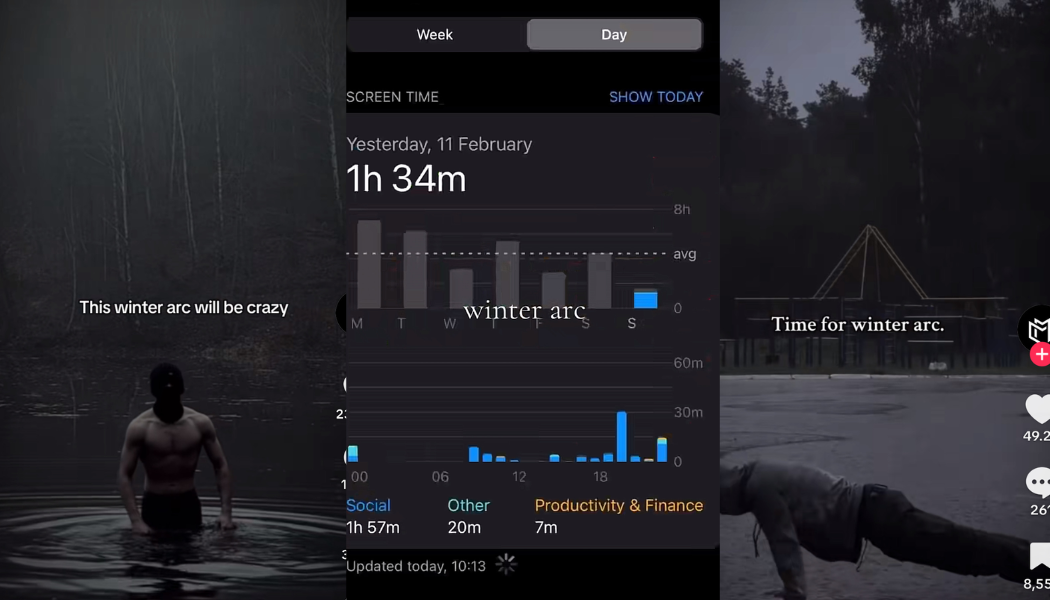
The rise of the “winter arc” trend isn’t anything new. The internet is obsessed with self-improvement messaging, reinventing a lifechanging trend to leave us feeling unproductive and inferior with the come of each new season.
If your TikTok “for you” page is anything like mine, you may have seen an increase in self-improvement content this past month. Often found tagged with “#winterarc,” our newest self-improvement challenge is to use the winter months, namely between October and December, to engage in a “great lock in” — to lock oneself into a disciplined routine to live a healthier life, enrich one’s mind and get motivated during the coldest, darkest months of the year.
Though I don’t see an issue with encouraging healthy habits online, these self-improvement trends tend to take less of an encouragement approach and more of a cold, shaming one. Audios used to soundtrack “winter arc” videos include tough love-esque messaging, urging viewers to get disciplined because “if you wake up in the morning and you don’t want to do something, you don’t care enough about yourself.”
Aside from the glaring class implications within this kind of messaging — which will be addressed later — it is easy to deduce that encouraging rigorous self-discipline and shaming anyone who breaks from it could attack anyone’s self-esteem. In the rhetoric of TikTok’s self-improvement content, you’re either inhumanely disciplined, or you’re not looking out for your health and wellbeing, and you need to do better.
Evidently, shame is a major tactic to bring people to engage with and participate in online self-improvement trends. Since it is entirely unrealistic for anyone to have the consistent energy or time to establish a sophisticated fitness routine, have unrestricted access to healthy, quality foods and read enough self-help books to become a brand-new person — all while being in school or working full-time and engaging in general life responsibilities — online self-improvement content can make anyone their target audience through shame and the illusion of procuring the perfect life.
The timing in which the “winter arc” trend has taken place points to its instability as well. Though one’s “winter arc” is assumingly supposed to take place in the winter, the encouraged time frame to participate in this trend conveniently stops at the end of the year.
Many videos within this trend are encouraging users to start their new routines before January 1st brings the new year. Taking the famous phrase “new year, new me” literally, the trend is encouraging users to build disciplined habits before the new year begins so they can go into 2026 with a revamped self-image and lifestyle, while others will wait until January 1 to start their new year’s resolutions.
Even though the trend seems to be subverting the usual trope of unsustainable new year’s commitments under the guise of building permanent healthy habits, the “winter arc” trend is just as much of a self-improvement fad as the countless other rigorous self-discipline trends we’ve seen over the years.
A problem with the shaming rhetoric that characterizes trends like the “winter arc” is that invisible prerequisites to participating in such a trend are disposable income and free time.
Many videos displaying a proper, disciplined “winter arc” assume that one has a membership to a sophisticated gym — with accompanying lavish fitness wear and accessories — as well as visually appealing healthy meals. Less materially, but evermore integral, the trend also assumes that every user has expendable free time and energy to participate in elaborate routines.
It’s clear that the trend could easily fit into the lifestyles of those with higher-paying, lesser tolling jobs and financial stability. The classist nature of the trend further exemplifies the risk of perpetuating the “tough love” rhetoric that the trend thrives on.
If someone works several jobs to pay their rent, and cannot afford a gym membership or the highest quality groceries, does that translate into a lack of discipline and an ignorance to health? Are they “undisciplined,” or are they understandably exhausted from racing to maintain stability?
When we engage with trends that assume everyone has equal access to the above resources, motivational messaging to be your best self can easily be flipped to exclude those without financial resources and subsequently shame them for the consequences of their class status — despite the fact that their daily lives require the discipline and effort that online self-improvement trends ask of users.
It is unrealistic to be constantly improving to ensure you meet the standards of the newest TikTok self-improvement trend. It is always important that we try to stay happy and healthy but procuring that reality does not look the same for everyone. In the midst of self-improvement trends popping up almost constantly, it is an important reminder that it is okay to rest. Adding healthier habits to your life is always a great practice but take extreme internet fads with a grain of salt before taking their messaging to heart.