

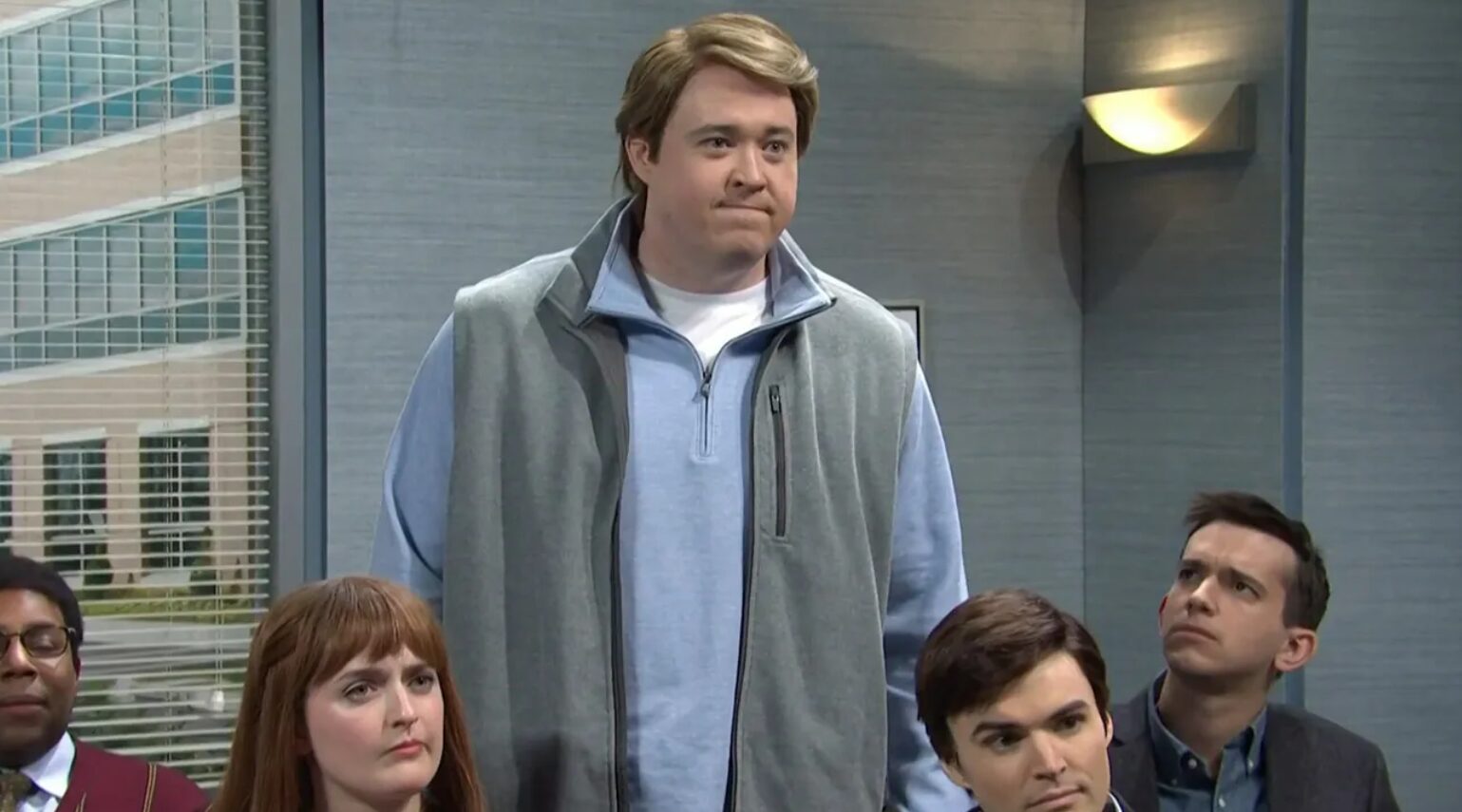
The fact that Shane Gillis felt comfortable enough testing out some misogynistic material on Saturday Night Live tells us more about our sexist culture rather than Gillis’ poor taste in comedy.
On Oct. 10, comedian Shane Gillis delivered a controversial monologue while hosting the late-night sketch comedy show Saturday Night Live (SNL). In the monologue, Gillis discusses his recent weight loss endeavours, in which he notes going to the gym for the first time in a while and seeing “women dress[ed] like whores.”
“I haven’t been to the gym in so long I didn’t know women just dress like whores now,” said Gillis. “There’s no other way to describe it. […] Have you seen [women’s] shorts? […] And don’t look. You’re not allowed to look.”
After airing his grievances with women’s whorish athletic wear, Gillis goes on to discuss his experience growing up with his “bitch” sisters. Clearly, Gillis had a lot to say about women that evening.
The controversy following Gillis’ monologue is unsurprising. His statements are clearly misogynistic and inarguably draw upon the same discourses rape culture and sexism rest on.
What is surprising though is that SNL approved the monologue in the first place. If you are unaware of the general form SNL takes, each Saturday, the live show debuts a string of short comedy skits surrounding current events. The show is hosted by a new celebrity every week, who guides the audience through evening and has several opportunities to do comedy sets of their own between skits. Since the celebrity host shoulders so much comedic responsibility, SNL writers collaborate with the celebrities on their material, while the final script decisions rest on the show’s creator, Lorne Michaels.
This means that Gillis’ misogynistic jokes were, assumingly, expected by the SNL team, and, by proxy, endorsed by Michaels.
The internet has been understandably upset by Gillis’ set. Gillis has been called out by several other celebrities in the comedy world regarding the misogynistic overtones in his “jokes.” Actor Dan Levy released a video directed to Gillis refuting the comedian’s statement that wearing gym shorts as a woman equates to being a “whore”:
“Women wearing short shorts to the gym does not make them whores; it makes the men calling them whores misogynists. […] I’m speechless that [a statement] like that can exist on live national television, and to be perfectly honest, more men need to be standing up in opposition to it because it’s complacency that has created the environment with which women are sexually assaulted and it’s a ‘conversation,’ as opposed to a ‘crime.’
“Men need to be defending women more. This is not a women’s issue; this is an everybody issue, because the more that men objectify women in the media, the more that other men see them as objects and treat them as objects,” said Levy.
Levy’s statement picks up on the central feature on which this controversy rests: we are becoming increasingly blind to rape culture discourses and sexist language in mainstream messaging — something that has and will continue to have disastrous consequences.
This is certainly not the first time a comedian has come under fire for making light out of women’s suffering — you need not think back too far to recall how Matt Rife opened his Netflix special with a joke about domestic violence — but it is disheartening that such clearly harmful language can end up on the big screen on SNL. Misogynistic language shouldn’t be able to enter mainstream media so easily.
However, we do live in a world where a woman can anonymously report an alleged gang rape and have her identity doxxed by strangers on the internet, leading her to receive text messages calling her a “typical white btich [sic] whore crying ‘rape.’”
And, no, the parallel use of the word “whore” in Gillis’ monologue and the sexual harassment faced by Jane Doe is not a coincidence. Their shared language signifies a pattern, and demonstrates that, though one man can be dumbed down as a politically lukewarm comedian who made a bad joke while the other is clearly a perpetrator of sexual harassment, they perpetuate the same discourses.
Just as Levy notes, when we watch men in the media continuously make light of sexual trauma, downplay abuse and reduce women to objects deserving of hate, we at some level internalize the understanding that this behaviour is acceptable. We internalize that it is okay to objectify women and call them “whores” en masse; it is okay to berate women from behind a screen; it is okay to treat women as if they do not deserve basic respect; and it is okay hurt women.
Gillis’ misogyny on SNL is more than just a couple bad jokes. The fact that slut shaming and sexist language is acceptable enough to be on live television shows that we have become numb to the discourses that uphold and justify women’s suffering.