

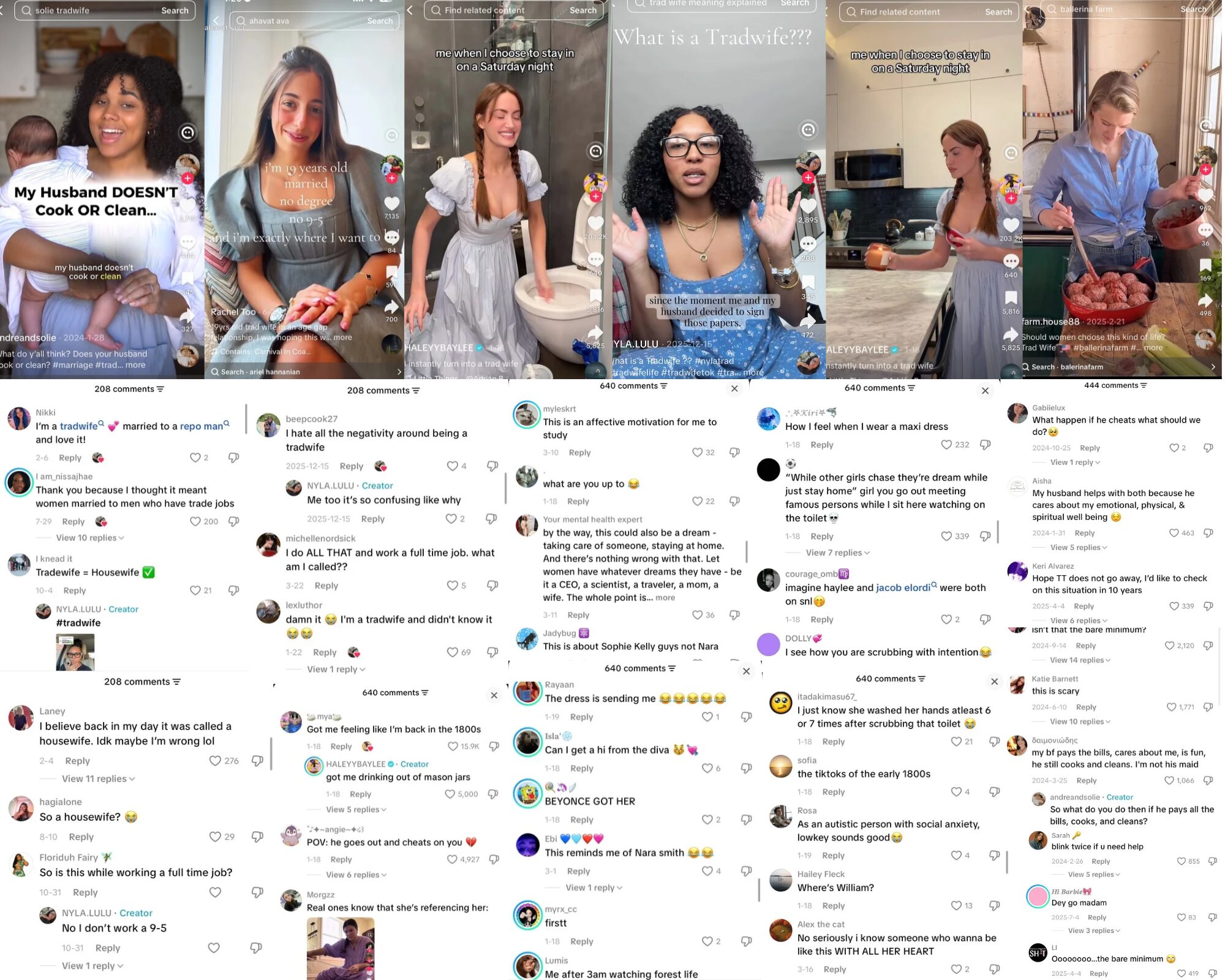
Though the internet can expose us to countless online subgroups whose echo-chamber-esque political rhetorics might cause a stir in mainstream discourse, some of the controversial creators in these communities seem to be driven by encouraging engagement rather than genuinely sharing their beliefs.
I am no stranger to constructing emotionally charged responses to online content that opposes my values. However, lately I’ve begun to wonder if I, like so many other short-form content consumers, have fallen into the trap of “rage bait” content — a trap that my algorithm can’t quite seem to escape.
Though rage bait content isn’t new to the internet, it is rising in popularity at an incredible rate. Rage bait content has become so renowned, in fact, that Oxford University Press named “rage bait” their word of the year for 2025. Oxford defines rage bait as “online content deliberately designed to elicit anger or outrage by being frustrating, provocative, or offensive, typically posted in order to increase traffic to or engagement with a particular web page or social media content.” Noting that the use of the phrase “rage bait” tripled throughout 2025, Oxford said their choice to bestow the “word of the year” title on the phrase came out of the role social media had to play in the increasingly tense political atmosphere in the West throughout the year.
Notably, the other contenders for “word of the year” — “aura farming” and “biohack” — take root from the “looksmaxxing” community, a genre of online content that shares advice on how to be as attractive as possible, relying on fundamentally racist and misogynistic logics to inform their barometer of “attractiveness.” Oxford’s choice emphasizes how deeply controversial content has been normalized and ingrained in popular internet culture.
According to Kellie Scott of ABC News, rage bait content can range in extremity, but the most dangerous iterations of it include political misinformation and disinformation, as well as downright discriminatory language, as exemplified above.
As evidenced in Oxford’s definition of rage bait, the purpose of posting such extreme content online is primarily not to share deeply held controversial takes. The purposes of rage bait are implicated in the phrase itself: controversial content in this genre is shared to bait other social media users into reacting to the content through comments and shares, ultimately driving up the post’s engagement numbers so the algorithm pushes it to other users, and the cycle starts all over again. Rapid engagement signals social media algorithms to distribute posts further, extending the creator’s outreach far beyond the fringe internet communities this controversial, rage-inducing language seemingly belongs to.
As Jessica Koehler of Psychology Today notes in a piece on the relationship between social media content and mental health, algorithms are engineered to “keep users hooked, sometimes by exploiting their emotional triggers.” Extremist content often functions as an algorithmic success, keeping social media users glued to their feeds — even if they are expressing outrage or distress.
And the continual push for engagement isn’t just so controversial that content creators can relish in their notoriety; the primary motivator for rage bait content, in almost any case, is profit.
Most major social media platforms — such as Instagram, TikTok and the like — encourage content creation through “creator rewards programs” that offer financial monetization for creators whose pages bring in large amounts of traffic to the platforms. TikTok users can join their creator rewards program so long as their profile has “at least 10,000 followers and 100,000 video views in the last 30 days,” while Instagram’s rewards program requires “a minimum of 5 million views within the previous 3 consecutive calendar months.”
Both rewards programs say that eligible creators must post content that encourages engagement. Though Instagram, for example, veils this requirement in flowery language, asking creators to “inspire people to connect,” algorithms clearly don’t differentiate between connection and division born of outrage.
Online, all content pays so long as people are talking about it.
We need not look any further than our current political landscape to see the disastrous consequences of monetarily rewarding content for its capacity to generate discussion and encourage clicks. It is no secret that political discussions online can be characterized by extreme polarization and fearmongering, and the profit motives inherent in producing extreme content cannot be divorced from this characterization. How can we meaningfully engage in democracy when our social media feeds are littered with horrific content all to exploit our interactions and capitalize on every second of our attention?
It is crucial that we spend time developing our media literacy and learning to identify rage bait content. The next time you go to share a social media post that filled you with anger, perhaps take a moment to consider whether the post is genuine, or if your engagement is exactly what the creator hoped you would do.