

For most Badgers fans, game day is the only part of the sports cycle they see. They see athletes take the court or field, the coaches on the sidelines and eventually the final score.
What they don’t see is everything that happens before the athletes compete.
Behind every Brock varsity team is a group of coaches and support staff working throughout the week to prepare athletes, manage workloads, plan practices, deal with injuries and make sure the team is ready when gameday arrives.
For performance coach Dave Scott-McDowell, work starts with understanding exactly what each athlete and sport requires.
“At Brock, we’re in charge of all the physical performance for the athletes,” McDowell said in an interview with The Brock Press.
That includes physical testing, athlete monitoring, sports science and program design. In some cases, the performance staff works with athletic therapists to help athletes return to action following an injury.
But their work is not limited to the weight room.
McDowell also works directly with coaches to help with practice design and manage how much work athletes are doing throughout the week. The goal is to make sure athletes are prepared to perform without putting unnecessary stress on their bodies.
“There’s a lot of influence we might have over practice from time to time in terms of helping manage who’s getting more practice volume versus who’s getting less practice volume,” McDowell said.
For athletes, some of that preparation happens every day.
Brock varsity athletes are responsible for two to three lifts each week and fill out daily forms that allow the performance staff to track their workload and wellness.
From there, the staff can identify when an athlete might need additional support, whether that means guidance around sleep, nutrition or recovery.
It is part of varsity athletics that can easily go unnoticed from the stands. Fans see the athlete competing, but not necessarily the work that goes into making sure they are physically prepared to do it.
That preparation looks different for every sport.
At the beginning of each year, McDowell works with the coaches to create a yearly training plan. The performance staff conducts an analysis to see what athletes need to succeed, which areas of the sport place the most stress on their bodies and what injuries the team experienced in the previous season.
From there, the training program is built around those needs.
Two athletes can perform the same exercise while training for completely different reasons.
McDowell used a front squat as an example.
For a volleyball player, the focus may be maintaining range of motion and building strength around the knees. For a rugby player, the exercise may be adjusted to better reflect the physical positions and demands of the sport.
“On paper they’re both front squatting, but the emphasis and the load is being directed differently,” McDowell said.
For volleyball, McDowell’s focus includes gradually preparing athletes to handle the demands of the season.
Players can be required to jump hundreds of times over the course of a weekend. Rather than immediately putting them through that workload, the performance staff gradually increases their jump volume throughout the season.
The idea is to have athletes accustomed to the demands before they reach the most important part of the season.
For rugby, the priorities are different.
McDowell said building muscle mass is an important part of preparing players for a sport where athletes do not have the same protective equipment as some other sports.
“Putting on muscle mass is a big piece that we focus on with them to create armor around what they have to do on the weekend,” McDowell said.
The sport specific planning is just one part of the job.
Head coaches have their own responsibilities outside of what happens during practice as well. For women’s volleyball Head Coach Steve Delaney, coaching is just one aspect of his day-to-day work. “I’d like to say it’s just coaching, but it’s not,” Delaney told the Press.
Delaney is responsible for creating practice plans and running them, administration, travel planning, camps and recruiting.
During the season, those responsibilities happen along with preparing the team to compete. Outside of the season, the work continues.
Delaney spends part of the summer scouting younger athletes at competitions; including 16U and 17U national championships, provincial competitions and provincial team events.
He also runs beach volleyball programming during the summer and has previously worked with national team programs.
For coaches, the preparation for a season can begin months before their athletes step onto the court for the first time, and head coaches do not work alone.
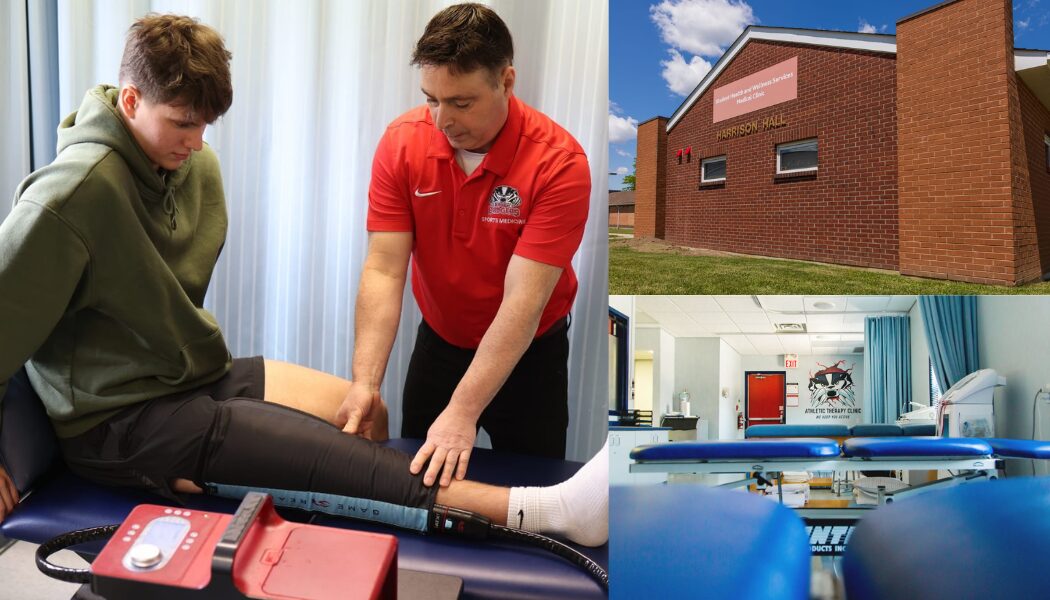
The performance staff is one part of a larger group that helps keep athletes healthy and available to play. For example, athletic therapists work with athletes on injuries and maintenance, helping them manage physical issues throughout the season.
Delaney said that maintaining an athlete’s health is an ongoing process rather than something that only happens after an injury. “If you’re a performance athlete, it’s not a matter of if you’re injured, you need to be involved in maintenance,” he said.
That can mean treatment, taping, therapy and helping athletes follow treatment plans.
For a coach, having that support allows them to focus more of their attention on the team and the sport. The different roles may have separate responsibilities, but they are connected by the same goal.
McDowell describes the performance staff as a support system for athletes and coaches. “We’re a support staff for a reason,” he said. “We’re here to provide you the resources along the way.”
That support can change throughout an athlete’s career.
Sometimes it means helping an athlete recover from an injury. Other times it means adjusting their workload, changing a training program or simply helping them understand what their body needs to perform. For McDowell, one of the most rewarding parts of the job is seeing an athlete make that progression. He described it as helping an athlete move from different points and eventually reach the point where everything begins to come together.
“Every athlete has an ‘aha’ moment when they begin to understand what they need to do to perform at their best,” McDowell said.
His role is to help provide the resources that allow them to reach that point. That work can be difficult to notice because much of it happens away from competition.
There is no scoreboard for a well-designed training program, and fans do not see the conversations that go into deciding how much an athlete should practice, when they need additional recovery or how their training should change throughout a season.
The same is true for the work of a head coach.
A practice may only last a couple of hours, but it is the result of planning that can be well before the team steps into the gym. Recruiting and scouting can take place months before a player ever joins the program, while travel, camps and other administrative responsibilities continue alongside the daily demands of coaching.
The work also depends on the different members of the athletic department working together. Performance coaches can help manage an athlete’s physical workload, athletic therapists can help keep athletes healthy and work through injuries and head coaches can use that information to plan practices and games.
The athletes themselves still must put in the work, whether that means lifting in the gym, completing recovery work or following the plans put in place for them.
For McDowell, that connection between the different parts of an athletic program is what makes the job rewarding. At Brock, he said, “there are a lot of competitive teams and athletes who want to continue improving.” That creates an environment where the support staff can help athletes work toward their own goals, rather than simply preparing them for the next game.
McDowell described the performance staff as “being there to provide athletes with the resources they need along the way.” Their work can change depending on the athlete, the sport and the point in the season, but the purpose remains the same: helping athletes reach the level they want to reach.
For Delaney, that support makes it possible for coaches to concentrate on their own responsibilities while knowing that other areas of the program are being looked after.
The result is a system where no single person is responsible for everything with most of the process happening without an audience.
By the time fans arrive for a game, much of the preparation has already been done. The training plan has been built, the athletes have been monitored, practices have been planned and any necessary treatment has taken place.
The final product is what fans see, but the work that makes it possible happens throughout the rest of the week, often without much attention.
For the people working behind Brock Athletics, that is part of their job. Their success is often measured by whether the athletes are prepared, healthy and ready to compete when their moment arrives.