

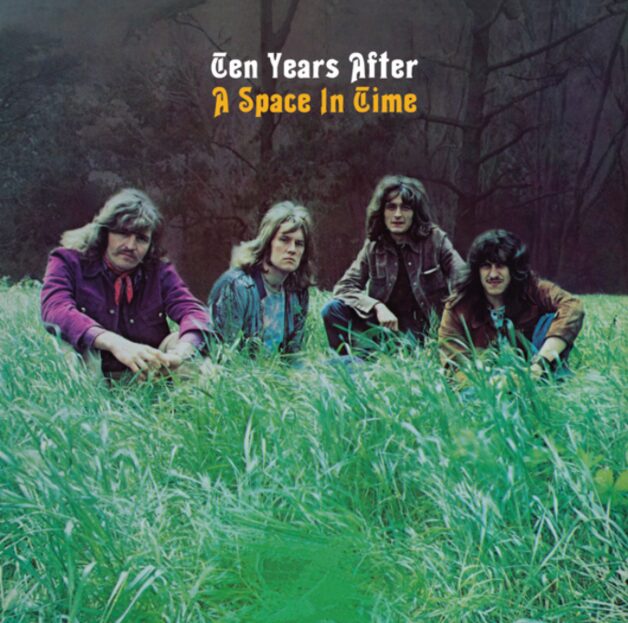
Beginning with a haunting, circular acoustic guitar riff and a delicate progression that feels like a quiet storm brewing, “I’d Love to Change the World” by the British blues-rock band Ten Years After is still worth listening to today.
When “I’d Love to Change the World” was released in 1971, Ten Years After were already legends of the late-sixties counterculture, largely thanks to frontman Alvin Lee’s blistering guitar performance at Woodstock. Despite their success, their biggest hit wasn’t a fierce, psychedelic blues jam, nor was it a triumphant protest anthem. Instead, it was a melancholy confession of political burnout and existential fatigue.
That profound sense of fatigue was a direct product of its era. By 1971, the utopian dream of the 1960s was visibly fracturing. The Vietnam War raged on, the Cold War loomed and the peace-and-love movement had been bruised by political assassinations, the Manson murders and the tragedy at Altamont. The youth who had passionately believed they could march, sing and legislate their way to a brighter future were exhausted. “I’d Love to Change the World,” the lead single from the album A Space in Time, perfectly captured this widespread cultural hangover.
At the core of this exhaustion is a raw, uncomfortable honesty about the limits of individual activism. The lyrics read like a grim inventory of a society in turmoil.
Lee sings of pollution, overpopulation and severe economic disparity: “Tax the rich, feed the poor / ‘Til there are no rich no more.”
At first glance, this reads like a classic socialist rallying cry. But Lee’s delivery is entirely stripped of revolutionary zeal. It is sung not with a raised fist, but with a heavy, melancholic sigh.
Breathing out that sigh, the song’s narrator observes the chaotic shifting of cultural norms — mentioning the “freaks and hairies” in a way that reflects the disorientation of the era, or perhaps his own alienation from the very counterculture he belongs to. He sees the systemic rot of the world and understands the moral imperative to fix it but is completely paralyzed by the sheer scale of the problems surrounding him.
That paralysis ultimately manifests in the chorus, which contains one of the most relatable, deeply cynical admissions in rock history: “I’d love to change the world / But I don’t know what to do / So I’ll leave it up to you.”
This is the ultimate abdication of responsibility. It is the sound of a well-meaning citizen throwing their hands up in defeat because the alternative is to drown in the impossible weight of trying to save everyone.
This psychological tension of wanting to care but surrendering to defeat is flawlessly mirrored in the musical arrangement itself. The track oscillates between the quiet, contemplative acoustic verses and Lee’s explosive, distorted electric guitar interludes. The acoustic moments represent the quiet paralysis and introspection of the lyrics, while the searing electric solos act as the pent-up frustration and anxiety finally boiling over.
Through those soaring solos, the music provides the catharsis that the lyrics refuse to offer. You can literally hear the helplessness transforming into a raw, wordless scream of the guitar, before retreating into the quiet resignation of the final verse. It is a sonic representation of panic rising in the chest, only to be suppressed once again by a feeling of utter powerlessness.
Yet, that panic has refused to stay suppressed in the decades since the track’s release; over 50 years later, “I’d Love to Change the World” feels unnervingly prophetic. If the song was relevant to the generation watching the Vietnam War on the evening news, it is utterly essential for a modern era defined by the smartphone and the 24-hour news cycle.
Today, we are intimately aware of every global crisis in real-time. From the accelerating threats of climate change and widening wealth inequality to geopolitical conflicts and domestic polarization, the modern citizen is bombarded with an unprecedented volume of existential threats.
Experts now have modern terms for the exact phenomenon Alvin Lee was singing about: compassion fatigue, doomscrolling and activism burnout.
We live in an age where the desire to be on the “right side of history” is immense, but the pathways to achieving meaningful change feel hopelessly obstructed by massive, unmovable systems. The modern internet user frequently experiences the exact emotional arc of the song: observing the horrors of the world, feeling a surge of righteous indignation and then locking their screen, overwhelmed by the realization that reposting an infographic won’t stop a war.
Furthermore, as we watch these massive systems fail, the song’s closing sentiment echoes the frustrating generational dynamics of the 21st century.
“So, I’ll leave it up to you” perfectly encapsulates the tension of older generations passing the burden of a damaged planet and a fractured economy down to mMillennials and Gen Z, expecting the youth to solve the very crises they inherited. It is a passing of the baton that feels less like an honour and more like an impossible burden.
Despite the weight of that burden, “I’d Love to Change the World” endures precisely because it grants us permission to feel overwhelmed.
Protest songs designed to inspire action and unity are vital to society, but there is an equally profound need for art that simply validates our exhaustion.
Ten Years After created a masterpiece that doesn’t offer solutions, false hope or a call to arms. Instead, it offers solidarity in our shared helplessness.
In a world that constantly demands we be outraged, informed and active at all times, there is a strange, profound comfort in hearing someone else admit that they too have absolutely no idea how to fix it.