

4/5
This article contains spoilers for the movie Resident Evil.
When adapting any original story into a movie or show, conflict is inevitable. Fans of the original will always have complaints about the adaptation process, usually regarding what information was left out or what aspects have been misrepresented. The protagonist’s hair colour might be wrong, the ending might be different or a slight change in the phrasing of a line might alter the tone of the story. Fans have high expectations, and for good reason.
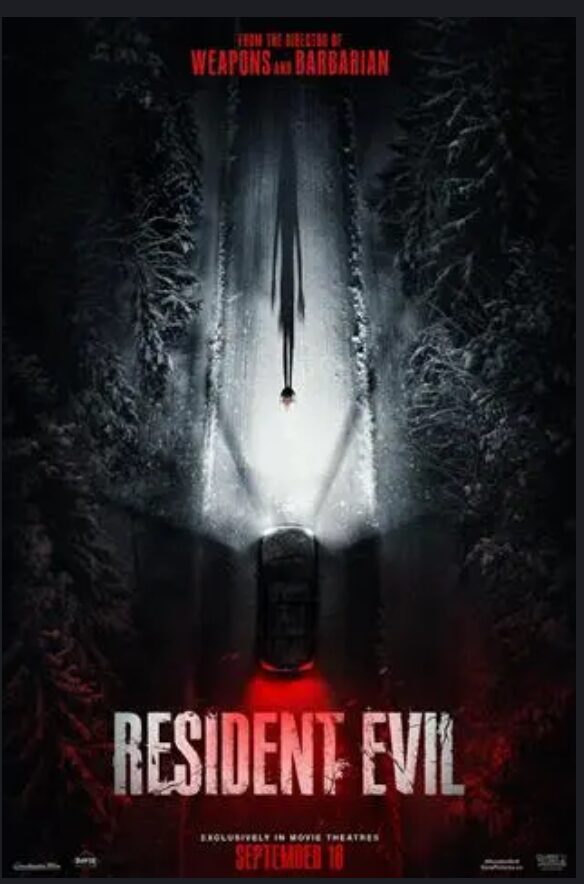
Zach Cregger’s 2026 adaptation of Resident Evil, based on the video game series of the same name, takes this challenge into consideration. Rather than attempting to recreate the games exactly, Cregger identifies the elements that make Resident Evil distinctive and preserves them. The result is an adaptation that feels familiar to longtime fans and exciting for new ones, without requiring prior knowledge of the games. By respecting the source material while still allowing the film to stand on its own, Cregger creates a unique, fun and gory adaptation experience.
The movie follows Bryan, played by Austin Abrams, who works as a medical courier. Bryan takes on one more job for the night with a further destination: Raccoon City. Fans of the game will recognize this name as the city in the franchise at the root of all that ensues. While driving on eerie, dark and snow-covered roads in the middle of nowhere, Bryan suddenly hits a woman with his car. The journey begins here, as he slowly uncovers a zombie-like outbreak stemming from Raccoon City and must make this delivery to the centre of the city before it’s too late.
This concept may sound like any run-of-the-mill apocalypse movie that we’ve seen before, and in a way, it is. But where Cregger’s depiction differs from the conventional zombie film or even other Resident Evil games, is the fact that Bryan is not a hero we would typically follow. He’s not a member of a super-intelligent military force or a cop who can absorb bullets like they’re nothing. He isn’t driven by brute strength or superhuman intelligence. Bryan navigates this reality the same way I do when given a controller — slightly cowardly with terrible aim.
This is what makes Cregger’s approach to this film work so well. Instead of replicating the skills and attributes of the protagonists in the games, inevitably frustrating fans through their representation, Cregger offers a new protagonist, one that is more realistic to what the viewer might experience in the same situation.
Abrams, who plays Bryan, spends most of the runtime by himself on screen (or at the very least, as the only human). While this may seem like an intimidating task, the film balances this well through encounters with the infected and maintaining opportunities for dialogue by having Bryan talk to himself and leave voice messages.
More importantly, Bryan’s isolation makes the film feel surprisingly similar to the experience of playing Resident Evil. The film is shot with gamers in mind: first-person perspective shots staring down the barrel of a gun; searching rooms for ammunition and becoming frustrated opening empty drawers; finding health items and plants; and pulling new guns from walls as a weapon upgrade. Bryan is not dumb either; he’s just not equipped for a zombie apocalypse, just as I would assume you and I aren’t. That’s what makes his character so compelling and easy to root for.
In an interview, Cregger emphasized that they tried to do as many practical effects as they could in this film. This application is incredibly compelling in some aspects of the film, particularly seen within the amalgamated creature that continues to appear. Though this wasn’t consistent throughout the film, when it was done well it allowed for horrifying and gory creatures from the game to come to life on screen.
Originally when coming out of the theatre, there were rumblings of an unsatisfying ending. While setting up to complete a real hero’s arc, the film takes that away from you in the final minutes. Bryan represents the fate of many in the Resident Evil universe that we often don’t get to see: lovable, good people who succumb to the circumstances of a relentless world.
In another life, Leon Kennedy would’ve scaled the building and saved the day. Still, even with the absence of these central characters, the film feels like an extension of the game’s universe, which feels like the best outcome that an adaptation like this can have.