

Rock music has long served as an amplifier for societal discontent. From the anti-establishment anthems of the punk explosion to the psychedelic counterculture of the 1960s, artists have consistently used amplification and distortion to question authority.
Few bands have mapped the psychological contours of modern economics with the precision of Pink Floyd. Across masterworks like The Dark Side of the Moon, Wish You Were Here and Animals, the band constructed a sprawling critique of industrial alienation. They illustrated how the relentless pursuit of profit erodes human empathy and turns individuals into cogs within a colossal machine.
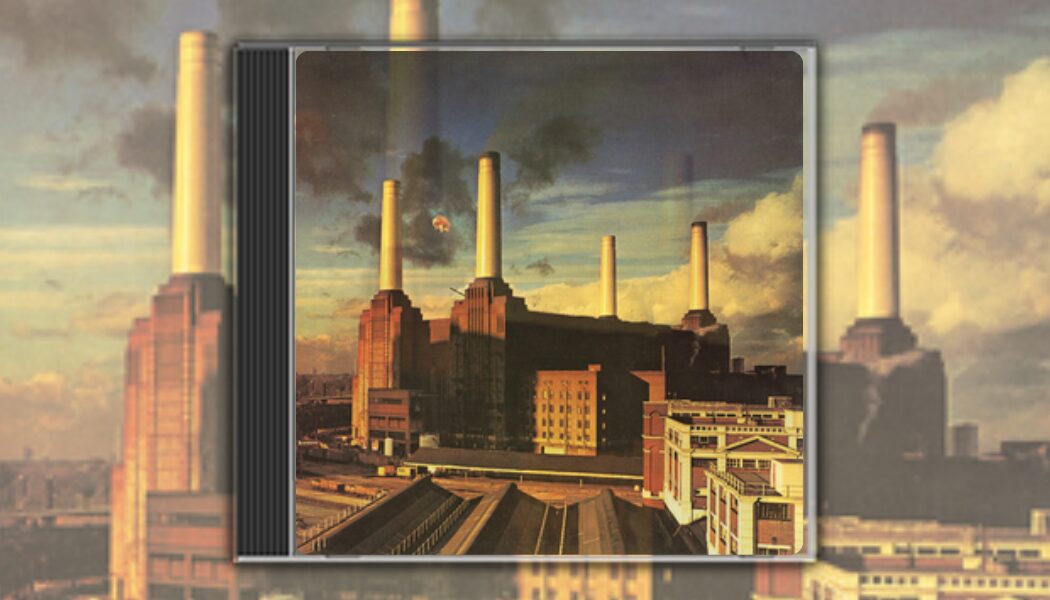
At the centre of this critique stands a bleak menagerie. In their 1977 album Animals, Roger Waters divided humanity into three distinct classes within a capitalist ecosystem. There are the pigs who sit atop the social hierarchy, dictating the rules and morality of the market; the sheep who blindly follow societal conditioning while remaining oblivious to their own exploitation; and finally, there are the dogs, the aggressive, ruthless, corporate mercenaries that tear at each other for a share of the spoils. They are the frontline enforcers of a system that rewards sociopathy and punishes compassion.
This dynamic is nowhere more visceral than on the track “The Dogs of War” from their later catalogue. The song evokes the grotesque marriage between corporate enterprise and military conflict. It reminds listeners that bloodshed is ultimately just another line item on a balance sheet. When the vocalist barks about fat cats expanding their portfolios through overseas devastation, the music locks into a menacing march, capturing the terrifying logic of an economic system that commodifies human life. War is not an aberration of late capitalism; it is an expansion market.
Long before that specific track was recorded, Pink Floyd was dissecting the everyday psychological degradation of the market. On The Dark Side of the Moon, the cash registers clinking at the start of “Money” announce the supreme deity of modern civilization. The track swings with a deceptive groove while skewering how currency distorts human relationships. It reduces friendship, art and time itself to transactional metrics. We are encouraged to grab that cash with both hands and make a stash while remaining entirely oblivious to the spiritual bankruptcy it requires.
This theme of commodification reaches its chilling peak in “Welcome to the Machine.” The song places the listener directly inside a corporate pipeline that swallows youthful idealism and spits out docile consumers. The acoustic guitar lines are swallowed up by cold synthesizers as a grinning executive welcomes a young musician to the machine. You are told what to like and what to buy, while your authentic creativity is processed into corporate equity. The tragedy is not merely that the machine wins, it is that we eventually learn to love our imprisonment. We mistake the glow of the office monitor for safety.
Decades after these albums were pressed onto vinyl, their warnings continue to resonate with haunting clarity. We live in an era defined by gig-economy burnout, algorithmic surveillance and tech monopolies that dwarf historical empires. The psychological landscape of late capitalism feels increasingly like a permanent Pink Floyd album side. People are constantly connected yet profoundly isolated, driven by economic anxiety to hustle through their waking hours just to maintain a baseline of survival.
Pink Floyd did not offer easy political solutions or utopian blueprints. They simply held up a cracked mirror to a culture obsessed with accumulation. They forced listeners to look past the neon signs and boardroom handshakes to witness the human collateral damage beneath.
As we navigate a world where corporate interests dictate the terms of our existence, the biting cynicism of the dogs of war remains an essential compass. Their music reminds us that our souls are worth more than market value. It insists that we must continually question the machine before it consumes us entirely.